Alerts

-
5 minutes, 44 seconds
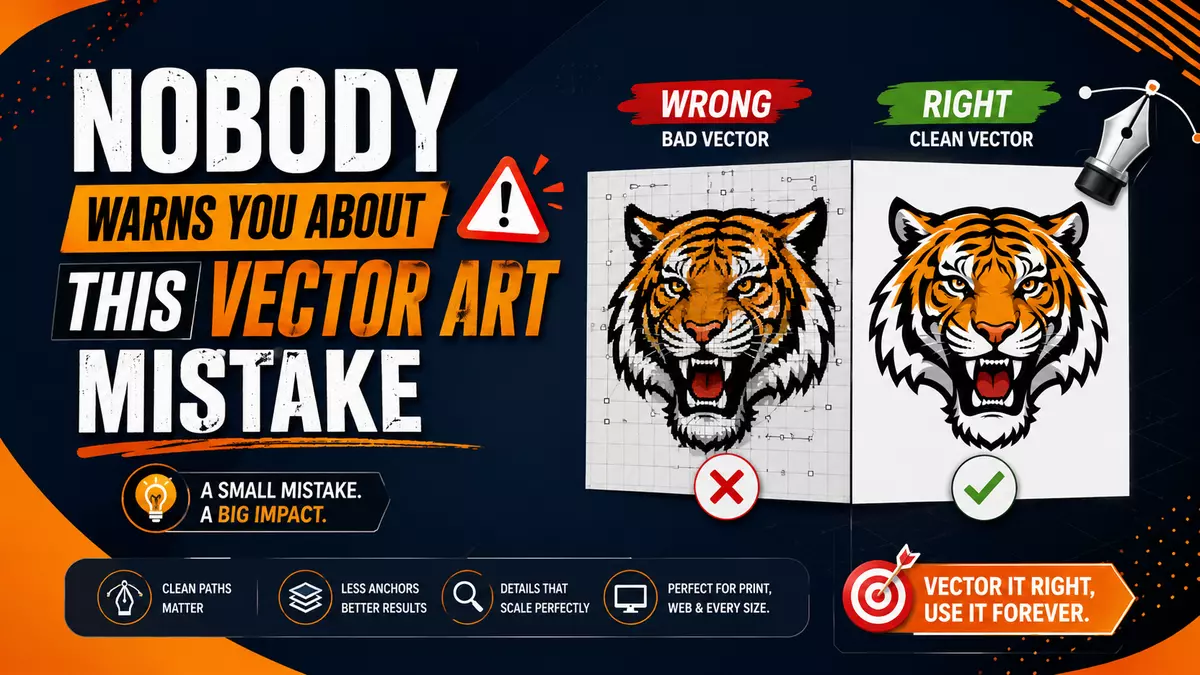
The biggest vector art mistake is assuming any file labeled AI, EPS, or SVG is automatically print-ready, when in fact many of these files are still built poorly underneath. A file can have the right extension and still cause blurry edges, broken colors, or rejected print jobs. This is exactly why so many brands quietly switch to professional vector art services after one bad print run teaches them the hard way.
Here is a story that plays out more often than people expect. A business owner pays a freelancer for a logo and receives a file that ends in dot AI. It looks perfect on screen, so the owner assumes the work is done. Months later, a vector art conversion service team opens that same file and finds messy, overlapping paths that no embroidery machine or printer can read cleanly. The file format was right. The actual construction underneath was wrong.
A vector file format alone does not guarantee quality, because the file extension only shows how the data is saved, not how carefully the artwork was built inside it. This is the warning most people never hear until something goes wrong. In my experience, this single misunderstanding causes more printing and embroidery problems than any other issue in the design world.
Many freelancers and quick online tools simply trace an image automatically, leaving behind extra points, uneven curves, and colors that do not separate cleanly. The file opens fine and looks fine at a glance, but underneath it is built like a house with no proper frame. That's why vector art services from a trained eye matter so much more than people expect.
A poorly built vector file often looks fine until it reaches production, where the real flaws finally show up. I've noticed this happens most with logos that were auto-traced instead of hand-built by a skilled artist.
Here are common warning signs to check for:
Edges that look slightly jagged when zoomed in closely
Too many anchor points along a single simple curve
Colors that shift slightly between different sections of the same shape
Text that does not stay sharp once converted into outlines
Files that crash or freeze design software when opened
Catching these issues early is exactly what custom vector art services are meant to do, long before a print shop or embroidery machine ever sees the file.
Here's why it matters to slow down before approving any vector file, even one that looks good at first glance.
Zoom in closely. Enlarge the file to two or three times its normal size and check every edge for smoothness.
Count the anchor points. A clean vector path uses the fewest points needed to form a shape, not hundreds of tiny ones.
Check the color separations. Each color should sit in its own clean layer, with no muddy overlap between shapes.
Test it on the final surface. Send the file to the actual printer, embroiderer, or sign maker before approving the full order.
This careful checking process is the backbone of reliable vector art conversion services, and it is the step most rushed freelance jobs skip entirely.
An auto traced file is created by software that guesses at shapes instead of a trained artist building paths intentionally. This shortcut often looks acceptable on a screen but falls apart the moment it is used for embroidery digitizing, large format printing, or vehicle wraps. That's why many designers recommend asking directly whether a file was hand traced or machine traced before ever accepting it as final.
I've seen this work well in many small businesses that stopped accepting auto traced logos and instead used trained art vectorization services. The difference shows up immediately in how clean the final stitched or printed design looks compared to the original rough file.
This mistake becomes most expensive once a flawed file reaches embroidery digitizing or large scale printing, where mistakes cannot be fixed mid run. A botched file caught early costs nothing but a few extra minutes of review. The same file caught late can mean a ruined batch of shirts, wasted thread, or a reprinted banner.
This is exactly why embroidery digitizing & vector art services in usa providers stress quality checks before production starts, not after. A few minutes of careful review at the start can save an entire order later.
Old logos scanned from photos or pulled from outdated business cards carry this same hidden risk, since they are often auto traced without anyone double checking the paths. For vector art services photos, this means the original image quality matters just as much as the software used to convert it.
A skilled vector art service will rebuild these older designs by hand rather than relying on a quick automatic trace, which protects the brand from the same mistake repeating itself on every future print job.
The real danger in vector art is not the file format, it is trusting a file simply because it carries the right extension without ever checking the quality underneath. Online vector art conversion services that take the time to hand build clean paths protect a brand from blurry prints, broken embroidery runs, and wasted money down the line. This is the exact warning that IDigitize has encouraged business owners to take seriously, helping them catch hidden file problems long before they reach a printer or embroidery machine.
If there is one thing worth remembering here, it is this: never judge a vector file by its extension alone. Zoom in, check the paths, and ask questions before approving anything for production.
Yes, a file can be saved as AI, EPS, or SVG and still contain messy paths, extra points, and poor color separation underneath.
An auto traced file is created automatically by software guessing at shapes, often resulting in jagged edges and uneven curves.
Zooming in closely and counting anchor points along curves quickly reveals whether a file was carefully built or auto traced.
Printers reject files with overlapping paths or poor color separation, since these issues only become visible once enlarged or printed.
Yes, hand built vector art avoids costly reprints and production delays, making it a smarter long term choice for any brand.

8.3K articles

2.7K articles

1.6K articles

34 articles








Comment