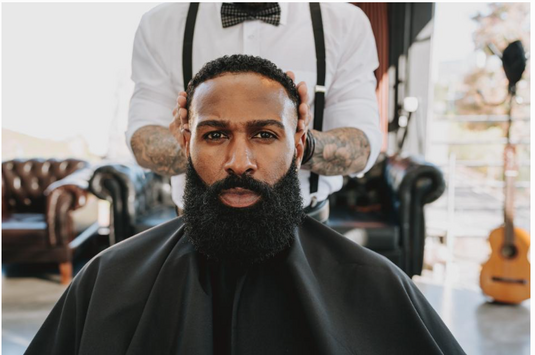
When Secretary of War Pete Hegseth announced a strict no-beard policy for military personnel, it was framed as a matter of discipline and uniformity. But beneath the surface, policies like these often reinforce systemic bias. Research shows that Black men are disproportionately affected due to pseudofolliculitis barbae (PFB), a medical condition that makes shaving painful and can cause permanent scarring. What seems like a neutral grooming rule can, in reality, lead to disparate impact—a form of discrimination that occurs when policies harm protected groups more than others.
No-Beard Policy and Religious Discrimination
The beard ban also collides with religious freedoms. For many faith traditions—including Islam, Sikhism, Rastafarianism, Orthodox Judaism, and Amish communities—facial hair is a religious obligation. A universal no-beard rule can put individuals in a position where they must choose between their faith and their career. This conflict has been the center of legal battles in the past, such as the 2000 lawsuit where Domino’s Pizza ended its no-beard rule after it was deemed discriminatory against Sikhs. These examples highlight how "neutral" policies can clash with both race and religion.
Workplace Grooming Rules and Racial Bias
Beyond the military, appearance and grooming standards have long been used to enforce narrow definitions of professionalism. From bans on natural Black hairstyles to vague corporate dress codes, these policies often disproportionately affect people of color. Legal experts like attorney Leah Goodridge have pointed out how professionalism itself has been weaponized as a racial construct—used to maintain power dynamics in workplaces. When policies such as no-beard rules are enforced without consideration for cultural or medical differences, they create environments of exclusion rather than equity.
Challenging Biased Policies and Driving Change
While Title VII of the Civil Rights Act protects against employment discrimination in civilian workplaces, it does not apply to military members. For those affected by the no-beard rule, seeking medical or religious exemptions is one pathway forward. For others, raising awareness and pushing back against such policies is essential. By educating others, sharing stories, and keeping conversations alive, we can expose how so-called neutral rules reinforce systemic racism and discrimination. True fairness requires more than surface-level uniformity—it requires policies that respect diversity, health, and human dignity.














Comment