Alerts

-
4 minutes, 43 seconds
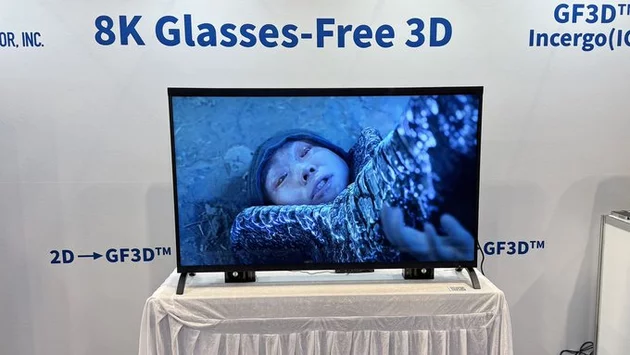
3D TVs have long promised a cinematic experience at home, but clunky glasses and awkward effects kept them from catching on. At CES 2026, two next-gen displays — one from Visual Semiconductor and one from TCL — are showing how that could change. These new TVs use plenoptic technology, also known as light field displays, to deliver seamless 3D experiences without glasses, creating depth and realism far beyond old 3D methods.
The demos were eye-opening, especially after seeing Avatar: Fire and Ash in theaters. Suddenly, the idea of 3D at home feels more practical and immersive, not gimmicky.
Traditional 3D relies on stereoscopic vision, sending slightly different images to each eye. Movie theaters achieve this with polarized glasses, while old glasses-free TVs used lenticular lensing, tiny lenses on the screen that direct light to each eye. The results were often narrow viewing angles, ghosting, or headaches.
Plenoptic displays work differently. Instead of just splitting images between eyes, they reconstruct a light field, simulating how light would travel naturally in a 3D space. This allows multiple viewers to see consistent depth and perspective from different angles — all without wearing glasses. The tech feels closer to real-life vision than anything previously seen on TVs.
Visual Semiconductor’s GF3D display at CES 2026 made a strong impression. The company’s slogan, “From black–and–white to color. From flat 2D to GF3D,” emphasizes the leap in visual quality. On-screen, objects appeared to project into the room, with depth that was smooth and natural.
Unlike older 3D TVs that only worked when viewed straight-on, GF3D allowed movement across the room without breaking the effect. This breakthrough shows what next-gen glasses-free 3D can achieve and why it may finally be ready for the living room.
TCL’s CES demonstration also used plenoptic principles, offering sharp visuals and realistic 3D depth. The company focused on color accuracy and motion consistency, solving problems that plagued early 3D TVs. While Visual Semiconductor highlighted extreme depth effects, TCL’s approach leaned toward practicality — making the experience feel more natural and less “gimmicky.”
Both approaches highlight a shared goal: making 3D TV viable for multiple viewers without special glasses or strict positioning.
The biggest barrier to 3D TV adoption has always been comfort and convenience. Glasses are inconvenient, and old tech often caused motion sickness. With plenoptic displays, those issues largely disappear. Multiple viewers can enjoy consistent depth, the image stays sharp even when moving, and content creators can push visual storytelling further.
If this tech reaches consumers at a reasonable price, it could revive home 3D entertainment — not as a fad, but as a meaningful enhancement to movies, gaming, and immersive content.
While both Visual Semiconductor and TCL are still in the prototype phase, CES 2026 shows the potential future of 3D TV. Scaling up production, improving content support, and lowering costs will determine if glasses-free 3D makes a comeback.
For now, enthusiasts and early adopters can glimpse the possibilities. Plenoptic TVs hint at a world where living rooms host cinematic experiences without compromise — and that’s a future worth watching.










Comment