New Glenn Rocket Landing Success Overshadowed by Payload Failure
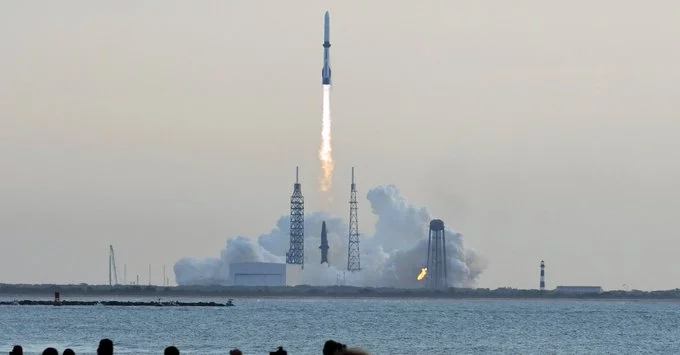
Blue Origin’s New Glenn rocket has achieved a major milestone with a successful reusable landing, answering one of the most common questions: can the heavy-lift rocket return safely? Yes, it can. However, the mission ultimately fell short after failing to deliver its critical space-based cell tower payload into orbit, raising fresh concerns about reliability and execution.
The mixed outcome highlights both the promise and the growing pains of next-generation space technology. While the landing proves the company’s reusability ambitions are on track, the payload failure underscores the complexity of orbital missions where even small errors can derail entire objectives.
Reusable Rocket Technology Shows Real Progress
New Glenn’s successful landing marks a significant leap forward in reusable rocket engineering. The ability to return and recover a massive booster safely is a cornerstone of reducing launch costs and increasing mission frequency. This achievement places Blue Origin firmly in the race to dominate commercial spaceflight with scalable, reusable systems.
Engineers demonstrated precise control during descent, showcasing advancements in guidance systems, propulsion, and landing accuracy. These improvements are critical for long-term sustainability in space operations. Reusability is no longer just an experimental concept—it is becoming an operational standard.
Despite the positive milestone, the landing alone cannot define mission success. Space missions are judged on complete execution, and in this case, the failure to deploy the payload significantly dampened the achievement.
Payload Delivery Failure Raises Critical Questions
The mission’s primary objective was to deploy a space-based cellular tower designed to expand global connectivity. Unfortunately, the payload did not reach its intended orbit, leaving the mission incomplete. This failure has sparked questions about system integration, stage separation, and onboard payload deployment mechanisms.
Early indications suggest that while the rocket performed well during ascent and landing phases, a malfunction occurred during the payload deployment sequence. Whether this was due to mechanical failure, software issues, or environmental conditions remains under investigation.
For stakeholders and customers, payload reliability is just as important as launch capability. A rocket that lands successfully but fails to deliver its cargo cannot yet be considered mission-ready for high-stakes commercial use.
What This Means for Future Space Missions
This outcome reflects a broader reality in the space industry: innovation often comes with setbacks. Even as reusable rockets become more advanced, the complexity of delivering payloads into precise orbits remains a major challenge. Each mission provides valuable data that helps refine future launches.
Blue Origin is likely to use this experience to improve its systems and address weaknesses in payload deployment. The company has invested heavily in long-term infrastructure, and setbacks like this are often part of the iterative development process.
For the industry, the event serves as a reminder that reliability must extend beyond launch and landing. End-to-end mission success—including payload delivery—is the ultimate benchmark for commercial viability.
Balancing Breakthroughs and Setbacks in Space Innovation
New Glenn’s mission is a clear example of how progress and failure can coexist in cutting-edge technology. The successful landing proves that reusable heavy-lift rockets are becoming more dependable, offering hope for more cost-effective space access in the future.
At the same time, the payload failure highlights the need for continued testing and refinement. Space missions operate under extreme conditions, and even minor issues can have major consequences. This balance between achievement and challenge is what drives innovation forward.
As the industry watches closely, future New Glenn launches will be critical in determining whether Blue Origin can turn this partial success into a fully reliable system. The next missions will not just aim to land—they will need to deliver, proving that the rocket can complete every phase of its journey.














Comment