Alerts

-
4 minutes, 11 seconds
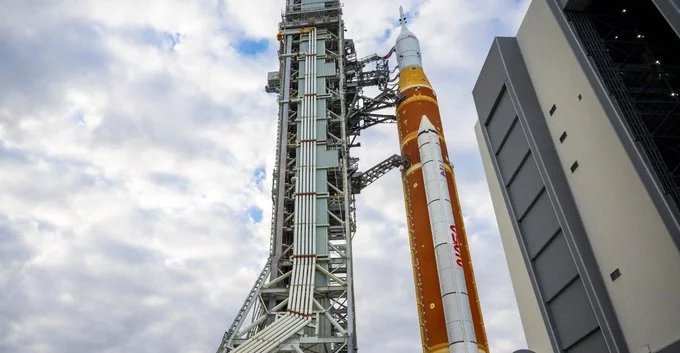
NASA is making bold moves to establish humanity’s presence on the Moon. The space agency recently revealed plans to build a $20 billion lunar base, aiming to transform the Moon from a distant dream into a functional hub for exploration. The project is part of NASA’s broader vision to expand human activity beyond Earth, including sending astronauts on longer missions and testing technologies for Mars.
This ambitious lunar outpost is not just about exploration—it’s intended to serve as a springboard for deep-space missions. By creating a sustainable base, NASA hopes to test life-support systems, energy production, and construction methods that could be used on Mars and beyond.
NASA head Jared Isaacman emphasized that the Moon base will support both scientific research and commercial activities. The plan includes habitats for astronauts, laboratories for experiments, and landing pads for reusable spacecraft. The Moon’s proximity makes it an ideal testing ground for technologies that could one day keep humans alive on more distant planets.
The project also highlights collaboration with private space companies and international partners. This combination of government and private sector expertise is expected to accelerate construction and reduce costs, while promoting innovation in spacecraft, robotics, and lunar infrastructure.
Alongside the Moon base, NASA is preparing to launch a nuclear-powered spacecraft to Mars by the end of 2028. This nuclear propulsion system promises faster transit times and more efficient fuel use compared to traditional chemical rockets. Faster travel reduces risks for astronauts and allows for more ambitious exploration missions, including long-term stays on Mars.
Isaacman stressed that these missions are interconnected. “The Moon serves as a proving ground,” he said. “Lessons learned there will directly influence our ability to safely send humans to Mars.” This integrated approach is crucial for NASA’s long-term vision of sustainable, interplanetary exploration.
Building a Moon base and launching a nuclear-powered spacecraft are no small feats. Engineers must overcome challenges like extreme temperatures, radiation, and limited resources on the Moon. Supply chains for construction materials, energy storage, and life support systems will need to be robust and reliable.
Despite these hurdles, the potential benefits are enormous. A functioning lunar base could pave the way for mining resources, advancing scientific knowledge, and inspiring a new generation of engineers and explorers. The Moon may soon evolve from a symbol of distant curiosity to a gateway for human expansion into the solar system.
NASA’s $20 billion Moon base and nuclear Mars spacecraft signal a new chapter in space exploration. By focusing on sustainability, technology testing, and international collaboration, the agency aims to establish permanent human outposts beyond Earth. These ambitious plans not only push the boundaries of science but also capture the imagination of the public, proving that humanity’s reach into the cosmos is only beginning.










Comment