
-
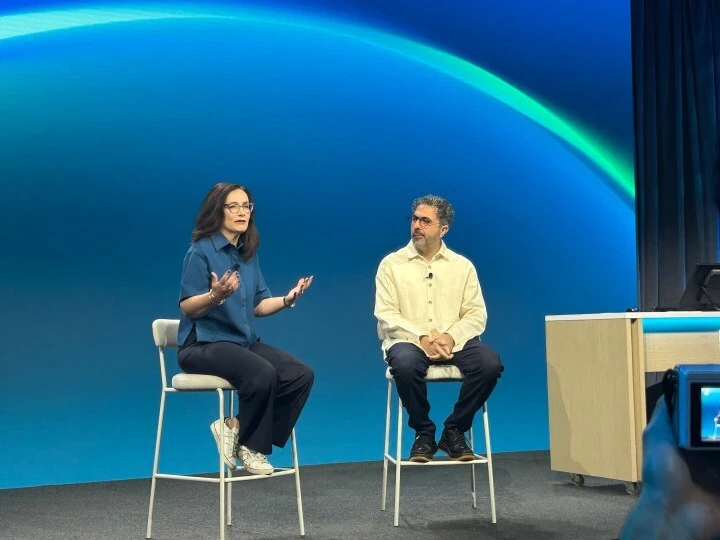
Microsoft announced the launch of its first cybersecurity-specialized AI model and a new AI security platform during a small event in San Francisco. The new offerings—MAI-Cyber-1-Flash and Perception—aim to outpace competitors like Anthropic, Google, and OpenAI in the rapidly evolving AI security space.
Microsoft describes MAI-Cyber-1-Flash as a model designed "to find challenging vulnerabilities in complex codebases". It integrates with MDASH, Microsoft’s harness for software vulnerability identification and remediation. According to Mustafa Suleyman, CEO of Microsoft AI, the model coupled with GPT 5.4 inside MDASH beats rival models on the Cyber Gym benchmark—including Gemini, GPT 5.5 Cyber, GPT 5.6 Sol, and Mythos 5. "We’re shipping this into production immediately," Suleyman added.
Microsoft claims MAI-Cyber-1-Flash is both more powerful and more cost-effective than competing AI security models, based on its performance on established industry benchmarks.
The Perception platform deploys teams of AI agents—red, blue, and green teams—to automate and assist security workflows. This includes identifying, triaging, and remediating bugs, and integrating with MDASH. Hayete Gallot, Microsoft’s vice president for security, emphasized that Perception helps defenders "defend against AI with AI at the scale and speed that the attackers have."
Provide detailed simulations of potential attacks, including context about threat actors and likely vulnerabilities.
Focus on detecting and triaging existing bugs in real time.
Take corrective actions to fix identified bugs and secure systems.
Dave Weston, lead engineer for Perception, described the platform as a massive efficiency upgrade: "In minutes, we have a fix for all of this—detection, posture fixing, and even a code fix."
Microsoft’s new security tools enter a crowded field, with Anthropic’s Mythos (via Glasswing) and OpenAI’s Daybreak already offering AI-powered cybersecurity solutions. Microsoft confirmed that Perception and MAI-Cyber-1-Flash will be available in preview starting November 3. As hackers increasingly weaponize AI, Microsoft positions these tools as essential for enterprise defenders seeking to stay ahead of threats.

2.5K articles

1.4K articles

34 articles

28 articles













Comment