
Alerts
-
5 minutes, 14 seconds
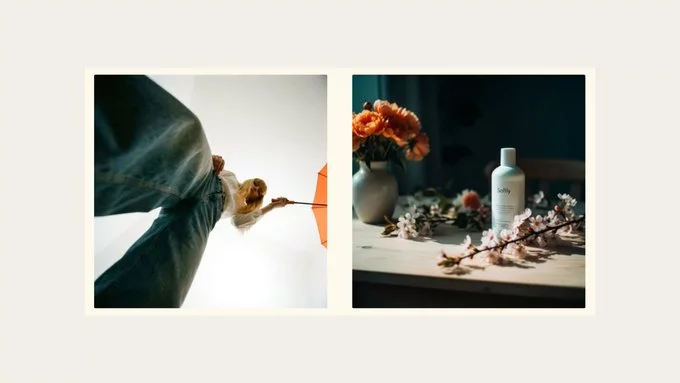
Microsoft has introduced three new foundational AI models designed to strengthen its position in the rapidly evolving artificial intelligence landscape. The announcement answers a growing question across the tech world: how will major cloud platforms compete with leading AI developers in 2026? These new systems—focused on transcription, voice, and image generation—are now available on Azure AI and the MAI Playground, signaling a major shift toward in-house AI control and optimization.
Microsoft’s latest move reflects a broader industry trend: reducing reliance on external AI providers while building tightly integrated internal systems. The three models—MAI-Transcribe-1, MAI-Voice-1, and MAI-Image-2—are designed to cover core multimodal tasks that power modern applications.
By developing its own foundational models, Microsoft gains greater flexibility in tuning performance, improving response times, and managing operational costs. This also allows deeper integration across its ecosystem, including enterprise tools and cloud services. For developers and businesses, the result is a more unified and predictable AI experience.
One of the most significant releases is MAI-Transcribe-1, a model focused on converting spoken language into highly accurate text. This tool is designed to support real-time transcription, meeting summaries, and multilingual processing.
In practical use, this means smoother workflows for professionals handling meetings, interviews, and customer interactions. The model emphasizes clarity in noisy environments and improved understanding of accents and speech variations. For enterprises, it could reduce manual documentation efforts while improving accessibility features across platforms.
MAI-Voice-1 introduces a new generation of voice synthesis technology aimed at making AI-generated speech sound more human-like. Instead of robotic or flat audio, the model focuses on tone variation, emotional expression, and natural pacing.
This advancement is particularly important for customer service tools, digital assistants, and content creation platforms. Businesses can now build voice interactions that feel more engaging and less mechanical. The result is a stronger emotional connection between users and AI-powered systems, which is becoming a key competitive factor in digital experiences.
The third model, MAI-Image-2, represents Microsoft’s latest step in generative visual intelligence. It improves image realism, detail accuracy, and prompt interpretation, allowing users to create more refined visuals from text descriptions.
This tool is expected to benefit industries such as marketing, design, gaming, and media production. Faster iteration cycles and higher-quality outputs mean creative teams can experiment more freely without relying heavily on traditional design pipelines. It also strengthens Microsoft’s position in the growing generative media space.
A key reason behind these releases is strategic control. By deploying models directly on Azure AI, Microsoft can optimize infrastructure efficiency while offering developers a tightly integrated environment.
This approach reduces dependency on third-party models and enhances performance consistency across services. It also gives enterprises more predictable pricing structures and security controls. As demand for scalable AI solutions grows, this level of integration becomes a strong competitive advantage in the cloud computing market.
The launch of these models signals a deeper shift in the AI industry. Rather than relying solely on external breakthroughs, major tech companies are increasingly building their own ecosystems to control innovation from end to end.
For users, this could translate into faster tools, more reliable performance, and richer AI-powered applications across devices and services. For developers, it opens new opportunities to build applications that are more tightly aligned with cloud-native AI capabilities.
Microsoft’s move highlights a clear direction: the future of AI will not be defined by a single model, but by integrated systems working seamlessly together.








Comment