Alerts

-
6 minutes, 19 seconds
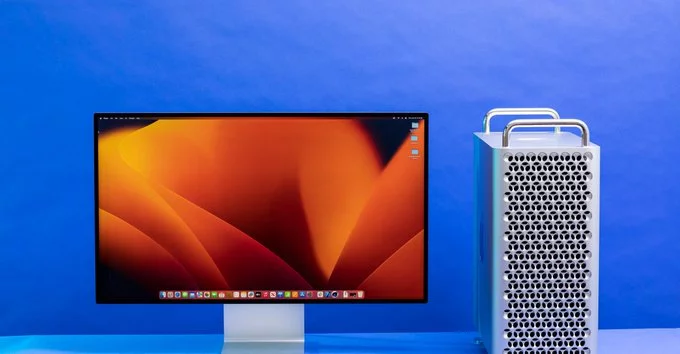
Apple’s Mac Pro is reportedly coming to an end, signaling a major shift in the company’s approach to professional computing. If you’re searching whether the Mac Pro is discontinued, canceled, or replaced, current industry signals suggest Apple is stepping away from its classic modular workstation. After more than 20 years of evolution, the Mac Pro appears to be fading out as Apple focuses on Apple Silicon-powered systems. This change is reshaping how professionals think about high-performance desktops, especially in fields like video editing, 3D design, and software development.
The Mac Pro has long been Apple’s most powerful and customizable desktop machine. It was designed for professionals who needed extreme performance, expandable memory, multiple GPUs, and internal upgrades. For years, it stood as a symbol of creative power, especially in film studios, music production houses, and engineering environments. However, Apple’s direction has changed dramatically with its transition to Apple Silicon.
Instead of building machines meant for internal upgrades, Apple now focuses on tightly integrated systems. Performance is no longer dependent on modular hardware but on highly optimized chip architecture. This shift has gradually reduced the role of traditional workstation towers like the Mac Pro in Apple’s ecosystem.
Apple’s decision is closely tied to the success of its Apple Silicon chips. These chips combine CPU, GPU, and memory into a single unified design, delivering high performance with far greater efficiency than traditional desktop components. This approach has allowed Apple to achieve workstation-level power in smaller, quieter, and more energy-efficient machines.
Because of this architecture, the need for large, expandable desktops has diminished. Many workflows that once required hardware upgrades can now be handled through software optimization and cloud-based tools. Apple is also prioritizing consistency across its product line, ensuring laptops and desktops share similar performance foundations.
This strategy reduces complexity for both users and developers. It also allows Apple to control performance more tightly, delivering predictable results across devices without relying on third-party hardware upgrades or configurations.
For professionals in creative and technical industries, the end of the Mac Pro era represents a major transition. Video editors, motion designers, engineers, and developers have traditionally relied on workstation towers for demanding projects. These systems allowed upgrades over time, extending their lifespan and adapting to growing workloads.
With Apple moving away from modular machines, professionals will increasingly depend on integrated systems. While Apple Silicon offers impressive raw performance, it changes how users scale their hardware over time. Instead of upgrading individual components, users may need to replace entire systems more frequently or shift certain workloads to cloud-based environments.
Some professionals may feel this limits flexibility, especially in high-end production environments. However, others will benefit from simpler setups, reduced maintenance, and improved performance consistency across devices.
Apple Silicon is the core reason behind this transformation. By designing its own chips, Apple has redefined what desktop performance looks like. Machines that were once considered “consumer-grade” now rival or exceed traditional workstations in many real-world tasks.
This shift also reflects a broader industry trend toward integration over customization. Rather than relying on expandable towers, the focus is now on efficiency, speed, and optimized workflows. Unified memory architecture allows faster data access, while improved thermal design reduces the need for bulky hardware systems.
As a result, Apple can deliver powerful computing experiences in compact devices without sacrificing performance.
Even if the Mac Pro line is ending, its legacy remains significant. It represented an era when professionals depended on hardware expansion and long-term upgrade paths. Many creative industries were built around the flexibility that machines like the Mac Pro provided.
Moving forward, Apple is expected to continue refining its integrated desktop lineup. The future likely includes fewer product categories but more powerful unified systems. While some users may miss the modular freedom of the Mac Pro, others will embrace the simplicity and performance of Apple’s new architecture.
Ultimately, the end of the Mac Pro symbolizes a broader transformation in computing. The industry is shifting away from physical expansion toward intelligent, chip-level performance. For Apple, this marks not just the end of a product line, but the beginning of a new computing philosophy that will shape the next decade of professional technology.










Comment