
Alerts
-
3 minutes, 37 seconds
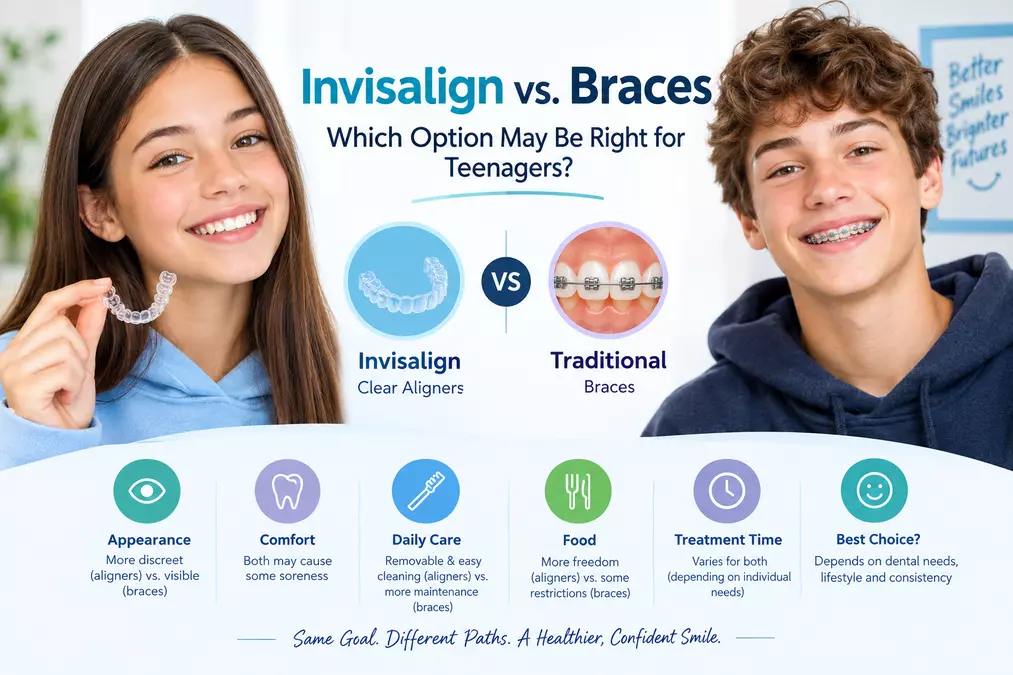
Straightening teeth during the teenage years can improve dental alignment, support oral hygiene, and help teenagers feel more confident about their smiles. Two common orthodontic options are traditional braces and Invisalign clear aligners. Both can correct many alignment problems, but they differ in appearance, daily care, and how they fit into a teenager's lifestyle. Understanding these differences can help parents and teenagers have a more informed conversation with an orthodontic professional.
Traditional braces use brackets attached to the teeth and connected by wires that gradually guide teeth into better positions. An orthodontist adjusts the braces throughout treatment to help achieve the planned alignment.
Braces can treat a wide range of orthodontic concerns, including crowded teeth, gaps, and certain bite problems. Because they remain attached to the teeth, teenagers do not need to remember to put them back in after meals. However, braces require careful cleaning around brackets and wires, and some foods may need to be avoided to prevent damage.
Invisalign treatment uses a series of custom-made, transparent aligners designed to move teeth gradually. The aligners are removable, allowing teenagers to take them out for meals, brushing, and flossing.
Many teenagers appreciate that clear aligners are less noticeable than traditional braces. However, they must be worn according to the orthodontist's instructions, typically around 20 to 22 hours daily. Forgetting to wear them consistently can affect treatment progress. Clear aligners may also not be suitable for every orthodontic concern, so an individual assessment is essential.
Appearance is an important consideration for many teenagers. Traditional braces are visible when speaking and smiling, although tooth-colored options may be available. Invisalign aligners are generally less noticeable, which may appeal to teenagers who prefer a more discreet treatment.
Both options can cause temporary pressure or soreness as teeth begin moving. Braces may irritate the cheeks and lips, especially after adjustments, while aligners may create pressure when switching to a new set. Comfort varies from person to person, and the orthodontic team can offer guidance on managing common discomfort.
Braces require careful brushing around brackets and wires, along with flossing techniques or tools designed to clean between teeth. Sticky, hard, and chewy foods may need to be limited because they can damage orthodontic appliances.
With Invisalign, teenagers can remove their aligners while eating and drinking anything other than water. They should brush their teeth before putting the aligners back in and clean the aligners as directed. This flexibility can be convenient, but it also requires responsibility and consistency.
Parents should consider their teenager's daily habits when discussing treatment choices. A teenager who frequently forgets instructions may find removable aligners challenging, whereas someone who is committed to following a routine may manage them well.
Treatment duration depends on several factors, including the complexity of the alignment problem, the type of appliance used, and how consistently treatment instructions are followed. Some cases may be completed within months, while others require a longer period.
Neither braces nor Invisalign is automatically faster for every teenager. An orthodontist can evaluate tooth positioning, jaw alignment, and overall oral health before recommending an appropriate treatment plan.
Families can explore orthodontic treatment options to learn more about approaches to improving tooth alignment and bite function.
The right choice depends on individual dental needs, lifestyle, personal preferences, and the orthodontist's assessment. Traditional braces may be appropriate for teenagers who need more complex tooth movements or prefer a treatment that cannot be removed. Invisalign may suit eligible teenagers who want a less noticeable option and can reliably wear their aligners as directed.
Parents and teenagers should discuss the benefits, limitations, costs, maintenance requirements, and expected treatment duration of each option before making a decision. The most suitable approach is one that addresses the teenager's orthodontic needs while fitting their ability to follow the treatment plan.
Both Invisalign and traditional braces can help teenagers achieve better tooth alignment when used appropriately. Braces offer a fixed treatment option for a broad range of orthodontic problems, while clear aligners provide a removable and less noticeable alternative for suitable cases. A professional orthodontic evaluation can help families understand which approach best meets their teenager's needs and supports a healthy, confident smile.



Comment