
Alerts
-
3 minutes, 54 seconds
A bright smile can help people feel more confident, but teeth can gradually become stained or discolored over time. Coffee, tea, red wine, tobacco, aging, and certain medications can all contribute to changes in tooth color. When looking for ways to improve their smile, many people consider professional teeth whitening or at-home whitening products. Understanding the differences between these options can help individuals choose an approach that suits their needs and protects their oral health.
Tooth discoloration can develop for several reasons. Surface stains often result from foods, beverages, and tobacco products that leave pigments on the enamel. As people age, enamel naturally becomes thinner, allowing the yellowish dentin underneath to become more visible.
Some discoloration originates inside the tooth and may be associated with trauma, certain medications, or changes in tooth development. These deeper stains may not respond to ordinary whitening products in the same way as surface stains. A dental examination can help identify the cause and determine which treatment options may be effective.
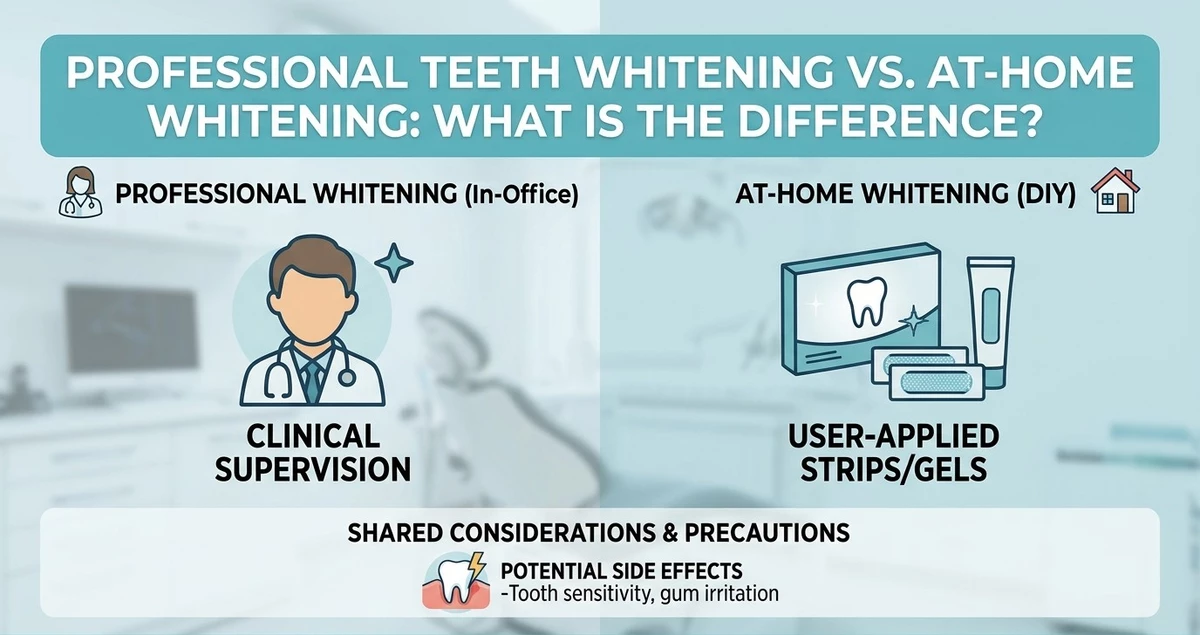
Professional teeth whitening is performed or supervised by a dental professional using whitening agents designed to lighten the natural color of teeth. Before treatment, the dentist can examine the teeth and gums, identify existing dental concerns, and discuss realistic expectations.
Depending on the method used, professional whitening may produce noticeable results in a relatively short period. Dental supervision also helps identify issues such as untreated cavities, gum inflammation, or existing restorations that could affect the treatment plan. Crowns, veneers, and fillings do not whiten in the same way as natural teeth, so patients with visible restorations may need additional planning to achieve a consistent appearance.
At-home whitening options include whitening strips, gels, trays, and certain toothpaste products. Whitening strips and gels generally use peroxide-based ingredients to lighten stains, while whitening toothpastes primarily help remove surface discoloration through polishing ingredients.
Results vary according to the product, its ingredients, the original tooth color, and how consistently it is used. Some products may take several days or weeks to produce visible changes. Following the manufacturer's directions is important because excessive use can contribute to tooth sensitivity or gum irritation.
People with sensitive teeth, gum problems, untreated decay, or dental restorations should consult a dentist before beginning a whitening routine.
Professional whitening offers individualized assessment and guidance, which can be particularly helpful when discoloration has multiple causes or when a person has existing dental concerns. At-home products provide convenience and may be more accessible for people who want to address mild surface stains.
However, neither option guarantees the same result for every person. Whitening effectiveness depends on the type of discoloration, the condition of the teeth, and the whitening method. Professional treatment may involve a higher initial cost, while repeated purchases of at-home products can also add up over time.
The best choice depends on personal goals, oral health, budget, and the advice of a qualified dental professional.
Temporary tooth sensitivity and gum irritation are among the most common side effects of whitening treatments. These effects are often mild, but they can become more noticeable when products are used too frequently or incorrectly.
Whitening products should only be used as directed. People experiencing persistent pain, significant gum irritation, or unusual changes in their teeth should stop using the product and seek professional advice. Whitening is not suitable for every dental condition, making an assessment especially important before treatment.
Good oral hygiene can help maintain the appearance of teeth after whitening. Brush twice daily with fluoride toothpaste, clean between your teeth regularly, and attend routine dental checkups. Limiting frequent exposure to staining beverages and rinsing with water after consuming them may also help reduce surface staining.
Avoid smoking and tobacco products, which can contribute to discoloration and other oral health problems. Remember that natural teeth may gradually become darker again over time, so any maintenance whitening should follow appropriate professional guidance.
To explore treatment options for a brighter smile, learn more about teeth whitening.
Professional and at-home whitening methods can both help improve the appearance of naturally stained teeth, but they differ in supervision, convenience, cost, and expected results. Understanding the cause of discoloration is an important first step toward choosing an appropriate treatment.
With realistic expectations, safe product use, and consistent dental care, individuals can work toward a brighter smile while protecting their teeth and gums. Consulting a dentist before starting treatment can help ensure that whitening is suitable for your oral health needs.




Comment