Alerts

-
3 minutes, 3 seconds
The National Science Foundation (NSF) has launched a bold new initiative called TechAccess: AI-Ready America to coordinate AI workforce readiness across every U.S. state and territory. This program brings together the Department of Labor, Department of Agriculture, and the U.S. Small Business Administration. Its goal is simple: help workers, small businesses, and local governments adapt to AI's impact on the economy.
When labor markets face sudden shocks—like a recession, a pandemic, or a new technology like AI—local leaders are often overwhelmed. They must quickly figure out what workers need, organize schools and businesses, find funding, and keep improving their approach. This work is usually underfunded and invisible. But now, the government is stepping in to make it easier.
Francie Genz, a fellow at New America's Future of Work program, explains that coordination leaders must act like an orchestra conductor. They bring together many different groups, each with its own goals and rules. These groups include:
Without strong coordination, these groups often work in silos. They may even compete for students or funding. The new NSF program aims to fix that by creating state-level coordination hubs.
The program has three main parts:
These hubs will help states create a strategic plan for AI readiness. They will also connect existing programs—like the Agriculture Department's Cooperative Extension System or the Small Business Administration's Development Centers—so everyone works toward the same goal.
The NSF is now accepting letters of intent from nonprofits, higher education institutions, and some for-profit businesses. Hubs can receive about $1 million per year for three years. The goal is to award 10 hubs soon, and up to 56 in total, depending on funding availability.
Some states already have AI education programs. For example, the NSF's Advanced Technological Education program supports the National Applied AI Consortium, led by Miami Dade College, Houston City College, and Maricopa Community College District. But these efforts often don't connect with workforce boards or K-12 schools. The new initiative aims to change that by creating a shared vision at the state level.
The program focuses on three key areas where gaps are biggest:
This means more Americans will learn how to use AI in daily life and at work. Small businesses will get support to adopt AI tools. And local governments will be better prepared to serve their communities.
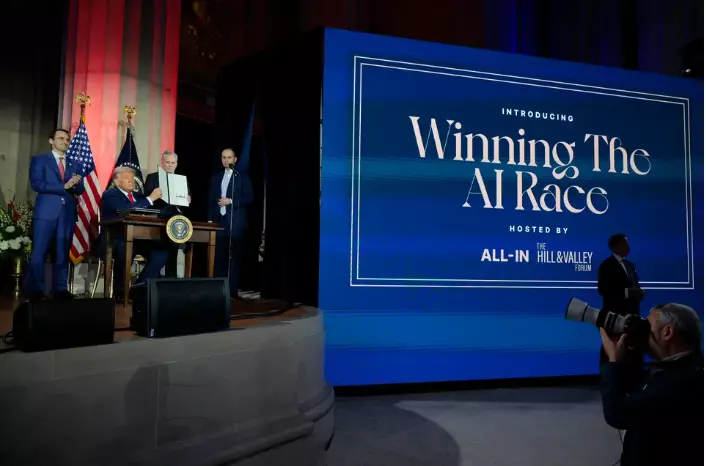
Funding for these hubs is limited, and the future is uncertain. The Trump administration's AI Action Plan calls for expanded AI skills, but the NSF has faced layoffs and budget cuts. Still, programs like AI-Ready America are a step in the right direction. They support bottom-up innovation while helping states coordinate their education and workforce strategies.
From red states to blue states, rural areas to urban centers, the coordination challenge is real. But with intentional effort, communities can help their students, workers, and businesses become AI-literate and ready for the future of work.










Comment