Google Veo expands portrait images into vertical AI video
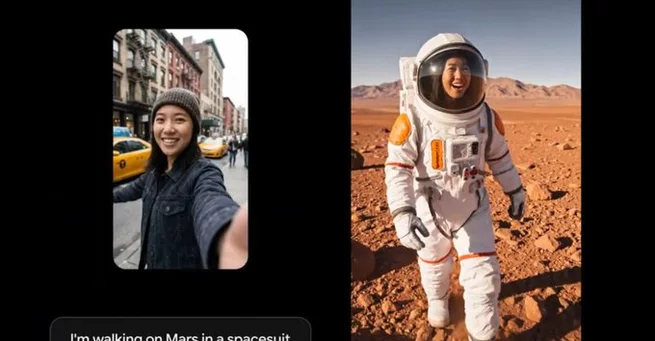
Google Veo is now able to turn portrait images into vertical AI video, answering a growing demand from creators who want social-ready clips without heavy editing. The update focuses on better visual consistency, native vertical formats, and higher resolution outputs. Users searching for how to make AI videos from photos or how to create vertical videos for TikTok and YouTube Shorts will find this release especially relevant. Google says the improvements make generated videos look closer to their reference images. The update applies to Veo 3.1 and builds on tools introduced last year. It also signals Google’s deeper push into creator-focused AI. For mobile-first platforms, this shift removes several production barriers.
Ingredients to Video gets smarter and more precise
At the center of the update is Google Veo’s “Ingredients to Video” tool, which lets users generate clips from up to three reference images. These images can define characters, environments, textures, and overall visual tone. With Veo 3.1, Google says the model now pays closer attention to these ingredients. Characters are more likely to stay visually consistent across multiple scenes. Objects, backgrounds, and textures can be reused without noticeable drift. This consistency is crucial for storytelling and brand content. The result is AI video that feels less random and more intentional.
Portrait images now work naturally in vertical formats
One of the most notable changes is native support for portrait-oriented images and vertical video output. Users can now generate videos in a 9:16 aspect ratio without cropping or reframing later. This makes Google Veo more practical for platforms like TikTok, Instagram Reels, and YouTube Shorts. Previously, creators often had to rely on editing software to adapt AI-generated clips. Now, the output is optimized from the start. Google had already enabled vertical video for text prompts last year. This update extends that capability to image-based generation.
Better storytelling and expressive video results
Google says the Veo 3.1 update also improves expressiveness, dialogue, and narrative flow in generated videos. Scenes transition more smoothly, and visual details remain stable across cuts. These improvements are subtle but important for creators producing multi-clip sequences. Consistent characters help viewers stay immersed. Reusable visual elements reduce the need for repeated prompting. Over time, this could make AI-assisted video creation feel more like directing than experimenting. The changes reflect Google’s focus on creative control rather than novelty alone.
4K upscaling brings higher-quality AI video
Another key upgrade is resolution upscaling, with Veo 3.1 now supporting 4K output. This is a significant jump from the previous 1080p limit. Higher resolution makes AI videos more usable for professional projects and large screens. It also helps preserve detail when clips are edited or compressed by social platforms. For creators who care about visual quality, this closes an important gap. Google positions this as part of making Veo production-ready. The move aligns with industry expectations for premium video content.
Gemini and YouTube integrations broaden access
Google is rolling out the improved Ingredients to Video and portrait features inside the Gemini app starting today. For the first time, these tools are also being integrated into YouTube Shorts and the YouTube Create app. This tight integration lowers the barrier for everyday creators to experiment with AI video. Users won’t need separate workflows or third-party tools. Google is clearly embedding Veo where creators already work. As AI video becomes more accessible, vertical-first content is likely to grow even faster.













Comment