
Alerts
-
4 minutes, 13 seconds
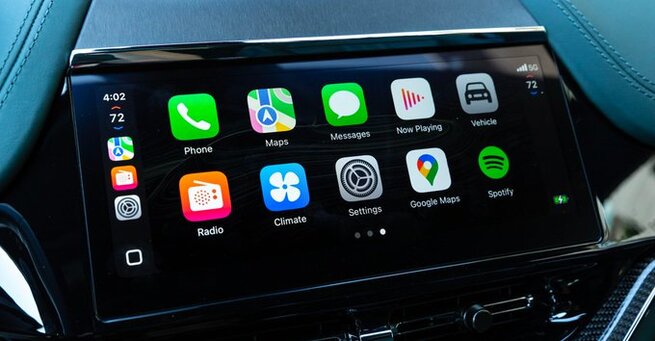
General Motors (GM) isn’t ready to rip off the CarPlay/Android Auto band-aid quite yet. Despite earlier statements hinting at a complete phase-out, the automaker is now clarifying that Apple CarPlay and Android Auto will remain available in its gas-powered vehicles for the foreseeable future. This cautious approach underscores GM’s measured transition toward a software-defined future.
After GM CEO Mary Barra suggested that support for Apple CarPlay and Android Auto would eventually disappear from all gas models, customers and tech enthusiasts reacted strongly. The company had already eliminated phone projection features from most of its new electric vehicles, signaling a similar move for its combustion cars.
However, GM now says it’s taking a slower, more deliberate path. Spokesperson Malorie Lucich confirmed, “We are not making any changes to existing vehicles. If your car supports Apple CarPlay or Android Auto, that will continue.”
This statement reassures current drivers that their infotainment experience won’t change overnight.
GM’s long-term goal is still to build a unified, deeply integrated infotainment system. The automaker’s upcoming centralized vehicle computing platform—announced last week—is designed to reduce control modules and enhance over-the-air (OTA) update capabilities.
The system will debut with the Cadillac Escalade IQ in 2028 before expanding to other models, including gas-powered vehicles. Until then, Apple and Google’s phone mirroring features remain safe.
The decision to hold off reflects a balance between innovation and customer satisfaction. Many drivers have grown accustomed to seamless phone integration for navigation, music, and communication. Removing these systems too soon could risk alienating loyal customers.
GM acknowledges this, emphasizing that the shift toward an all-in-one, software-defined experience will “happen over time, not overnight.” The company continues to collaborate with Apple and Google to ensure that users enjoy familiar, reliable interfaces during the transition.
GM’s software ambitions are clear: it wants to control more of the in-car experience. By developing a proprietary infotainment system powered by its Ultifi software platform, GM aims to deliver faster updates, better personalization, and tighter integration with vehicle functions.
Still, dropping CarPlay and Android Auto entirely remains a controversial move, especially when competitors like Ford and Hyundai continue to embrace them. GM’s decision to delay the shift could help it avoid a customer backlash while refining its next-generation tech.
GM isn’t ready to rip off the CarPlay/Android Auto band-aid quite yet—and that’s likely a good thing for its drivers. The company is taking time to perfect its centralized computing platform and ensure a smooth, user-friendly transition. For now, fans of Apple and Google’s in-car experiences can breathe easy knowing their favorite features are staying put.










Comment