
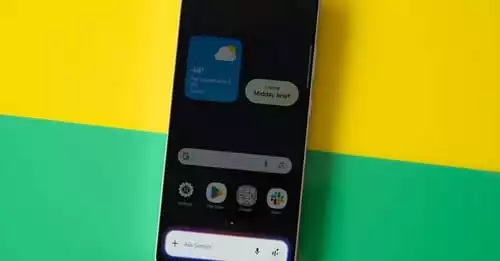
Google has officially delayed its plan to replace Google Assistant with Gemini on Android devices. Originally slated for completion by the end of 2025, the company now confirms the full transition won’t happen until 2026. In a statement released Friday, Google emphasized its commitment to a “seamless transition,” acknowledging that more time is needed to ensure the AI-powered upgrade meets user expectations without disrupting daily functionality. For millions who rely on voice commands for everything from sending texts to setting alarms, Assistant isn’t going anywhere just yet.
If you’re using a compatible Android phone today, you’ll continue to have access to Google Assistant throughout 2025. Once the Gemini rollout begins in earnest next year, devices that meet Gemini’s system requirements will gradually lose access to the legacy Assistant—both as a built-in feature and as a downloadable app. Google hasn’t specified which models will be affected first, but flagship devices like the Pixel 9 series and Samsung Galaxy S25 line are likely early candidates. Users on older hardware may retain Assistant longer, though support will eventually end across the board.
While the Android home screen still belongs to Assistant, Gemini has quietly infiltrated other corners of Google’s ecosystem. The AI is already active on Wear OS smartwatches, Nest speakers, Google Home displays, and Android Auto. Earlier this year, Google also enabled core assistant functions—like making calls, sending messages, and setting timers—through Gemini, even when users opted out of data collection for AI training. That move signaled Google’s confidence in Gemini’s readiness, while also giving users a low-stakes preview of the future.
Google’s decision to extend the timeline reflects growing industry pressure to prioritize reliability over rapid AI deployment. With competitors like Apple Intelligence and Amazon’s Alexa+ advancing quickly, Google can’t afford a botched transition that frustrates users or damages trust. The extra months will likely go toward refining voice recognition accuracy, reducing latency, and ensuring cross-device consistency—especially for non-English speakers and users in emerging markets. As AI assistants become central to smartphone experiences, even small hiccups can have outsized consequences.
One of Gemini’s distinguishing features is its granular privacy controls. Unlike the older Assistant, which had limited opt-out options for data usage, Gemini lets users disable “Gemini Apps Activity”—meaning voice interactions won’t be saved or used to train models. This flexibility appears to be a key part of Google’s strategy: easing users into the new system without forcing them into opaque data practices. The continued availability of this toggle during the 2025 overlap period may help build goodwill ahead of the full switch.
Barring last-minute changes, 2025 will be Google Assistant’s final full year of service on supported Android devices. The company hasn’t announced a sunset date yet, but expect phased deactivation starting in early 2026. Once removed, there will be no official way to reinstall Assistant—even via APK—suggesting Google is determined to consolidate its AI efforts under the Gemini brand. For power users who’ve built routines around Assistant Routines or third-party integrations, this transition may require significant reconfiguration.
While the delay might seem like a setback, it’s arguably a savvy move. Rushing to replace a deeply embedded feature like Assistant could backfire, especially if early adopters report bugs or missing functionality. By buying time, Google positions itself to launch a polished, cohesive experience that leverages Gemini’s multimodal strengths—like image understanding and contextual awareness—while maintaining the reliability users expect. In the high-stakes battle for AI dominance, a smooth transition might be worth more than being first.
Gemini Replaces Google Assistant in 2026, Not... 0 0 0 2 2
2 photos

𝗦𝗲𝗺𝗮𝘀𝗼𝗰𝗶𝗮𝗹 𝗶𝘀 𝘄𝗵𝗲𝗿𝗲 𝗽𝗲𝗼𝗽𝗹𝗲 𝗰𝗼𝗻𝗻𝗲𝗰𝘁, 𝗴𝗿𝗼𝘄, 𝗮𝗻𝗱 𝗳𝗶𝗻𝗱 𝗼𝗽𝗽𝗼𝗿𝘁𝘂𝗻𝗶𝘁𝗶𝗲𝘀.
From jobs and gigs to communities, events, and real conversations — we bring people and ideas together in one simple, meaningful space.




Comments