
Alerts
-
3 minutes, 37 seconds
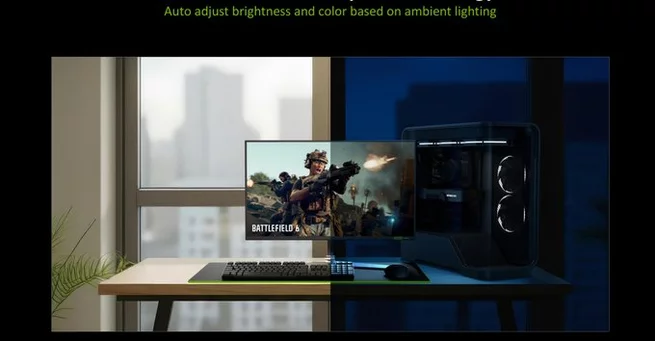
Nvidia is bringing a smart upgrade to its G-Sync Pulsar monitors, letting screens automatically adjust brightness and color based on your room’s lighting. Similar to a modern laptop display, these monitors use a built-in light sensor to detect ambient brightness and color temperature. Whether you’re gaming in daylight or working late at night, the display adapts to reduce eye strain and provide optimal visuals. Users can also manually customize or disable the feature through the monitor’s on-screen settings.
The new monitors feature G-Sync Ambient Adaptive Technology, which intelligently shifts color temperature and brightness. According to Michael McSorley, Nvidia’s product marketing manager, the display brightens and adopts cooler tones during daytime. At night, it lowers brightness and warms colors to reduce glare. This automatic adaptation ensures consistent image quality without requiring constant manual adjustments. For esports professionals or content creators, this means less fatigue during long sessions and a smoother viewing experience.
Nvidia’s first monitors with this technology launch on January 7, starting at $599. Acer, AOC, Asus, and MSI are all offering 27-inch IPS displays with 1440p resolution and refresh rates up to 360Hz. These monitors are designed for competitive gaming and professional esports, combining fast performance with adaptive visuals. Nvidia’s partnership with MediaTek integrates G-Sync features directly into scalers, removing the need for dedicated G-Sync modules and simplifying the setup for users.
For gamers, the adaptive brightness helps maintain consistent colors across different lighting conditions, giving a competitive edge during tournaments. Professionals in creative fields also benefit from accurate color representation and reduced eye strain. The combination of high refresh rates and automatic color adjustment ensures smooth gameplay and more precise visual feedback, especially during fast-paced action or critical design work.
Despite the automated features, Nvidia keeps full user control a priority. Through the monitor’s on-screen display, users can tweak the brightness and color settings, or turn off the adaptive mode entirely. This balance of automation and customization caters to both tech enthusiasts who want convenience and power users who prefer fine-tuned control.
G-Sync Pulsar’s Ambient Adaptive Technology represents a shift in monitor design, bringing laptop-like intelligence to desktop displays. As more brands adopt similar features, we can expect next-generation monitors to become smarter, faster, and more user-friendly. Nvidia’s rollout sets a new benchmark for gaming monitors, blending performance, comfort, and visual innovation seamlessly.










Comment