Alerts

-
3 minutes, 41 seconds
Hair loss can affect both appearance and confidence, especially when the hairline starts receding or thinning becomes more noticeable. For people looking for a long-term solution, FUE hair transplant in India has become a popular surgical option because it can restore hair using the patient’s own healthy follicles.
At Crown - The Hair Transplant Experts, FUE hair transplantation is planned according to the patient’s hair loss pattern, donor hair availability, facial proportions and long-term expectations. The objective is not simply to add hair, but to create a natural-looking hairline and appropriate density.
FUE, or Follicular Unit Extraction, is a hair transplant technique in which individual follicular units are carefully extracted from the donor area, usually the back and sides of the scalp. These grafts are then prepared and implanted into areas affected by hair loss.
Unlike traditional strip harvesting, FUE does not involve removing a linear strip of scalp. Instead, tiny extraction sites are distributed throughout the donor area, allowing the area to heal gradually.
The quality of an FUE procedure depends on several factors, including graft handling, extraction technique, recipient-site design, implantation and the surgeon’s ability to plan the procedure according to the patient’s future hair-loss pattern.
India has developed into an important destination for hair restoration, with experienced hair transplant surgeons and modern treatment facilities available in major cities.
Some potential advantages of FUE include:
However, FUE is not automatically the right procedure for everyone. A proper consultation is necessary to determine whether the patient has sufficient donor hair and whether the expected result is realistic.
An FUE procedure generally begins with an assessment of the scalp and donor area. The surgeon designs the hairline and determines the approximate number of grafts required.
The donor area is prepared, and follicular units are individually extracted using specialised instruments. The grafts are then examined and prepared before being placed into carefully created recipient sites.
The direction, angle and distribution of the implanted follicles are particularly important. A well-designed hairline should complement the patient’s facial features rather than appear artificially straight or dense.
At Crown - The Hair Transplant Experts, the treatment plan is customised rather than following a fixed graft number for every patient.
After an FUE procedure, patients may experience temporary redness, mild swelling, sensitivity or small crusts around the treated areas. These effects generally improve as the scalp heals.
The transplanted hair commonly goes through a temporary shedding phase during the early months. This can be concerning for patients, but shedding of the visible hair shaft does not necessarily mean that the transplanted follicle has been lost.
New growth develops gradually. Hair density typically improves over several months, and the final result is generally assessed after sufficient time has passed for the transplanted follicles to mature.
Following the surgeon’s aftercare instructions is essential during recovery.
FUE may be suitable for adults experiencing certain patterns of hair loss who have an adequate donor supply and realistic expectations.
A consultation should assess:
Medical treatment may also be recommended alongside or instead of surgery when appropriate.
Choosing a clinic should involve more than comparing prices. Patients should consider the surgeon’s qualifications, experience, approach to hairline design, graft-handling protocols, before-and-after results and the quality of consultation.
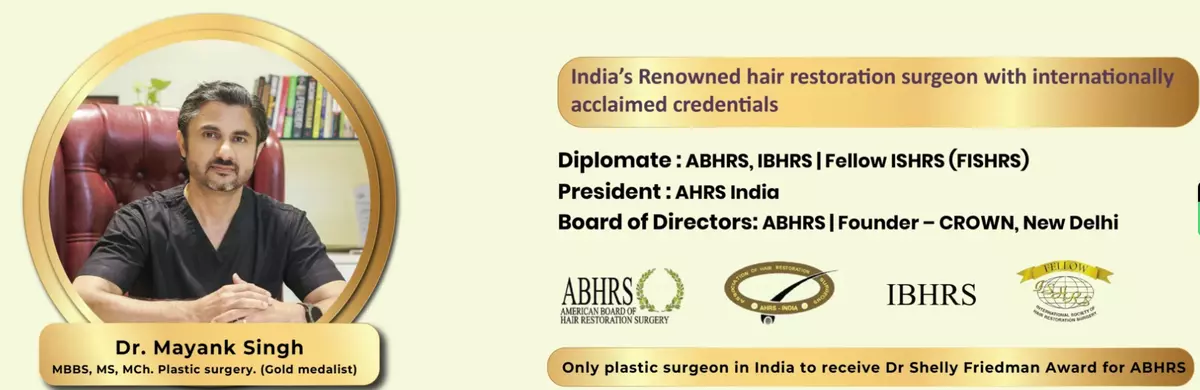
At Crown - The Hair Transplant Experts, the focus is on personalised planning, natural-looking results and appropriate donor management. Dr. Mayank Singh evaluates each patient individually before recommending the most suitable hair restoration approach.
If you are considering FUE hair transplant in India, a professional consultation can help you understand your donor capacity, expected graft requirement, treatment options and realistic results before making a decision.
Book a consultation with Crown - The Hair Transplant Experts to discuss your hair restoration goals and determine whether FUE is suitable for you.




Comment