Alerts

-
5 minutes, 35 seconds
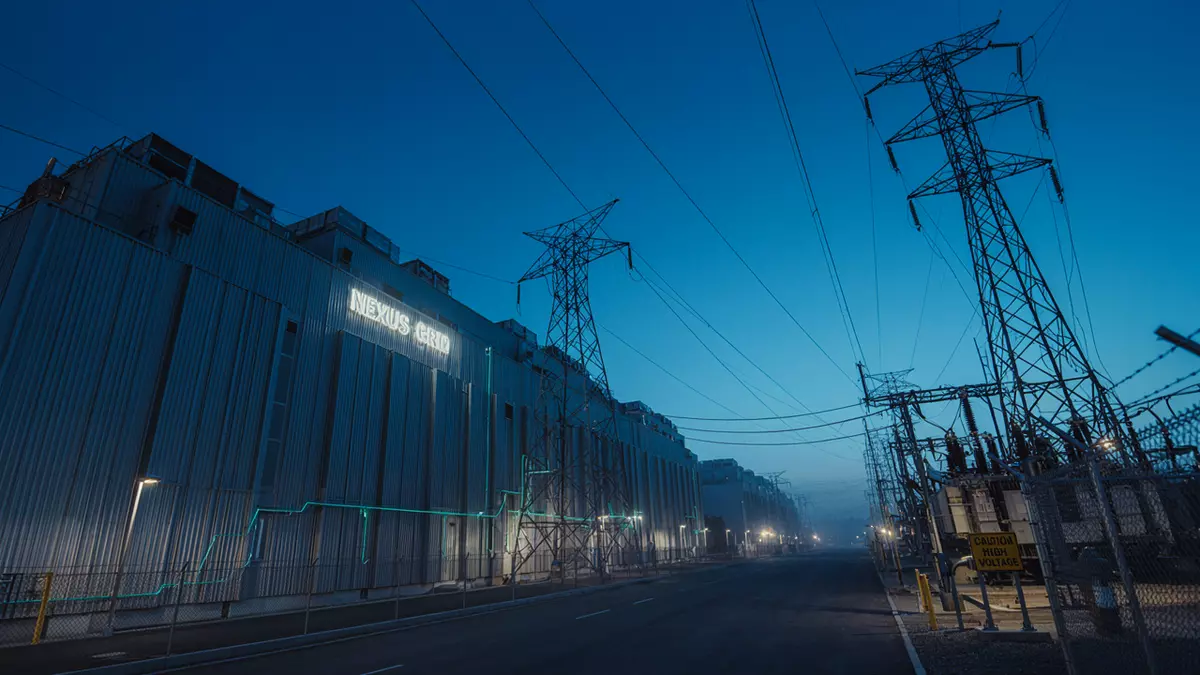
The rapid expansion of cloud computing, artificial intelligence, high-performance computing, and digital services is driving demand for increasingly large data centers. Unlike conventional commercial facilities, modern data centers can introduce very large, concentrated electrical loads within relatively small geographic areas. Connecting these facilities to the transmission system therefore requires careful engineering, detailed modeling, and close coordination among utilities, transmission owners, system operators, and project developers.
A successful data center grid interconnection is not simply a matter of determining whether a nearby substation has enough capacity. Engineers must evaluate how the proposed load affects voltage, power flows, system stability, protection, short-circuit levels, power quality, and transmission infrastructure. MISO's current large-load initiatives also emphasize reliability requirements, modeling, visibility, ramping, and operational considerations for these emerging loads.
One of the first engineering tasks is developing an accurate representation of the facility's expected electrical demand. A data center's nameplate capacity alone does not provide enough information for a meaningful interconnection study.
Engineers need to understand peak demand, normal operating load, minimum load, staged expansion, energization sequence, and the expected ramp from initial operation to full capacity. Redundant electrical systems can also produce operating conditions that differ significantly from traditional industrial facilities.
Large data centers may use UPS systems, power electronic converters, generators, battery energy storage, cooling equipment, and other dynamic loads. These components can affect how the facility responds to disturbances.
For this reason, developers should establish realistic load assumptions early in the project. MISO has been working on requirements addressing large-load forecasting and operational visibility, including proposed forecasting concepts intended to support reliable system commitment and dispatch.
A robust large load interconnection assessment typically involves multiple layers of power system analysis. Steady-state studies can evaluate voltage profiles, thermal loading, transformer utilization, and transmission constraints under normal and contingency conditions.
Short-circuit analysis is also important. Adding a major load can alter fault-current contributions and affect breaker duties, protection settings, and equipment ratings, particularly when the project includes onsite generation or inverter-based resources.
Dynamic and electromagnetic transient studies may become increasingly important when the facility includes substantial power electronics, UPS systems, battery storage, or other equipment with fast control responses.
The objective is not simply to identify whether an interconnection is technically possible. Engineers must determine what network upgrades, operating limitations, protection changes, or mitigation measures may be required to maintain reliable operation.
MISO's current framework recognizes that large concentrated loads can materially affect transmission planning and operational reliability, creating a need for defined modeling and reliability requirements.
For projects within the MISO footprint, developers need to pay particular attention to evolving requirements and study processes. MISO large load studies are becoming increasingly important as the region evaluates rapidly growing demand from data centers, advanced manufacturing, and other energy-intensive facilities.
MISO has identified large-load interconnection as an active planning and stakeholder priority. Its current initiatives address topics such as reliability requirements, large-load project review, resource alignment, partial-load service, and the relationship between new load and associated generation.
Another important consideration is project maturity. A proposed data center may change its ultimate MW requirement, energization schedule, phasing, or associated generation strategy during development. Engineering studies should therefore clearly document the assumptions behind the modeled project.
MISO stakeholder discussions have specifically highlighted the importance of accurate load forecasts and early disclosure of project characteristics because changes in large-load assumptions can influence transmission planning and infrastructure decisions.
Large data centers can have electrical characteristics that differ from conventional loads. Rapid changes in demand, inverter-based equipment, UPS controls, and onsite generation can introduce dynamic behavior that must be evaluated carefully.
Voltage stability and transient stability studies can help determine how the facility responds to faults, switching events, generator outages, and other disturbances. Engineers should also evaluate voltage recovery, ride-through behavior, reactive power requirements, and interactions between onsite equipment and the transmission system.
Power quality deserves attention as well. Harmonics, voltage fluctuations, unbalanced conditions, and rapid load changes can create challenges for both the facility and the surrounding grid.
MISO's current large-load reliability work specifically identifies modeling, ramping, ride-through, stability, and related performance expectations as areas requiring clearer requirements.
The point of interconnection can significantly influence project cost, schedule, and technical complexity. Engineers must assess the existing transmission network and determine whether transformers, breakers, lines, substations, reactive power equipment, or protection systems require modification.
A large data center may require a dedicated substation or multiple interconnection points depending on reliability objectives and utility requirements. Protection coordination should be reviewed across the utility and customer systems so that faults can be isolated without unnecessarily disconnecting healthy portions of the network.
Transmission upgrades also need to be evaluated under realistic contingency scenarios. A connection that appears adequate under normal conditions may require substantial reinforcement when N-1 contingencies or other applicable reliability criteria are considered.
Early engineering analysis can help developers understand potential upgrade requirements before major equipment procurement and construction decisions are finalized.
Successful interconnection engineering connects technical analysis with the project's commercial and construction schedule. Developers should avoid treating grid studies as a one-time regulatory exercise. Instead, the study model should evolve as the facility's design becomes more mature.
Key inputs should include the expected MW demand, ramp schedule, operating modes, generator characteristics, battery systems, transformer configuration, reactive power equipment, protection philosophy, and anticipated commissioning sequence.
For projects with associated generation or co-located resources, the relationship between load and generation should also be modeled carefully. MISO is developing approaches for studying large loads alongside associated generation, reflecting the growing need to coordinate these resources in a changing interconnection environment.
For data center developers, early engineering support can reveal constraints, identify required studies, improve utility discussions, and reduce the risk of major design changes later in the project lifecycle.
Large data center grid connections require much more than a simple capacity check. Accurate load modeling, steady-state analysis, short-circuit assessment, dynamic and EMT studies, power-quality evaluation, protection coordination, and transmission planning all contribute to a reliable interconnection strategy.
As large-load requirements continue to evolve, particularly within regions such as MISO, project developers should establish technically sound assumptions early and maintain close coordination with utilities and system operators. A structured data center grid interconnection approach can help identify network requirements, manage technical risks, and support reliable expansion as computing demand continues to grow.
For complex facilities, experienced power system engineers can help bridge the gap between data center electrical design, utility requirements, and transmission-system reliability—creating an interconnection strategy that supports both today's requirements and future expansion.


8.5K articles

2.8K articles

1.6K articles

34 articles








Comment