Alerts

-
5 minutes, 28 seconds
This Disability Pride Month, we celebrate disabled leaders who are transforming media, fashion, policy, and more. Despite ongoing legal challenges to the Americans with Disabilities Act (ADA) and Olmstead integration mandate, these changemakers continue to drive progress. Meet the innovators ensuring disability rights, representation, and inclusion move forward.
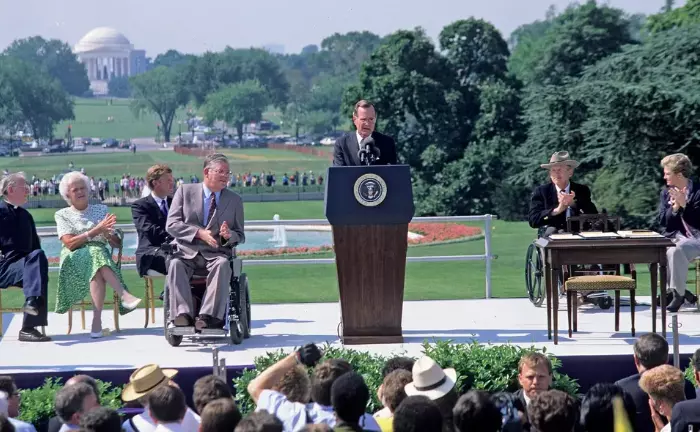
July marks 36 years since the ADA became law. It reshaped how disabled people access buildings, jobs, education, and public life. But this year, the legal protections for disabled people face serious threats. In Texas v. Kennedy, six states seek to strike down the Olmstead integration mandate—the 1999 Supreme Court ruling that disabled people have the right to live in their communities, not institutions. Meanwhile, the Department of Justice released a memo arguing against integrated settings, and the Department of Education is being dismantled, risking special education progress.
Despite these challenges, disabled advocates and leaders are fighting back. They are ensuring the disability rights movement continues, expands, and evolves. Below are nine disabled changemakers redefining their industries this Disability Pride Month.
Mychal Threets, known as Mychal the Librarian on TikTok, is a literacy and mental health advocate. He is the new host of PBS's Reading Rainbow and author of I'm So Happy You're Here: A Celebration of Library Joy. His mother homeschooled him at their local library in Fairfield, California. “Our entire curriculum was built at the local library,” he says.
Threets is open about his anxiety and depression. In 2024, he stepped back from his library role to focus on recovery. His message: libraries are safe places where everyone belongs—especially those often told they don't.
Whit Downing is Vice President of Policy and Programming at the Kansas Council on Developmental Disabilities (KCDD). An autistic self-advocate, she spent eight years on the Kansas IDD waiver waitlist. Now she testifies before the Kansas Legislature and leads behavioral health initiatives. She also founded “We All Matter,” a mental health support group for teens and adults with intellectual and developmental disabilities. Her core belief: real change happens when disabled people lead policy decisions.
Patrick McMullen is Deaf and founded Inclusify Studio, the first Deaf-owned influencer marketing agency. He built a 1.3 million-follower TikTok following before launching his business. His mission: connect brands with Deaf and hard-of-hearing creators. “When brands work with Deaf creators, they help our community see themselves represented,” he says. “There are 430 million people with hearing loss worldwide. Hire them, amplify them, and give them real opportunities.”
After severe Crohn's disease led to ostomy surgery, Paula Sojo started making ostomy covers that matched her wardrobe. She co-founded Osto·me Fashion with her brother in 2022. The brand now serves ostomates in over 40 countries and has been featured in Vogue and People. Sojo wants to change how people see disability: “We are people first—with passions, careers, and dreams. Lead with empathy. Ask yourself: what if that were me?”
Syanne Bloom is a disabled Afro-Indigenous Latina wheelchair user, activist, and political commentator. She translates complex policy into accessible content for nearly 100,000 followers. “Disability intersects with healthcare, reproductive justice, and immigration,” she says. She is currently petitioning to close ICE detention centers, where disabled people face inaccessible conditions and neglect. “Every signature builds pressure for a more just system.”
Paralyzed from the neck down at age eight, Sarah Todd Hammer now walks and has over 450,000 followers. She has modeled for Kohl's Adaptive at New York Fashion Week, authored three books, and partnered with Rare Beauty. Her content shows everyday life—like accessible grocery shopping. “Disabled people lead beautiful, complex lives,” she says. “I exist authentically every day, not just in July.”
Elle Potruch founded EP Talent in 2024, a boutique agency representing disabled creators, speakers, and actors. Her clients reach over 7 million people and have worked with Sephora, Netflix, and Amazon. “Our community has been conditioned to feel grateful for inclusion,” she says. “I help creators value their time and lived experience. Disability inclusion isn't a checkbox—it's smart business.”
Nila Morton is a licensed social worker and youth coordinator who lives with Ullrich muscular dystrophy. She focuses on disability and desirability, especially for Black and Brown communities. “Adaptive fashion is often an afterthought,” she says. “Disabled people want style and trend-driven pieces. Accessibility doesn't have to sacrifice creativity.” Her advice: “Disability is the one community anyone can join at any time. Listen, learn, and include disabled people in your everyday life.”
Maddy Ullman, a disabled transracial adoptee and wheelchair user, consulted on Disney's Wish to shape Dahlia—the studio's first visibly disabled Asian American animated character. “Disability pride is just existing and choosing to live,” she says. “Our work doesn't end with awareness. It begins with action. Learn from disabled voices and be an active ally all year.”
Dom Kelly co-founded New Disabled South, the first regional disability justice organization in the US South. He previously served on Stacey Abrams' campaign and at Fair Fight Action. Before that, he toured internationally with rock band A Fragile Tomorrow. “We defend the laws that make community living possible,” he says. “We celebrate disabled leaders carrying the movement forward.”
This Disability Pride Month, we honor the activists who fought for the ADA and the leaders continuing that work today. Despite legal threats, the disability community remains resilient. By listening to disabled voices, supporting their work, and taking action, we can ensure a more inclusive, equitable future for all.








Comment