
-
5 minutes, 6 seconds
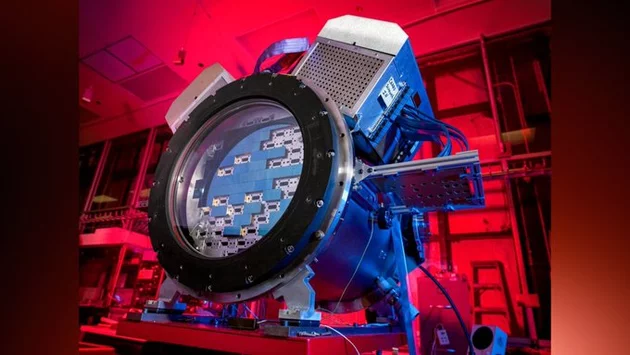
Dark energy remains one of the most mysterious forces in the universe. Scientists are asking: What exactly is it? How does it shape cosmic expansion? Recent research from the Dark Energy Survey (DES) is bringing us closer to answers. By combining four distinct analysis techniques, researchers are producing more precise insights into dark energy, narrowing down what it could—and couldn’t—be.
The Dark Energy Survey has spent six years collecting data from telescopes and observatories worldwide. Rather than relying on a single method, the latest study integrates four key approaches: galaxy clustering, weak gravitational lensing, supernovae observations, and cosmic microwave background analysis. Each method examines the universe in a different way, but together they provide a far sharper picture of dark energy’s effects on cosmic expansion.
Galaxy clustering tracks how galaxies are grouped across the cosmos, revealing the influence of dark energy on large-scale structures. Weak gravitational lensing measures how light bends around massive objects, indirectly mapping invisible energy in space. Supernovae serve as “standard candles” to measure distances in the universe, while cosmic microwave background studies offer insights from the universe’s earliest moments.
By combining these techniques, DES researchers have refined the constraints on dark energy models more than ever before. This makes some theoretical scenarios less likely, while strengthening confidence in the prevailing frameworks—ΛCDM (Lambda cold dark matter) and wCDM.
ΛCDM remains the standard model for cosmology, suggesting that dark energy is a constant property of space, while wCDM allows for a slightly variable “equation of state,” letting dark energy change over time. The new DES data slightly favors ΛCDM, though wCDM remains in the running. This combination approach provides unprecedented accuracy, helping physicists focus on the most promising models.
The Dark Energy Survey represents a massive investment in technology and global collaboration. From cutting-edge telescopes like DECam to advanced computational analysis, funding and innovation are finally translating into meaningful results. These efforts demonstrate that long-term, collaborative science projects can yield insights into phenomena once thought unknowable.
Beyond improving our understanding of dark energy, this research has broader implications. By refining models of the universe, scientists can better predict cosmic evolution, test theories of gravity, and even guide future missions that aim to probe dark matter and dark energy more directly.
Despite these breakthroughs, dark energy remains an enigma. Current models may eventually be challenged or even replaced, as new observational techniques and data sets arrive. Researchers emphasize that these findings are not the final word—they are a significant step forward, but the universe still holds many secrets.
Future surveys and next-generation telescopes, like the Vera C. Rubin Observatory and the Euclid space telescope, promise even more precise measurements. By combining multiple methods, scientists hope to one day answer the fundamental question: Why is the universe expanding at an accelerating rate?
Understanding dark energy is crucial not only for cosmology but for humanity’s quest to understand its place in the cosmos. Each refinement brings us closer to answering one of the most profound questions in science: What is driving the universe’s expansion? The latest DES results demonstrate that, even in the face of immense complexity, innovation, collaboration, and persistence can illuminate the darkest corners of space.
By leveraging multiple techniques and global expertise, scientists are turning abstract theory into measurable understanding—and the universe is slowly beginning to reveal its secrets.

2.5K articles

1.4K articles

34 articles

28 articles














Comment