Alerts

-
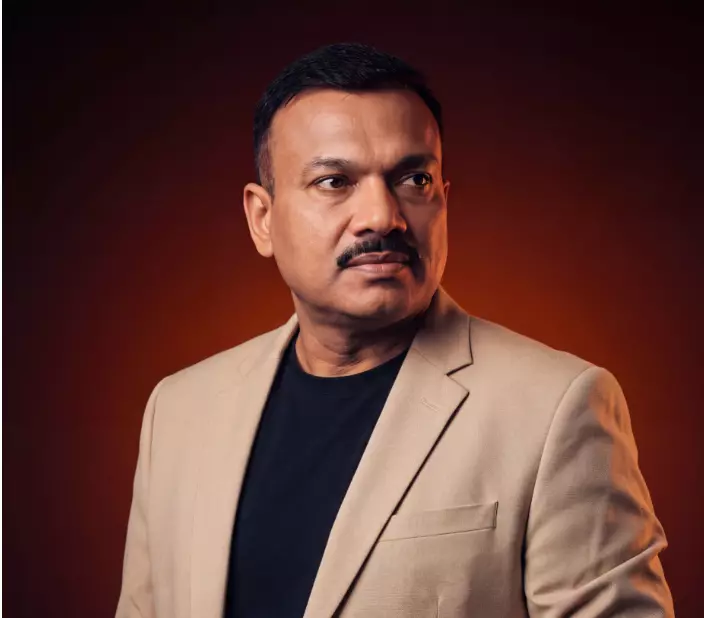
When you look at the career trajectory of Captain Pradeep Singh, the immediate reaction is often disbelief. How does one person transition from commanding massive merchant vessels on the open ocean to building a global real estate portfolio and founding a technology-led advisory firm? It seems like the résumé of several accomplished leaders combined into one.
In a recent interview, Singh sat down to discuss this very question. His path is not a straight line, but rather a series of calculated leaps across sea, land, and tech. The conversation revealed a mindset that views the world not as a place of barriers, but as a landscape of endless opportunity for those willing to put in the work.
Born in India, Singh’s fascination with entrepreneurship began early. However, he recognized a critical truth: to build something of his own, he first needed to step outside the comfort of his family environment and forge an independent identity. He found that crucible not in a boardroom, but on the deck of a ship.
“The sea gave me the opportunity to create my own path,” Singh explained. “It taught me discipline, responsibility and how to make decisions when there was no one else available to make them for me.”
This choice to go to sea was about more than just physical distance from home; it was a deliberate strategy for personal growth. The isolation and immense responsibility of maritime life served as a crash course in leadership. He learned to trust his own judgment in high-stakes situations, a skill that would later define his business ventures.
The sea did more than separate Singh from the familiar; it revealed his natural leadership abilities. By the age of 27, he had become one of the youngest Indian merchant ship Captains of his generation. The weight of this position is immense. A ship’s Captain holds responsibility for an asset worth hundreds of millions of dollars, cargo of similar or even greater value, the safety of the entire crew, and decisions that can have lasting impacts on both lives and the environment.
Despite achieving this extraordinary milestone at such a young age, Singh felt a familiar pull. “I was young. I was enjoying my career and my life,” he recalled. “But after becoming Master of a ship much earlier than I had expected, I found myself becoming restless. I was constantly driven by one question: What comes next for me to learn, to master and to build?”
This restlessness was not a sign of dissatisfaction, but rather a signal of his entrepreneurial drive. He had conquered the challenge of the sea; his mind was already turning toward new frontiers.
Interestingly, Singh’s move into business was not a sudden pivot. Even as a young seafarer, he had begun investing in real estate. Here was a man navigating the world’s oceans who simultaneously understood the enduring value of land. This dual focus—on the fluid world of shipping and the solid ground of property—became the foundation of his business philosophy.
“My interest continued to grow,” he said. “I began learning as much as I could about property, finance and investment. But I was also spending my days noticing how improvements could be made within the shipping industry.”
This unique perspective allowed him to see opportunities for innovation that others missed. He wasn’t just building wealth; he was identifying inefficiencies in his own industry and planning a way to solve them.
In 2010, Singh took the leap and founded Aethon Group. The company began with a clear focus: providing marine inspection, risk-management, and advisory services. It was a natural extension of his expertise, applying his years of command experience to help others navigate complex operational and safety risks.
The company’s growth was rapid. What started as a focused platform quickly developed into a global operation, supporting shipowners and maritime stakeholders around the world. The demand for his team’s expertise was clear, and Aethon expanded to meet it.
The results speak for themselves. Over the years, Aethon has completed more than 35,000 vessel inspections and related assignments worldwide. Reflecting on this achievement, Singh offered a simple, humble summary: “We did well.”
That understatement belies the scale of the accomplishment, but it also points to his mindset. For Singh, the work was never just about the numbers; it was about mastering a challenge, building a team, and moving on to the next opportunity to learn and grow.
Captain Singh’s modesty belied the significant success of Aethon, which secured a substantial position within its specialized market and became a leading organization in its field. Yet even with that achievement behind him, Singh was already charting a course toward his next venture.
“I had spent years learning about property and investing in real estate,” he said. “Eventually, I began thinking about how I could move from being an investor to becoming a developer.”
When asked if he simply decided one day to start constructing buildings, Singh smiled and clarified his approach. “No. But, yes. I knew enough about real estate to understand what needed to be done. More importantly, I understood what I did not know and what kind of partners and professionals I needed around me to do it properly.”
This self-awareness became the cornerstone of Karma Developers. Singh applied the same disciplined principles he had relied on at sea: meticulous preparation, careful risk assessment, surrounding himself with capable people, and continuously adjusting his approach as circumstances evolved. The results spoke for themselves—one of the company’s earliest developments sold out within hours of its public launch, and Karma has since grown its portfolio and forged international partnerships across multiple continents.
For Singh, real estate development transcends bricks and mortar. He views the work as fundamentally human.
“A home is one of the most important parts of anyone’s life,” he explained. “A good home is connected to good karma. As developers, we are not simply constructing buildings. We are creating places where people will live, raise families and build memories.”
This guiding philosophy has helped Karma attract investors and partners from Europe, Asia, the Middle East, and increasingly, the United States. Singh has also broadened his interests to include technology ventures, professional education, and investment activities.
When asked what connects his achievements across such different fields, Singh identified several recurring principles. The first is measured progression.
“Build progressively, start with a strong foundation, learn the terrain, and scale with confidence as you gain experience,” he advised. “Basically, learn to walk before you run.”
That lesson came from experience. “The biggest mistake I made during my early entrepreneurial years was expanding too fast,” Singh admitted. “But I recognized the mistake and corrected it. Steering a ship and building a business are similar that way. You have to keep checking your position and making corrections, or you can gradually move far off course.”
The second principle centers on relationships. “People and partners,” Singh said without hesitation. “Finding the right people and partners is critical to success.”
His approach to hiring reflects a long-term perspective. Singh described his philosophy as taking considerable time to hire—but also taking considerable time to fire. “Invest in the person rather than just the résumé,” he said. “If you genuinely care about your people, they will care about you. If they care about the company, their potential will eventually reveal itself. I believe most people have enormous potential if you give them the time, trust and tools to discover it.”
When asked how he handles someone who consistently fails to meet expectations, Singh’s answer underscored the same patient, deliberate mindset that has guided his career from the open sea to the world of development. He emphasized that correcting course—whether on a ship, in a business, or with a person—requires constant attention, honest assessment, and the willingness to make tough decisions when necessary. The key, he suggested, is ensuring that every decision is made with care, intention, and a genuine investment in the people who make success possible.
Captain Singh’s philosophy on hiring is rooted in a powerful belief: “Sometimes you hire someone for one role, but they may perform far better somewhere else in the organization. Destiny may have brought you together for a reason. As leaders, we should make an honest effort to discover what that reason might be before giving up on someone.”
This perspective offers a profound insight for leaders at every level. It challenges the conventional approach to talent management and encourages a more thoughtful, human-centered strategy. Beyond this hiring philosophy, Captain Singh’s broader leadership principles provide a valuable framework for anyone building an organization or pursuing ambitious goals.
Captain Singh’s approach to business and career management is defined by a forward-thinking, contrarian strategy. He emphasizes that true resilience is not developed in the moment of crisis but is built deliberately during periods of stability.
As he explains, “It may sound counterintuitive, but resilience must be built before you need it.” This principle transforms a reactive stance into a strategic advantage, allowing leaders to act decisively when opportunities arise from disruption.
Captain Singh offers a compelling reframe for professional development: a job is a school where you are paid to learn. He believes that many of the most important life lessons will never be found in a book.
Instead, these lessons are available daily in the workplace. He encourages young professionals to:
This perspective shifts the focus from merely completing tasks to actively seeking growth and understanding in every professional experience.
One of Captain Singh’s most memorable principles comes from a lesson his mother taught him in childhood. The lesson is simple: if someone draws a line and asks you to make it smaller without touching it, the answer is to draw a bigger line beside it.
“The way to become bigger is not to shorten somebody else’s line,” Singh explains. “You draw a bigger line of your own.”
This philosophy has guided him from the sea to the boardroom. Instead of focusing on competition or diminishing others, he has consistently placed larger challenges in front of himself. Each time he reached what appeared to be the pinnacle of one career or industry, he sought a new, more ambitious goal. This approach fosters personal growth and creates value without the need to tear down others.
When asked about his future plans, Captain Singh’s vision extends far beyond simply creating more businesses. He articulated a clear and ambitious goal for what comes next.
“What comes next is not simply about creating more businesses,” Singh said. “It is about building institutions, developing people and creating systems that can continue delivering value beyond their founders. To me, true success is building a lasting legacy—something capable of outliving you and continuing to create value for generations to come.”
This final insight ties his entire philosophy together. The focus on resilience, continuous learning, and drawing a bigger line all serve a larger purpose. The ultimate measure of success is not personal achievement but the creation of institutions and the development of people that will endure and thrive long after the founder has moved on. It is a vision of leadership that prioritizes sustainability, mentorship, and the long-term health of the organization over short-term gains.
This brings us to the heart of the matter regarding destiny and resilience. The circumstances we are given—the landscape of our lives, the opportunities that appear, or the challenges we face—may very well be a matter of fate. The sea, the land, or an unexpected door that opens are all part of the hand we are dealt.
However, the true measure of a person is not found in the cards they hold, but in how they choose to play them. While destiny might lay the foundation, it is resilience that provides the blueprint and the work ethic necessary to build something meaningful upon it. It is the difference between seeing an obstacle as an immovable wall and viewing it as raw material for a new structure.
One person might see a turbulent sea as a barrier, while another sees a challenge to be navigated. Similarly, a piece of barren land could be viewed as a dead end, or as a canvas for a new beginning. An unexpected opportunity might feel like a disruption to a carefully laid plan, or it could be a doorway to a more fulfilling path. The event itself is neutral; our response to it is where our character is forged.
Resilience is not about ignoring difficulty or pretending that hardship does not exist. It is about acknowledging the weight of a situation and deciding to move forward anyway. It is the capacity to adapt in the face of adversity, to bend without breaking, and to learn and grow from setbacks. This active, persistent effort is what transforms a simple existence into a life of purpose and achievement.
Ultimately, destiny may set the stage, but it does not write the entire script. We are the authors of our own response. It is in the daily choices we make, the perseverance we show when things get tough, and the creativity we apply to our circumstances that we truly define ourselves. We may not have control over the hand we are dealt, but we have absolute control over how we play it, and that is where resilience turns fate into a foundation for a life we can be proud of. The final outcome is not a question of what we are given, but a testament to what we choose to build with it. This is the true power of resilience, and it is a power that resides within each of us, waiting to be called upon. It is the quiet force that allows us to not only endure the storms of life but to learn how to dance in the rain, turning the very obstacles of our destiny into the stepping stones of our success. This is not merely a passive acceptance of fate, but an active, ongoing partnership where our determination shapes the final structure of our lives, ensuring that what we build is a reflection of our own strength and spirit. And so, while destiny may provide the plot, it is resilience that writes the most compelling and defining chapters of our story.

8.5K articles

3.1K articles

1.6K articles

34 articles













Comment