
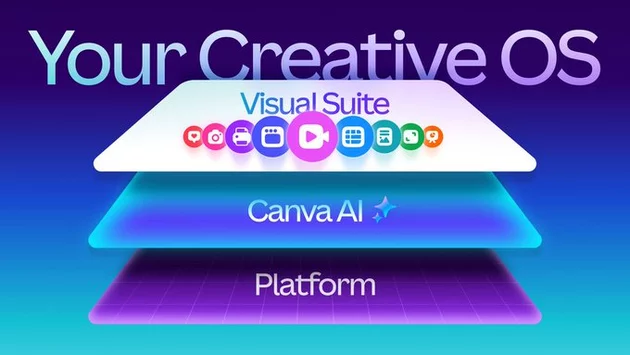
Canva is once again making headlines, this time with its bold move to become more than just a design tool. The company recently unveiled its new Creative Operating System, aiming to serve as a central hub for creators of all kinds. Alongside this, design powerhouse Affinity has gone free for everyone, shaking up the creative software landscape. We spoke with Anna Wood, Canva’s Product Marketing Lead, to understand what these developments mean for designers and creators navigating the AI-driven creative era.
When Canva refers to itself as a “Creative Operating System,” it’s signaling a shift far beyond creating simple graphics. “This isn’t just a tool anymore,” Wood explains. Canva now aims to support the entire creative journey, from brainstorming and design to publishing and tracking results. The platform integrates collaborative features, campaign management, and AI tools, making it a one-stop hub for creators, educators, and marketers alike.
AI is increasingly central to Canva’s vision. Designers can now generate content, iterate on ideas, and optimize workflows faster than ever before. Wood emphasizes that AI isn’t replacing creativity—it’s accelerating it. “Our goal is to give users more time to focus on the parts of creation that truly require human insight,” she says. For creatives, this means more freedom to experiment without getting bogged down by repetitive tasks.
One of Canva’s standout features is its real-time collaboration capabilities. Teams can work together on projects simultaneously, comment directly within designs, and share updates instantly. This approach not only streamlines workflow but also nurtures a community-driven creative process, empowering individuals and organizations to produce high-quality content more efficiently.
In a surprising twist, Affinity, known for professional-grade design tools, is now available for free. This move challenges Canva’s competitors and democratizes access to advanced creative software. For users, it represents an opportunity to experiment with pro-level features without financial barriers, while keeping platforms like Canva at the center of collaborative and AI-enhanced design workflows.
By positioning itself as a Creative OS, Canva is redefining its competition. It’s no longer just about other design tools—it’s about becoming the platform that supports creativity from start to finish. Wood notes that the goal is to make creative work seamless, whether you’re a solo designer, a classroom teacher, or a large marketing team. The focus is on speed, integration, and accessibility.
These developments signal a larger shift in the creative industry, where AI-powered tools and platform convergence are rapidly changing how content is made. Canva’s strategy reflects the demand for intuitive, all-in-one platforms that reduce friction and make creativity more inclusive. Users now have access to powerful tools without the steep learning curve traditionally associated with professional software.
As Canva continues to expand its Creative OS and AI capabilities, the company is setting the stage for a new era of digital creativity. With tools that combine design, collaboration, and AI, creators are empowered to push boundaries like never before. For designers and creators worldwide, the message is clear: the future of creativity is faster, smarter, and more accessible than ever.
Canva Creative OS: Redefining Design in the A... 0 0 0 2 2
2 photos

𝗦𝗲𝗺𝗮𝘀𝗼𝗰𝗶𝗮𝗹 𝗶𝘀 𝘄𝗵𝗲𝗿𝗲 𝗽𝗲𝗼𝗽𝗹𝗲 𝗰𝗼𝗻𝗻𝗲𝗰𝘁, 𝗴𝗿𝗼𝘄, 𝗮𝗻𝗱 𝗳𝗶𝗻𝗱 𝗼𝗽𝗽𝗼𝗿𝘁𝘂𝗻𝗶𝘁𝗶𝗲𝘀.
From jobs and gigs to communities, events, and real conversations — we bring people and ideas together in one simple, meaningful space.




Comments