
Alerts
-
4 minutes, 10 seconds
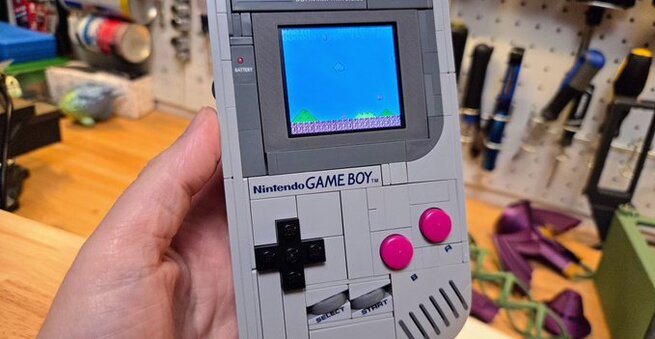
If you backed the BrickBoy Kickstarter, you might be wondering: where are the physical switches under the buttons? Unlike traditional game controllers, the BrickBoy kit for the Lego Game Boy doesn’t rely on clicky switches. Instead, it uses tiny rare earth magnets inside Lego bricks, paired with a 3D magnetometer, to register button presses. This unusual design has left some backers both excited and confused.
The decision to use magnets isn’t just gimmicky—it’s a practical solution. Hollowing out Lego bricks to fit standard switches would have been tricky and messy. By embedding magnets, the BrickBoy team can create a responsive button system without drastically altering the Lego build. Each key, from the D-pad to the A and B buttons, includes a magnet that triggers the magnetometer beneath, making gameplay possible without traditional switches.
Most promotional images for BrickBoy hinted at domed, clicky switches, and the campaign text didn’t make the magnetic system clear. Only a brief mention in an October video hinted at “powerful 3D magnetometers” controlling the action. For many backers, this was a surprise, sparking debates online: did supporters expect magnets—or traditional switches?
The setup is surprisingly elegant. The Start and Select buttons, essentially rubber tires, house small magnets. The D-pad and face buttons also get magnets embedded within their posts. All these interact with a compact magnetometer sandwiched between the buttons, translating every press into digital input. The result is a smooth, click-free gaming experience—though it may feel unfamiliar to players used to tactile feedback.
One of the main benefits is simplicity in assembly. Only a few bricks need modification, and the system is modular, making repairs or adjustments easier. It also preserves the aesthetic integrity of the Lego Game Boy. Players can enjoy a fully functioning handheld without seeing wires, PCBs, or switch mechanisms hidden inside.
While some early testers praise the novelty and innovation, others miss the tactile feedback of real switches. The Kickstarter community has been buzzing with videos and photos, showing how the magnets allow a surprisingly responsive gameplay experience—though the sensation is different from a traditional Game Boy.
BrickBoy demonstrates how creative engineering can bridge classic toys and modern electronics. By combining Lego construction with innovative magnetic sensors, the project reimagines DIY handheld consoles. It may inspire more modular, hackable gaming kits that don’t compromise on design or usability.
BrickBoy is challenging expectations of what a Lego Game Boy can be. While it may take time to get used to a click-free, magnet-driven interface, the approach is both clever and practical. For fans of Lego and retro gaming, it’s a bold, playful twist that turns a nostalgic hobby into a tech experiment.










Comment