Alerts

-
5 minutes, 40 seconds
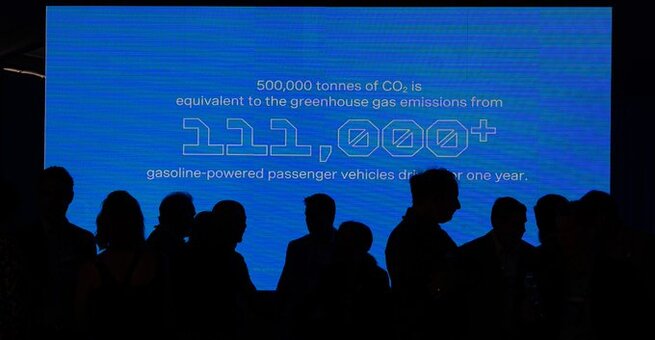
The fight over climate tech is heating up. Carbon removal projects that Big Tech poured money into are in Trump’s crosshairs, as the new administration moves to cut key clean energy programs. The Department of Energy has now slashed funding for at least 10 direct air capture (DAC) hubs — a major setback for companies betting on carbon removal to hit their climate goals.
These projects, designed to pull carbon dioxide straight from the air, have been heavily backed by major tech giants like Amazon and Microsoft. For years, Silicon Valley positioned DAC as a bold solution to offset their growing emissions. But with the Trump administration calling climate change a “hoax,” that momentum is now in jeopardy.
Under President Joe Biden, the U.S. invested billions in DAC hubs through the Department of Energy, aiming to make the U.S. a leader in carbon removal innovation. But that effort has been abruptly reversed.
Trump’s new energy strategy — summarized by his “drill, baby, drill” mantra — is undoing much of that progress. The administration’s recent budget proposal even dismissed DAC as part of a “Green New Scam,” signaling a broader attack on clean energy investments.
Big Tech companies are now facing a tough question: can they continue to rely on U.S.-based carbon removal projects to meet their sustainability targets?
Erin Burns, executive director at Carbon180, tells The Verge, “They’re already committed to this funding. The question is — will they spend it on U.S. projects or move it elsewhere?”
For companies like Microsoft and Amazon, the answer might determine whether their climate pledges remain credible in a post-funding-cut world.
The Department of Energy recently confirmed it would cancel about $7.5 billion in clean energy and climate project awards. A leaked spreadsheet shared with lawmakers shows that at least 10 DAC hubs lost their funding, signaling a broad rollback of climate commitments.
Among those affected is CarbonCapture, a California-based startup that partnered with Microsoft in 2023 to help the tech giant become carbon negative. The company’s plans for a new DAC plant in Louisiana are now in limbo after its engineering grant was terminated.
Even before the funding cuts became official, CarbonCapture had already started shifting focus. Last week, the company announced plans to move its first commercial pilot project from Arizona to Alberta, Canada — a decision shaped by months of political uncertainty.
CEO Adrian Corless told The Verge that the company “saw the writing on the wall” following Trump’s election win. “The future of DAC in the U.S. looks shaky,” he added, hinting that Canada might become a safer haven for carbon removal innovation.
Ironically, this shift comes as Big Tech’s latest obsession — artificial intelligence — drives energy use and carbon emissions even higher. Training large AI models requires enormous data center power, and carbon removal projects had offered a way to offset that impact.
With carbon removal projects that Big Tech poured money into now in Trump’s crosshairs, the tech industry faces a growing sustainability dilemma: how to expand AI without accelerating climate damage.
The Trump administration’s funding cuts mark a turning point for America’s role in climate tech. For startups and investors, the signal is clear — the U.S. may no longer be the most reliable place to scale clean energy innovation.
For Big Tech, that could mean looking overseas for carbon removal opportunities, or ramping up private investment to fill the gap left by Washington. Either way, the stakes are enormous — both for the planet and for Silicon Valley’s climate credibility.










Comment