
Alerts
-
6 minutes, 5 seconds
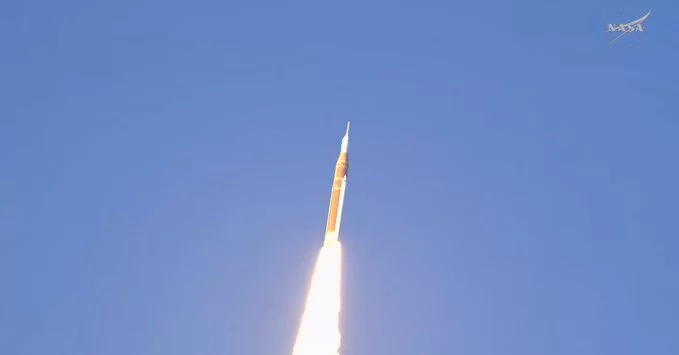
Artemis II mission launch has captured global attention as NASA sends four astronauts toward the Moon for the first time in over 50 years. The mission answers a key question many have been asking: when will humans return to deep space beyond Earth orbit? This groundbreaking flight is designed to orbit the Moon, test critical systems, and pave the way for future lunar landings. Excitement is building as humanity takes a major step toward sustained space exploration.
NASA’s Artemis II mission is not just another launch—it represents a turning point in modern space history. The spacecraft carrying the crew is expected to travel farther than any human mission since the Apollo era. This journey will test both human endurance and advanced technologies in deep space conditions. The stakes are high, but so is the potential for discovery and progress.
Artemis II is a critical milestone in NASA’s broader lunar exploration strategy. The mission aims to validate life-support systems, navigation tools, and spacecraft performance before astronauts attempt to land on the Moon in future missions. Unlike previous unmanned tests, this mission places humans back into the equation, making it a defining moment for space travel.
The mission also reflects a shift toward long-term exploration goals, including establishing a sustained human presence on the Moon. Engineers and scientists will closely monitor every phase of the journey, collecting valuable data that will shape upcoming missions. This includes insights into radiation exposure, spacecraft durability, and crew performance under deep space conditions.
Four astronauts have been carefully selected for the Artemis II mission, representing a diverse and highly skilled team. Their training has prepared them for the challenges of space travel beyond Earth’s orbit, including emergency scenarios and extended time in confined environments. Each crew member brings unique expertise, from piloting to engineering and mission operations.
Their journey will not include a lunar landing, but orbiting the Moon is no small feat. The mission will involve complex maneuvers and precise timing to ensure a safe trajectory around the lunar surface. For the crew, this is both a professional milestone and a historic opportunity to be part of humanity’s return to deep space.
At the heart of the Artemis II mission is advanced spacecraft technology designed for safety and efficiency. The launch system provides the power needed to escape Earth’s gravity, while the crew capsule ensures protection during the journey. Every component has undergone rigorous testing to meet the demands of deep space travel.
One of the key objectives is to test these systems under real mission conditions. This includes communication with Earth over vast distances, navigation accuracy, and the ability to sustain human life for extended periods. The success of these technologies will determine the readiness of future missions aiming for lunar landings and beyond.
The Artemis II mission will follow a carefully planned trajectory that takes the crew around the Moon before returning to Earth. During this journey, astronauts will conduct system checks, observe the lunar surface, and gather data essential for future missions. The mission timeline includes several phases, each designed to test different aspects of the spacecraft and crew capabilities.
Orbiting the Moon provides a unique vantage point for both scientific observation and mission validation. The crew will experience conditions similar to those expected in future lunar missions, offering invaluable insights. These findings will directly influence the planning and execution of upcoming Artemis missions.
Artemis II marks the beginning of a new chapter in human space exploration. After decades without crewed missions beyond low Earth orbit, this launch reopens the path to the Moon and eventually Mars. The mission is part of a larger vision to create a sustainable presence in space, enabling scientific research and potential resource utilization.
Public interest in space exploration has surged as this mission brings humanity closer to becoming a multi-planetary species. Artemis II is more than a test flight—it is a symbol of ambition, innovation, and the enduring human desire to explore the unknown. As the mission unfolds, the world watches with anticipation, knowing this journey could redefine our future in space.










Comment