Alerts

-
4 minutes, 33 seconds
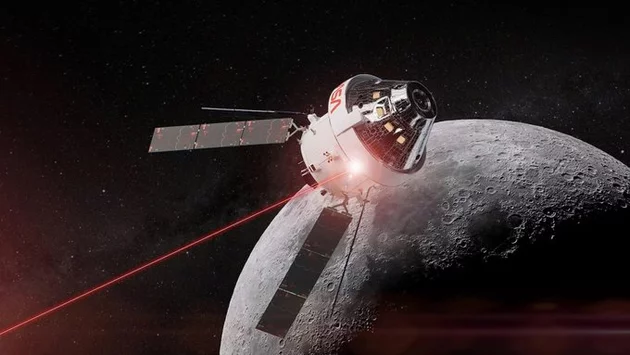
NASA is gearing up for its Artemis II mission, aiming to push space communication to unprecedented speeds. Astronauts will test a laser-based system capable of sending data back to Earth up to 100 times faster than traditional radio signals. This means high-definition videos, voice calls, and real-time mission data could reach mission control with stunning clarity and speed. For the first time, humans in lunar orbit will experience this next-generation communication firsthand.
The system, called the Orion Artemis II Optical Communication System (O2O), has already proven itself on seven unmanned missions. Now, it faces its ultimate test: human operators navigating around the Moon. This innovation could transform how astronauts share information, potentially enabling new science experiments and live coverage of deep-space missions.
Unlike standard radio waves, laser communication relies on highly focused beams of light to transmit information. This allows a much larger amount of data to travel over the same distance. With Artemis II, O2O will handle everything from telemetry data and system diagnostics to HD video and voice calls.
The difference is dramatic. Traditional radio communications are limited by bandwidth, often causing delays or compressed transmissions. Laser systems, by contrast, can carry gigabytes of data per second, drastically reducing lag and opening new possibilities for exploration. Imagine live video streaming from the Moon—something impossible with current radio technology.
Testing O2O with a human crew marks a major milestone in space communications. NASA wants to ensure that laser links remain stable despite challenges like spacecraft movement, distance, and interference from sunlight or cosmic dust. Successfully transmitting human-generated data will validate the system for future missions, including potential trips to Mars.
For mission planners, this test isn’t just about speed—it’s about reliability. A stable, high-speed communication link could allow astronauts to transmit large research files in real-time, improving both safety and scientific output. It also lays the groundwork for future deep-space networks, where high-bandwidth communication is essential.
If successful, laser-based communication could redefine the way humans explore space. Scientists anticipate that missions to the Moon, Mars, and beyond will rely on optical communication for everything from remote surgery in space habitats to streaming real-time lunar landscapes for research or public engagement.
Moreover, faster communication could enable new experiments that require instant data transfer, from robotic operations on lunar surfaces to monitoring environmental changes in real-time. NASA’s Artemis II mission is therefore not just about reaching the Moon—it’s about preparing a communication infrastructure for the next era of space exploration.
Artemis II is scheduled to launch later this year, with astronauts orbiting the Moon before heading back to Earth. While much of the public excitement focuses on human spaceflight, the laser communication experiment represents a quieter but equally significant technological leap.
By proving that humans can rely on laser-speed data transfers, NASA sets the stage for a future where deep-space communication is fast, reliable, and capable of supporting advanced scientific work. Artemis II may be just the beginning, but it promises a Moon mission that’s not only historic in distance but also revolutionary in connectivity.










Comment