Alerts

-
3 minutes, 28 seconds
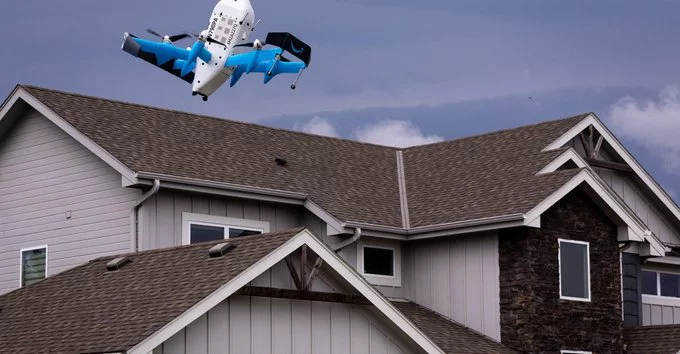
Amazon’s drone delivery service, Prime Air, has achieved a significant operational landmark this year. According to the company, the service has now delivered hundreds of thousands of packages to customers, marking a major step forward in its journey from pilot program to a regular part of Amazon’s logistics network.
This volume of deliveries indicates that Prime Air is moving beyond experimental stages and into a more scalable phase. The service aims to offer a faster, more sustainable delivery option for eligible items, with drones designed to fly packages to customers in under an hour. While the company has not released exact figures, the reported milestone suggests that the technology is gaining traction and proving its reliability in real-world conditions.
For customers in the service areas, this means that a growing number of orders are now eligible for rapid aerial delivery. The milestone underscores Amazon’s commitment to integrating drone technology into its core operations, setting the stage for the broader expansion discussed in the next section.
Prime Air is not yet a nationwide service, but it has established a meaningful footprint in select U.S. markets. Currently, the service is available to customers in College Station, Texas, and in parts of California. This targeted rollout allows Amazon to refine its delivery operations and regulatory compliance before scaling further.
The choice of these locations is strategic. College Station serves as a mid-sized testbed with varied residential layouts, while the California zones help the company navigate stricter airspace and privacy regulations. For eligible customers in these areas, Prime Air offers a distinct advantage: eligible items can be delivered by drone in under an hour, with the entire process—from order to landing—managed through the Amazon app.
Availability is determined by factors such as weather conditions, local ordinances, and the customer’s precise address. Amazon continues to evaluate additional cities, but for now, only these specified regions are active.
Prime Air relies on fully autonomous drones to complete deliveries in under an hour. The system is designed around two core principles: safety and efficiency. Each drone uses advanced sensors and onboard computer vision to navigate around obstacles, including people, pets, and power lines, without a human pilot.
To ensure safe operation, the drones are built with redundancy in mind. They are designed to handle a single point of failure, meaning that if one component fails, the drone can still land safely. The system also uses a sophisticated geofencing approach, keeping the aircraft within approved flight paths and away from sensitive areas like airports and stadiums.
For efficiency, the delivery process is streamlined:
This combination of advanced technology and strict safety protocols allows Prime Air to operate reliably in residential areas, aiming to make rapid drone delivery a routine convenience.
Amazon’s roadmap for Prime Air involves expanding drone deliveries to more locations and integrating the service more deeply into its broader logistics network, according to the company’s public statements. This means linking drone operations with existing fulfillment centers and delivery routes to create a more seamless end-to-end process.
However, this expansion is not without hurdles. Regulatory approval remains a significant obstacle, as Amazon must continue to work with the Federal Aviation Administration (FAA) to secure permissions for beyond-visual-line-of-sight operations and expanded flight zones. Technical challenges also persist, including improving drone battery life, ensuring safe navigation in adverse weather, and developing robust sense-and-avoid systems to prevent collisions. Amazon has acknowledged these issues and is investing in new aircraft designs and autonomous software. The company has emphasized that it will proceed cautiously, prioritizing safety and compliance as it scales. While the long-term vision is ambitious, the pace of growth will depend heavily on overcoming these regulatory and technical barriers.










Comment