
-
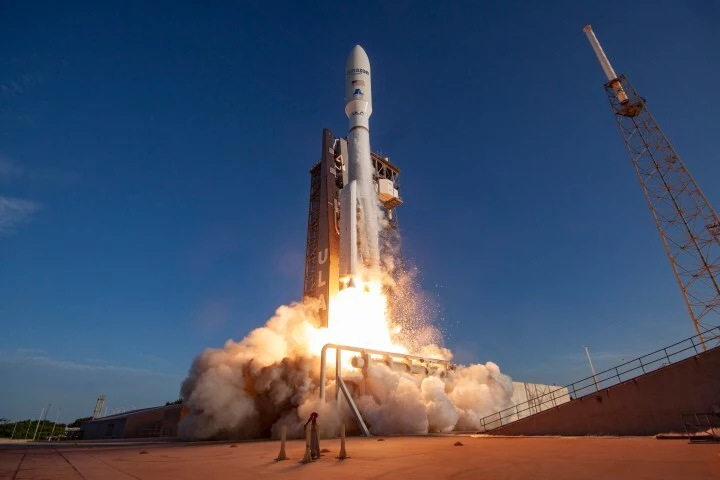
Amazon has filed an application with the Federal Communications Commission (FCC) to operate a new constellation of 5,105 satellites designed to deliver mobile phone connectivity directly from space. The company plans to begin launching these satellites in 2028, setting the stage for a direct showdown with SpaceX’s Starlink direct-to-cell service.
This move follows Amazon’s acquisition of Globalstar’s satellite operations earlier this year. Globalstar currently provides emergency connectivity to Apple iPhones and Internet-of-Things (IoT) devices. By securing Globalstar’s radio spectrum, Amazon aims to expand these offerings and integrate them with Project Kuiper (Amazon’s broadband internet satellite network). The FCC filing confirms that Amazon will use Globalstar’s licensed spectrum to power its satellite-to-mobile services.
SpaceX has long dominated both the satellite internet and satellite-to-mobile markets. The company plans to spend $20 billion buying spectrum from EchoStar to build out its own mobile constellation — a key growth driver highlighted in its IPO filings. Amazon’s entry adds another layer of rivalry in the low-Earth orbit (LEO) space race.
Despite the hype, it remains unclear how valuable satellite-to-mobile connections will be. Most offerings today provide limited bandwidth, suitable only for text messages or emergency services. T-Mobile CEO Srini Gopalan noted at a conference in May that satellite usage accounted for just 0.0002% of total network usage, with most traffic concentrated in national parks.
Unlike SpaceX, Amazon does not have its own fleet of rockets. The company originally planned to rely on Jeff Bezos’ Blue Origin and its New Glenn rocket for satellite launches. However, New Glenn has faced repeated delays and is currently grounded after an anomaly destroyed its launch pad in May. Amazon had to request an extension from the FCC to meet its network buildout deadlines.
While Amazon lags behind SpaceX in deployment, its massive capital reserves — $255 billion in current assets as of April — allow it to keep investing heavily in its satellite network. In contrast, SpaceX’s capital needs appear far more pressing, especially given its aggressive Starlink expansion and IPO preparations. This financial advantage could help Amazon close the gap over time.
The satellite-to-mobile market is still in its infancy. Amazon’s planned 5,105-satellite constellation could eventually offer broader bandwidth, enabling messaging, voice, and even data services in remote areas. However, success will depend on overcoming technical hurdles, securing reliable launch vehicles, and convincing consumers to adopt the technology.

2.5K articles

1.4K articles

34 articles

28 articles













Comment