Alerts

-
4 minutes, 6 seconds
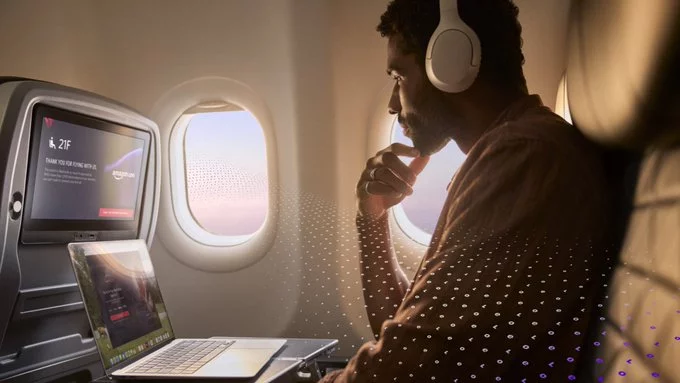
Air travelers may soon experience faster and more reliable Wi-Fi thanks to Amazon’s new satellite technology. The company announced that its Amazon Leo service will reach Delta Air Lines flights in 2028, offering high-speed internet powered by a vast constellation of low Earth orbit satellites. Positioned roughly 370 miles above Earth, these satellites aim to deliver seamless connectivity for streaming, work, and communication at 35,000 feet.
With in-flight internet often criticized for being slow or unreliable, Amazon Leo promises a step-change in passenger experience. Travelers will no longer have to endure buffering videos or limited browsing options. Instead, Delta customers could enjoy speeds comparable to ground-based broadband, redefining the way people stay connected in the skies.
Amazon Leo relies on thousands of satellites operating in low Earth orbit, a technology designed to reduce latency and improve bandwidth compared to traditional geostationary satellites. Each satellite communicates with others in the constellation, creating a robust network that can handle multiple connections across a single aircraft.
The technology also includes advanced antennas and onboard receivers that automatically link to the nearest satellite. This setup ensures consistent performance even during long-haul flights across oceans or remote regions, where standard Wi-Fi services often struggle. Amazon Leo’s approach mirrors the growing trend of satellite-based internet designed to reach areas that ground infrastructure cannot.
Delta Air Lines customers can anticipate significant improvements in their in-flight experience once Amazon Leo rolls out. Online meetings, streaming movies, and gaming may become fully practical at cruising altitudes, transforming how passengers spend hours in the air.
In addition to entertainment and work benefits, the technology could enhance airline operations. Real-time communication between pilots, crew, and ground staff could improve safety and operational efficiency, while passengers enjoy uninterrupted connectivity.
Amazon’s move into in-flight internet highlights its broader ambition to dominate satellite connectivity. While the service initially targets Delta, the potential to expand to other airlines and global markets is significant. By integrating Amazon Leo into commercial flights, the company positions itself as a key player in the evolving space-based broadband industry.
This expansion also complements Amazon’s other satellite internet efforts, which focus on delivering high-speed connectivity to underserved regions worldwide. The company envisions a future where internet access is ubiquitous, whether on the ground or in the air.
Delta’s adoption of Amazon Leo signals a major shift in in-flight services and passenger expectations. As airlines face increasing competition for customer loyalty, offering high-speed, reliable internet could become a defining feature of premium travel experiences.
By 2028, passengers may no longer view in-flight Wi-Fi as a frustrating add-on but as an essential service that rivals home or office connections. Amazon Leo could redefine the skies, blending advanced satellite technology with practical, everyday connectivity for millions of travelers.










Comment