
Alerts
-
3 minutes, 21 seconds
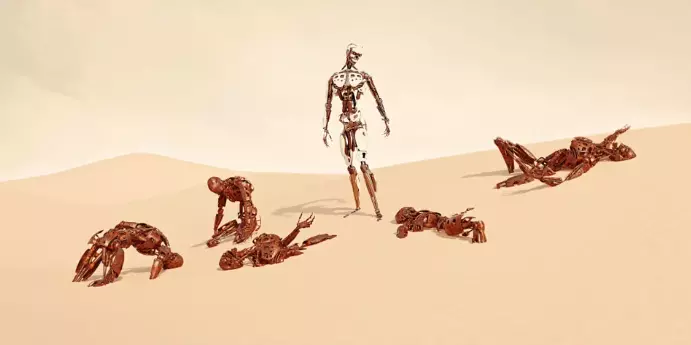
Unless you have spent the past two weeks meditating at a Buddhist retreat, you have probably heard that there’s somewhere between 10-65% chance that we will disappear from the face of the earth in the next ten years or so, courtesy of AI. According to ChatGPT’s own estimates, the probability is only 1%, but it is arguably not the most neutral source on this subject.
Apocalyptic predictions are far from new — from Nostradamus to Y2K and the Mayan apocalypse, we have survived every one. What differs is that serious scientists, engineers, entrepreneurs, and investors actually building AI now voice these warnings. Unlike a prophecy, AI is a rapidly evolving technology with genuinely uncertain trajectory. More importantly, the concern is not that AI will spontaneously destroy us, but the classic AI alignment problem. You don’t have to believe in Skynet to accept that this deserves more attention than previous prophecies.
As a scientist, I prefer to limit my predictions to areas where there’s data. Since nobody has data on the future, and nothing approximating past data that can be extrapolated to predict the end of humanity, we are limited largely to sheer speculation. It is also hard to ignore the potential motives behind doomsday warnings: the claim that this technology is so powerful nothing else matters; requests for yet more R&D funds to make AI safe and ethical; and the suggestion that any harm caused by AI is the sole responsibility of AI rather than the humans behind it. Many of these predictions are themselves attempts to attract attention, which reduces the appetite for nuance and balance.
Peter Thiel noted that extreme optimism and extreme pessimism both lead to inaction. Harari’s Homo Deus (2015) envisions a small elite controlling supercomputers while the rest of us become irrelevant. If you want to get predictions right, it is safer to predict the world will not end.
Obsessing about the future is a good excuse for not dealing with our present problems. Even if AI stopped evolving today, we would need years to catch up with its impact. Consider what we already overlook:
We do not need superintelligence to create serious societal problems. The pathologies of the internet and social-media age — misinformation, echo chambers, filter bubbles, polarization, tribalism, addiction to engagement, and the industrial-scale manipulation of attention — can now be amplified by generative AI, which adds cheap, personalized, infinitely scalable content to an information ecosystem already struggling to distinguish signal from noise.
Meanwhile, a plausible scenario exists in which AI delivers productivity gains, humans remain employed, and incomes rise, yet work becomes less intellectually stimulating. Knowledge workers could become little more than an interface between AI and the world, prompting, checking, and forwarding machine-generated intelligence.
The evolutionary parallel is our hunter-gatherer ancestors, whose environment forced them to move; modernity removed that activity, and we invented gyms and diets to put it back. If AI removes enough cognitive friction, we may need to manufacture it again. Thinking could become an intellectual luxury — the cognitive equivalent of vinyl records or film photography, valued precisely because the friction is the point.










Comment