Alerts

-
5 minutes, 18 seconds
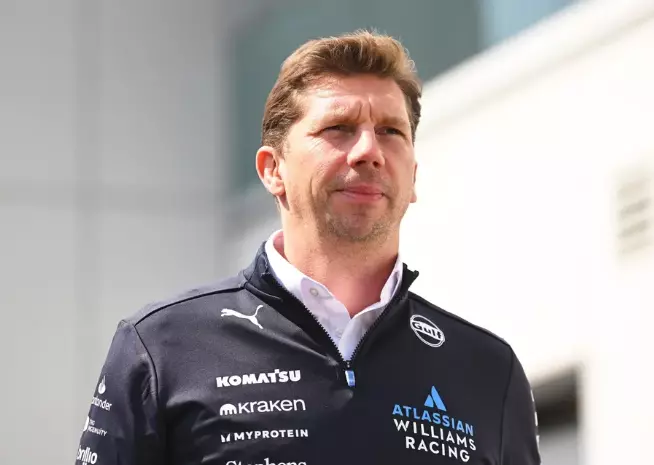
James Vowles is rebuilding Atlassian Williams F1 Team after joining the storied British outfit in 2023. His experience spans a 2009 world championship with Brawn GP, eight consecutive constructors’ titles as a strategist at Mercedes, and two businesses he founded while working in Formula One. His approach to Williams offers five lessons in resilience, focus and leading through change.
Vowles shared these ideas in Austin during the United States Grand Prix, the first of three back-to-back race weekends. They reflect a career shaped by setbacks, high-pressure decisions and a long-term goal: returning Williams to the front after two decades in the wilderness.
At 19, Vowles wrote to all 11 Formula One teams on the grid. Every one rejected him. Williams and British American Racing told him they needed rounded engineers, not mathematicians. He completed his mathematics and computer science degree, taught himself engineering over a summer and began a master’s at Cranfield University as the program’s only student without an engineering background.
Within three months of joining a Formula 3 team as a data scientist, he was given the checkbook and responsibility for running it. Then, in 2008, Honda withdrew from Formula One during the financial crisis, and the team—including Vowles—lost its jobs overnight. He responded by starting two companies: a driver-training business that became profitable within weeks, and a race-strategy software company that grew to roughly 84 people across Germany, London and New York before he sold it.
For Vowles, a dead end is a reason to assess what remains: skills, relationships and unfinished ideas. “What can I do? What skills have I got?” he asks. The lesson is to use a setback to identify available resources and build from there.
Vowles left Mercedes at the peak of its dominant run to lead Williams, the team he watched as a child. Williams has nine constructors’ championships and a 50-year history, but restoring its success is a long-term project. Vowles says he is motivated by making a difference and leaving his “DNA and fingerprint on the world,” rather than money.
A purpose that extends beyond quarterly or seasonal results can help leaders make difficult decisions without losing direction. Vowles says Williams employees can name the team’s three North Stars. He also chose not to treat a podium season as the ultimate achievement: “My drive is to make this team successful. That’s what I’m going to do.”
Brawn GP rose from Honda’s ashes in 2009 and won both world championships in its only season. Vowles recalls a team united by humility and a shared priority: survival. The workforce fell from roughly 900 people before the first race in Melbourne to about 400 almost overnight, and no one knew whether the team would last the year.
With little money, the team improvised, pulling brakes from show cars and testing on 50-lap-old tires. At Monza late in the season, Vowles backed a one-stop strategy, despite the choice meaning the cars would start seventh and eighth rather than on pole. Brawn finished first and second. His takeaway is that a team with a common goal can keep making brave decisions under pressure, even when resources are scarce.
At the 2018 Austrian Grand Prix, Vowles made the wrong strategy call for Lewis Hamilton under a safety car. When Hamilton began to spiral on the radio, Vowles took responsibility: “Lewis, James. I made a mistake. This is on me. But here’s what we’re going to do about it.”
He says leaders should acknowledge what went wrong, understand the cause, put prevention in place and then “put a box around it” quickly. The point is not to ignore failure, but to stop one mistake from affecting the next decisions. Vowles compares this with top drivers, who diagnose a lost tenth—perhaps because of wind, tires or over-pushing—and adjust within seconds.
When Vowles arrived at Grove in 2023, he estimated that Williams’ infrastructure, systems and processes were about 20 years out of date. Rather than copy established rivals, he wants the team to make leaps. Proposals that simply mirror Mercedes or Red Bull are rejected; he is willing to fund a different, risky technology change with a 50/50 chance. The board supports those experiments, even when they may cost short-term results.
His approach also applies to team culture. Vowles uses an A/B/C framework: A players lead others, B players work hard but need daily direction, and C players block progress. He says removing even one C player can shift a group’s culture. He rates his senior leadership team seven out of ten, up from four or five, while acknowledging he is still working too tactically because the pathways beneath him are not yet built.
Williams finished fifth in the 2025 constructors’ championship with multiple podium finishes, its best season in years. The 2026 season, under sweeping new technical regulations, has been much harder, bringing public criticism for Vowles. His view of a rebuild leaves room for setbacks: the important question is whether the team keeps pursuing changes its competitors will not attempt.
Before walking to the grid, Vowles takes five minutes alone. Interviews continue almost until the race begins, so the pause helps him clear his mind and sort the day’s priorities. He says he is not nervous once a race starts; he enters a flow state that has kept him in the sport for 25 years.
That pause is not a retreat from pressure. It helps make focused action possible. Vowles also speaks candidly about the cost of his intensity: 16-hour days, no off switch and a high bar that can make podiums feel insufficient. “If you don’t start taking pleasure out of it, why are you doing it?” he asks.
Asked whether a Williams championship would make him pause, he said he probably would take a moment to recognize how the company had come “from 20 years of not doing anything back to the front.” His final lesson is simple: take the time to reset, then return to the work with purpose.










Comment