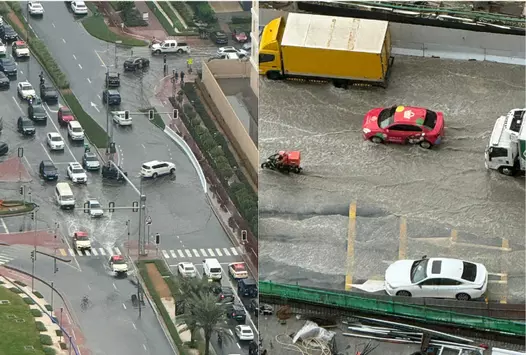
UAE rains and unstable weather have prompted residents across Dubai and nearby regions to adjust work schedules, commutes, and daily routines. Many people are choosing to work from home, delay travel, or monitor official updates before heading out. Authorities have warned of heavy rain, strong winds, and possible hail as a major weather system moves across the country. The focus has shifted toward safety, especially for outdoor workers and families with young children. Employers are being encouraged to assess risks and offer flexible arrangements where possible. The situation reflects how extreme weather is reshaping daily life and workplace decisions across the Emirates.
Work-from-home decisions during UAE rains
Remote work quickly became a practical solution as uncertainty around the weather increased. Parents faced additional pressure as schools and daycare centers evaluated closures and safety risks. Many professionals chose to stay home after considering childcare logistics and potential travel disruptions. Safety concerns outweighed routine obligations, especially in areas vulnerable to flooding or reduced visibility. Residents described the decision as preventative rather than reactive, given forecasts predicting worsening conditions. This shift highlights how weather events are influencing workplace flexibility and employee well-being. Remote work has become a key tool for maintaining productivity without compromising safety.
UAE rains and commuting changes across Dubai
Commuting patterns changed significantly as residents sought safer travel alternatives. Some avoided driving due to concerns about traffic congestion, slippery roads, and vehicle damage. Public transport, particularly the metro, became a preferred option for those who still needed to travel. Past experiences with severe weather played a role in shaping these choices. Residents remembered earlier disruptions that left commuters stranded or delayed for hours. This time, many opted for caution rather than routine. The adjustments underscore how environmental conditions are reshaping urban mobility decisions.
Weather alerts and safety guidance from UAE authorities
Authorities issued advisories urging companies to prioritize employee safety during the unstable weather period. Special attention was placed on outdoor workers who face higher exposure to rain, wind, and reduced visibility. Employers were encouraged to reassess operations and ensure compliance with occupational safety standards. The guidance extended to commuting risks, emphasizing safe travel conditions for employees. These measures reflect a broader push toward proactive risk management. Safety messaging aimed to reduce incidents before conditions worsened. The alerts also reinforced the importance of coordinated responses between workplaces and public services.
Heavy rain, hail, and winds forecast across regions
Weather conditions intensified across multiple parts of the UAE, particularly in eastern areas that often experience early rainfall. Residents reported heavy showers, overcast skies, and valleys filling with flowing water. Forecasts indicated that the system would develop in phases over two days, bringing stronger winds and possible hail. Major cities, including Abu Dhabi and Dubai, were expected to experience heavier rainfall later. The evolving weather pattern increased uncertainty and heightened precautionary measures. Communities stayed alert for updates as conditions continued shifting. The forecast signaled that disruptions could extend into the following day.
Community efforts during UAE rains and storms
Beyond personal safety, some residents focused on protecting vulnerable groups in their neighborhoods. Community members installed feeding stations and shelters for stray animals ahead of heavy rain and wind. These efforts reflected a broader sense of responsibility during severe weather conditions. People recognized that animals and outdoor workers often face the greatest risks. Small actions, such as securing supplies or checking on neighbors, strengthened local support networks. The response showed how communities adapt collectively in times of environmental stress. Compassion became part of the wider safety response.
Workplace safety and employer responsibilities in severe weather
Organizations were urged to evaluate operational risks and implement safety measures during working hours. Employers needed to consider not only on-site hazards but also travel risks faced by employees. Flexible scheduling and remote options were seen as practical solutions to reduce exposure. Clear communication helped workers understand expectations and available support. Companies that prioritized safety reinforced trust and resilience within their teams. The situation highlighted the growing role of employers in managing climate-related disruptions. Workplace policies are increasingly shaped by environmental realities.
UAE rains highlight growing climate and urban resilience challenges
The latest wave of UAE rains illustrates how extreme weather is becoming a defining factor in urban planning and daily life. Residents, businesses, and authorities are adapting in real time to protect safety and continuity. Flexible work, infrastructure readiness, and community awareness are emerging as critical responses. The experience also raises broader questions about preparedness for future weather events. Cities must balance mobility, safety, and productivity during unpredictable conditions. Residents are learning to respond quickly while maintaining routine where possible. The evolving response reflects a nation adjusting to a changing environmental landscape.














Comment