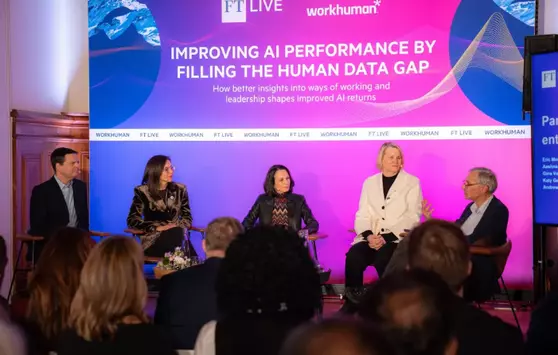
Davos 2026 made one thing clear: leaders are no longer asking whether AI matters, but why returns are lagging despite massive investments. Across panels and executive briefings, CEOs and technology leaders shared a common concern—AI pilots are everywhere, yet measurable enterprise impact remains uneven. The conversation has moved beyond fear of job loss to a more urgent question about outcomes. Organizations are seeing productivity gains in isolated teams, but those wins rarely scale across the business. This growing “AI ROI gap” has become one of the most discussed leadership challenges coming out of Davos. It reflects a deeper issue around visibility, execution, and how work actually happens inside modern companies.
Many organizations have invested heavily in AI tools, pilots, and transformation programs over the past two years. Yet executives report that returns remain inconsistent, with progress happening in pockets rather than across entire enterprises. Leaders are struggling to translate experimentation into sustained performance gains. The issue isn’t ambition or lack of innovation—it’s the inability to connect AI to the real mechanics of work. Most strategies rely on legacy data sources such as org charts, process maps, and performance metrics. Those sources show what should happen, not what actually happens daily. Without deeper insight into execution, AI cannot reliably optimize business outcomes.
Traditional leadership models still rely on structured reporting lines and formal workflows to guide decisions. That model worked when value creation followed predictable, linear paths across departments. Today, work flows through informal networks, collaboration channels, and peer-driven problem solving. Critical execution often depends on trust, relationships, and quick decision loops that rarely appear in enterprise dashboards. As a result, leaders are steering AI with incomplete information about how work truly unfolds. The gap between formal systems and real execution limits AI’s ability to drive performance. Closing that gap requires rethinking what counts as meaningful organizational data.
Formal structures remain comforting, but they rarely reflect how progress actually happens inside companies. Leaders can usually identify top performers and teams hitting targets, yet struggle to see the networks driving innovation and adoption. AI transformation spreads through early adopters, peer learning, and managers who reinforce new behaviors. These dynamics operate beneath the surface and often go unnoticed at scale. When leaders manage AI as isolated deployments, transformation slows. Without visibility into real operating networks, momentum stays fragmented. Understanding the human system behind execution is becoming a competitive advantage.
Most organizations still define strong AI data through transactional metrics like outputs, utilization, and cost savings. These indicators matter, but they are lagging signals that reflect past performance rather than future potential. The drivers of lasting transformation are human behaviors such as collaboration, adaptability, initiative, and trust. These skills determine whether teams adopt AI meaningfully or resist change quietly. Yet many companies lack systems to capture and reinforce these signals at scale. Without visibility into human contribution, AI improvements remain localized. The result is productivity gains that never evolve into sustained enterprise advantage.
Adoption depends less on access to tools and more on confidence in how those tools operate. Employees need clarity about where human judgment still matters, what AI systems are optimizing for, and what happens when mistakes occur. When those questions remain unanswered, engagement drops and experimentation stalls. People may comply with new systems but avoid fully integrating them into their workflows. Trust grows through transparency, feedback loops, and recognition of meaningful contributions. Leaders who prioritize these factors see stronger alignment between AI initiatives and business priorities. Building confidence is now a core operational responsibility, not a communications exercise.
The next breakthrough lies in making the flow of work observable across the organization. AI performs best where execution can be tracked, measured, and understood in real time. Operational environments like call centers and production lines already benefit from this visibility. Knowledge work, however, often remains hidden inside collaboration tools and informal interactions. Recognition and peer feedback can reveal patterns of value creation that traditional metrics miss. These signals help leaders identify emerging talent, effective teams, and high-impact behaviors early. When AI connects to this layer of insight, it becomes far more effective in guiding decisions and investments.
The takeaway from Davos 2026 is clear: the next era of AI will reward leaders who prioritize outcomes over ambition. Organizations that succeed will close the gap between how work is assumed to happen and how it actually unfolds daily. They will invest in understanding human systems, not just technical infrastructure. Visibility into collaboration, contribution, and leadership behaviors will shape smarter AI deployment. Trust, transparency, and alignment will determine adoption at scale. The real differentiator will not be access to advanced tools, but the ability to lead the human systems around them. In this new phase, AI success belongs to leaders who can see, measure, and strengthen the work that truly drives results.


Array