As the Trump administration proposes a drastic 56% cut to the National Science Foundation (NSF), community colleges are raising critical concerns. While top universities often dominate discussions about research funding, it’s local colleges—often overlooked—that stand to lose the most. From training the next generation of AI technicians to supporting regional innovation hubs, NSF funding for community colleges plays a vital role in shaping America’s future workforce.
This blog explores the overlooked connection between community colleges and NSF funding, how proposed budget cuts threaten student opportunities, and why bipartisan leaders are joining the push to protect these essential programs.
The Impact of NSF Funding on Community Colleges
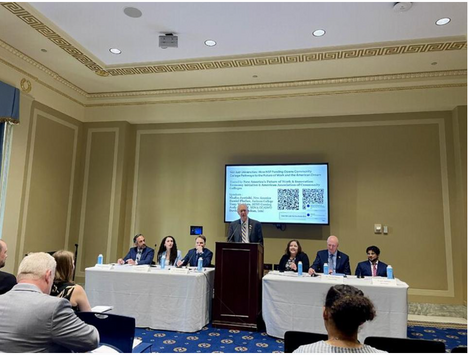
NSF isn’t just about advanced research—it’s also a key driver of workforce development. At recent Capitol Hill briefings hosted by New America and the American Association of Community Colleges, educators and industry leaders shared powerful stories of how NSF grants have helped build STEM education programs in community colleges. These investments have enabled hands-on training in cutting-edge fields like AI, biotechnology, and blockchain—fields central to the White House’s own tech priorities.
Speakers emphasized that these grants go beyond routine funding—they catalyze collaboration between colleges and industries, modernize curricula, and help students gain skills that lead to stable, high-paying jobs.
Why Industry Leaders and Employers Support NSF Grants
Companies like Intel and Micron aren’t just watching from the sidelines—they’re co-investing with the NSF to prepare a skilled technical workforce. Intel’s David Shahoulian called the NSF a “great taxpayer investment,” noting how these partnerships ensure students are trained for real-world industry needs. These aren’t just educational programs—they’re pipelines for innovation, helping companies stay competitive while offering upward mobility for students who may not pursue a four-year degree.
Without continued NSF support, many of these collaborations risk being dismantled—leaving employers without qualified talent and students without accessible career pathways.
What’s at Stake With NSF Budget Cuts
The administration’s FY 2026 proposal includes a 75% cut to the NSF’s STEM education directorate—raising alarms among education leaders. Panelists from Jackson College, SUNY Corning, and other institutions warned that slashing NSF funding would gut critical infrastructure, reduce access to training in advanced industries, and widen the gap between rural or underserved communities and emerging tech opportunities.
Daniel Phelan of Jackson College put it clearly: “NSF grants are strategic and catalytic. They let us move quickly with industry, build real outcomes, and strengthen the economy.” Simply put, these aren’t cuts to paperwork—they’re cuts to jobs, innovation, and American competitiveness.
Community Colleges Urge Congress to Act
As lawmakers debate the future of U.S. science policy, community colleges are urging Congress to reject deep cuts and maintain at least $9.9 billion in NSF funding. Their message is clear: if America wants to lead in artificial intelligence, biotech, and cybersecurity, it must invest in all levels of talent—not just PhDs.
NSF funding empowers colleges to meet students where they are, especially those seeking technical skills that fall between a high school diploma and a bachelor’s degree. Without that investment, the American Dream may move further out of reach for millions.














Comment