Alerts

-
6 minutes, 0 seconds
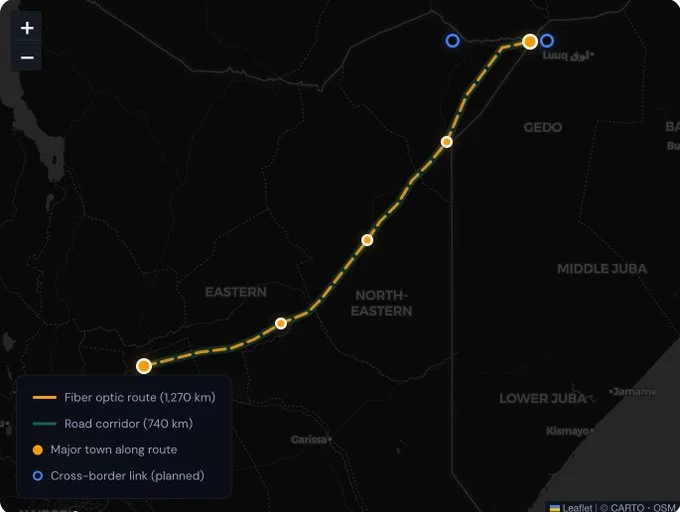
Reliable internet access is finally reaching Northern Kenya, thanks to a massive KES 58 billion investment backed by the World Bank. The new fiber optic corridor will connect over 3.2 million people across underserved counties like Isiolo, Wajir, and Mandera. For many residents, this marks the first time high-speed internet will be available. The project answers a long-standing question: when will Northern Kenya join the country’s digital economy? Now, that transformation is officially underway.
A key highlight of the initiative is the construction of a 1,270-kilometre high-capacity fiber optic cable running alongside the Isiolo–Mandera road corridor. This is not just a tech rollout—it’s a combined infrastructure project blending transport and digital connectivity. While roads are upgraded to bitumen standards, fiber cables are installed simultaneously, cutting costs and improving efficiency.
The total project cost stands at nearly KES 116 billion, with a significant portion financed through international development funding. Construction began earlier and is expected to continue through 2028. Two major government agencies are leading the rollout: one handling physical infrastructure and the other overseeing digital deployment and connectivity.
Northern Kenya has long faced a severe digital divide compared to urban areas like Nairobi. While city residents debate internet speeds and service providers, many communities in the north still lack basic connectivity. Most rely on mobile networks, which are often slow, unreliable, or expensive.
This fiber project changes that reality by delivering stable, high-speed internet directly to the region. It aims to connect at least 341 public institutions, including schools, hospitals, and community centers. Access to reliable internet will unlock essential services such as online education, telemedicine, and digital government platforms.
For millions of residents, the shift goes beyond convenience. It represents a new pathway to economic participation in a country increasingly driven by digital systems.
One of the most strategic aspects of this project is its integrated approach. By laying fiber cables alongside road construction, overall deployment costs are expected to drop by up to 40%. This efficiency could eventually translate into more affordable internet services for end users.
However, affordability will depend on service providers passing these savings down to consumers. Without competitive pricing and service expansion, the full benefits of the infrastructure may not reach local communities as quickly as expected.
Still, the groundwork being laid now creates a strong foundation for future digital growth across the region.
Beyond internet access, the upgraded road network is set to transform transport and trade. Travel time between Nairobi and Mandera is expected to shrink dramatically—from nearly three days to about one. This improvement will make it easier to move goods, access markets, and support local economies.
The corridor also plays a key role in regional integration. It forms part of a broader network connecting Kenya to neighboring countries like Ethiopia and Somalia. Improved connectivity—both digital and physical—can strengthen cross-border trade and foster economic stability across the Horn of Africa.
Such developments are critical for long-term growth, particularly in regions that have historically been isolated.
Despite its promise, the project faces real challenges. Large-scale infrastructure efforts in Kenya often encounter delays, budget constraints, and logistical hurdles. The region’s security concerns and harsh terrain add further complexity to construction timelines.
Another major concern is what happens after the fiber is installed. Infrastructure alone is not enough. Communities need reliable electricity, affordable devices, and digital literacy skills to fully benefit from connectivity.
Without these supporting elements, the network risks becoming underutilized despite its massive investment.
Northern Kenya stands on the edge of a major digital breakthrough. The World Bank-backed fiber corridor could significantly reduce the country’s connectivity gap and open new opportunities for millions of people. From education to healthcare and business, the potential impact is enormous.
Success, however, will depend on execution, affordability, and accessibility. If all pieces fall into place, this project could redefine what digital inclusion looks like in Kenya—turning one of the country’s most underserved regions into a connected, thriving part of the digital economy.










Comment