


How the Wicrypt story began with a simple campus question
Wicrypt story begins with a problem many people still search for answers to today: Why is internet access expensive when so much data goes unused? This question first surfaced on a university campus in southeastern Nigeria, where students relied heavily on mobile data despite inconsistent connectivity. The idea focused on affordability, access, and fairness in internet usage. Instead of building another traditional internet provider, the concept explored how individuals could share and monetize unused bandwidth. That curiosity-driven question eventually turned into a fast-growing connectivity startup.
The student experiment that challenged internet pricing
Back in 2018, Ugochukwu Aronu was a student at the University of Nigeria, Nsukka, trying to understand why internet access remained uneven. Mobile data plans were expensive for students, while fixed broadband rarely extended beyond large cities. At the same time, many subscribers paid for data they barely used. The gap between access and utilization stood out clearly. Aronu began asking whether connectivity had to remain centralized and rigid. That line of thinking pushed him to question how internet pricing could be reimagined.
A simple analogy that sparked the Wicrypt model
The idea behind Wicrypt did not begin with complex technology. Instead, it came from a simple everyday observation. Neighbors often share electricity using extension cables when power is available. Aronu wondered why the same logic could not apply to internet bandwidth. If unused data could be shared securely, it might reduce costs and improve access. This analogy became the foundation of Wicrypt’s peer-to-peer connectivity model. From that moment, the project moved from theory to experimentation.
Founding Wicrypt as a tool, not a provider
Wicrypt was officially founded in 2019 by Aronu and his co-founder, Nweke Emeka, who serves as Chief Technology Officer. The company did not aim to replace existing internet service providers. Instead, it positioned itself as an enabling platform. Wicrypt focuses on building tools that allow individuals to resell their internet securely. This approach avoids heavy infrastructure costs while empowering everyday users. By staying neutral, Wicrypt could integrate into existing internet ecosystems rather than compete with them.
How Wicrypt lets users price their own internet
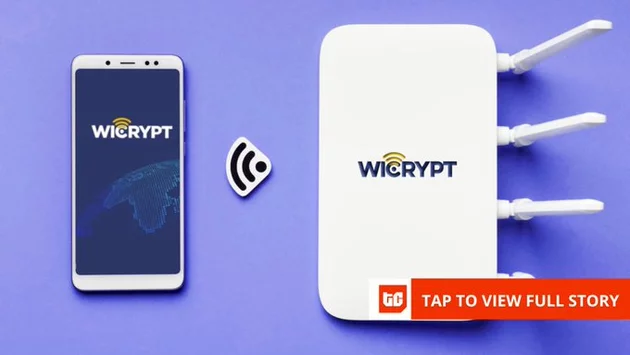
At the core of the Wicrypt story is the ability for users to set their own prices. Through a combination of hardware routers and mobile software, users can turn their internet connection into a paid hotspot. The owner decides who connects, how much data is shared, and at what cost. This flexibility introduces a marketplace-driven approach to connectivity. Pricing adjusts based on demand, location, and usage patterns. For many users, this turns internet access from a fixed expense into a potential source of income.
Solving access gaps without heavy infrastructure
One of Wicrypt’s strongest value propositions is how it addresses connectivity gaps. Traditional broadband expansion requires significant investment and long deployment timelines. Wicrypt bypasses this challenge by leveraging existing connections. Communities with limited infrastructure can still improve access through shared networks. This model works especially well in densely populated areas where unused bandwidth is common. As a result, Wicrypt supports faster connectivity growth without waiting for large-scale rollouts.
Building trust through secure sharing technology
Security played a critical role in shaping Wicrypt’s technology. Sharing internet access raises concerns about privacy, misuse, and accountability. Wicrypt designed its system to isolate user activity and protect network owners. Transactions and usage are monitored through the platform, reducing abuse risks. This trust-focused approach makes users more comfortable participating. Over time, reliability became a key factor driving adoption and word-of-mouth growth.
The broader vision behind the Wicrypt story
While Wicrypt started as a student experiment, its long-term vision extends beyond campus environments. The platform aims to redefine how people think about internet ownership. Instead of a one-way service, connectivity becomes a shared resource. This shift encourages micro-entrepreneurship and local economic participation. Users are no longer passive consumers of data. They actively shape pricing, availability, and access within their communities.
Why the Wicrypt story resonates today
The Wicrypt story stands out because it addresses a universal challenge with a relatable solution. Rising data costs, uneven coverage, and wasted resources affect millions of users daily. By turning a simple observation into a scalable business, Wicrypt demonstrates how innovation can emerge from lived experience. The company’s journey highlights the power of asking basic questions. In doing so, it shows how local problems can inspire globally relevant solutions.











Comment