Alerts

-
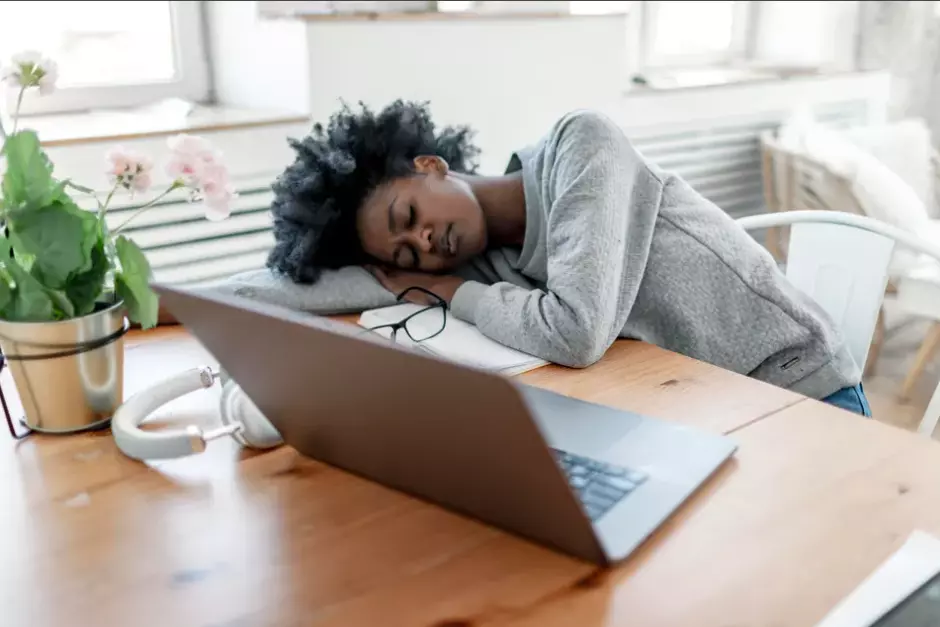
A Memphis morning news anchor recently found herself at the center of an unexpected viral moment. Dominique Dillon was caught on camera appearing to fall asleep during a live broadcast. Speaking with TODAY, Dillon recalled the moment she realized what had happened: “I opened my eyes, and it was cutting to the next shot and I was like, ‘Oh my goodness, I can’t believe this just happened to me.’”
While the experience was undoubtedly embarrassing for Dillon, the response from viewers was overwhelmingly supportive. Many people reached out to share that they could relate to her situation. Dillon explained to TODAY that she is a mother to a 2-year-old and an 8-month-old. She had been running on very little rest because her husband was working a double shift, and her youngest child was teething through the night.
Though few people will experience a workplace mishap that goes viral, Dillon’s underlying struggle is far from uncommon. What may be less widely known is that women tend to feel the consequences of insufficient sleep more severely than men. A 2024 study highlighted this disparity, and brain health professional and corporate wellness expert Candy Calderon has weighed in on why that is.
Calderon, the founder of CEO Wellness Club, explains that the toll of sleep loss accumulates more quickly in women and takes longer to reverse. “The negative effects of sleep loss appear to build faster in women and take longer to recuperate from,” she says. She points to a range of serious health risks linked to chronic sleep deprivation in women, including cardiovascular and metabolic disorders, insulin resistance—which raises the risk of diabetes—and even a higher risk of dementia.
When asked why women might be more vulnerable to the effects of poor sleep, Calderon points to biology. “If we ask, ‘Why could women be more affected than men?’ Then hormonal changes might be the reason. The menstrual cycle, pregnancy, postpartum, perimenopause, and menopause. Men don't go through any of it.”
This hormonal landscape means that women can make all the “right” choices and still face significant sleep disruption. As Calderon puts it, “As women, we can do everything right and still be handed a decade of broken sleep and the health consequences to match.”
The impact is not just physical. Calderon references a controlled study where a single night of sleep loss had a measurable effect on women’s working memory. Notably, the women in that study did not perceive their own impairment—meaning they were operating at a deficit without realizing it. Men in the same study showed neither the cognitive impairment nor the lack of awareness.
Calderon is careful to note the limits of the current evidence. “What I'd add is that these are small studies. Sex differences in sleep have been chronically understudied.” This acknowledgment underscores the need for more comprehensive research into how sleep affects men and women differently, and it highlights an important takeaway: sleep is not a one-size-fits-all issue, and the unique challenges women face deserve more attention—both in the doctor’s office and in the research lab.
Dominique’s experience offers a striking, real-world illustration of what Dr. Samantha-Rae Dickenson, a researcher and strategist, calls High-Functioning Survival Mode™. According to Dickenson, this is what occurs when relentless perseverance can no longer compensate for deep exhaustion and a lack of adequate support. She describes it as a nervous system trapped in a perpetual state of alert, driven by the unending demands of work, life, and caregiving, with no opportunity for true restorative rest. “You keep showing up, and saying you’re fine, until your body has the final say,” Dickenson explains.
Dr. Dickenson emphasizes that while these moments are often framed as relatable, they reveal a much broader systemic issue. “High-Functioning Survival Mode™ is the nervous system state and mechanism behind being outwardly successful and high functioning while internally depleted,” she says. This pattern is especially prevalent among high-achieving women, and particularly Black women, who are often rewarded for this behavior. “It has been normalized as being strong, resilient, successful, a good mom, dependable, while juggling multiple things all at once,” Dickenson notes, “without room or enough support to get the type of restorative rest you need.” The expectation to operate this way is not just common; it is frequently the standard.
Addressing this crisis requires systemic solutions that extend beyond the individual. Fatigue expert Calderon points out that this is a well-understood problem in high-stakes industries. “None of this is new. I see similar cases in aviation, medicine, and shift workers all the time where fatigue is treated as an operational risk with rules attached,” Calderon explains. The common corporate response—resilience training—is fundamentally flawed. “You cannot train someone out of a sleep deficit,” Calderon asserts. The necessary improvements must be structural, involving tangible changes to workplace policies such as calendars, shifts, and leave policies.
Calderon advocates for specific, actionable changes that organizations can implement to make a meaningful difference.
Calderon offers a straightforward way for companies to evaluate their genuine commitment to employee well-being. “The test I give companies is simple,” Calderon shares. “Name one thing on your calendar that changed because of what you know about sleep. If the answer is nothing, you have a wellness program, not a well-being strategy.”
Ultimately, it is imperative that organizations introduce infrastructure that protects all employees, especially those most vulnerable to sleep deprivation, including women and Black women. The responsibility for rest cannot rest solely on the individual. Instead, wellness programs must be designed with these populations in mind, ensuring that the system itself supports recovery and long-term health.

8.5K articles

4.2K articles

1.6K articles

34 articles













Comment