
-
2 minutes, 59 seconds
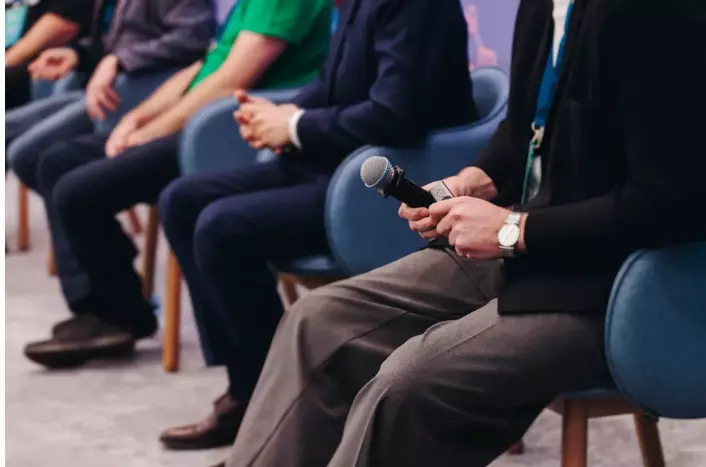
New research finds that many people don't even notice when no women are present in a group. This phenomenon, called "blindness to minority absence," explains why conferences, expert panels, and articles can lack women without anyone realizing it. The study, published in the Proceedings of the National Academy of Sciences (PNAS), shows that our brains simply overlook missing groups when we don't expect to see them.
Scientists ran a series of field studies and experiments with over 1,500 participants. They discovered that people frequently fail to notice the absence of women and racial minorities. For example:
Our brains are wired to notice things that are unusual or unexpected. But we often miss things that fit our expectations. Think about a kitchen: you'd immediately notice a recliner in the middle of the room, but you wouldn't notice a missing oven. Similarly, a female neurosurgeon feels unexpected, so she stands out. But when all neurosurgeons are men, that fits our mental image, so we don't notice the absence of women.
The same pattern applies to race and other settings. In one experiment, participants were more likely to notice missing white faces than missing Black faces. Why? Because they expected to see white faces. The researchers also tested this with kindergarten teachers. Most people expect female teachers in a kindergarten classroom, so participants noticed when no female teachers were present, but not when no male teachers were present.
Surprisingly, people who belong to underrepresented groups also failed to notice the absence of their own race or gender. Political beliefs didn't matter either. This shows the bias is not about prejudice—it's about how our brains process information.
The researchers call this "blindness to minority absence," and it's a big problem for diversity initiatives. As they explain: "Because people cannot act on problems they do not perceive, blindness to minority absence may present a significant obstacle for the development and effectiveness of diversity-promoting policies." In simple terms: if no one notices women are missing, no one will push to include them.
The good news is that this bias can be overcome. When researchers prompted participants to reflect on whether women or minorities were missing, they often remembered correctly. Lead author Rasha Kardosh, a postdoctoral fellow at New York University, says: "Simply prompting people to ask 'Who is missing?' may change how they see a setting and how they think about possible responses."
These findings come at a time when diversity initiatives face increased scrutiny. By simply training ourselves to notice who is missing, we can make our workplaces, articles, and events more inclusive. The first step is awareness—and now you have it.

7.8K articles

1.4K articles

34 articles

28 articles












)
)
Comment