
Alerts
-
6 minutes, 18 seconds
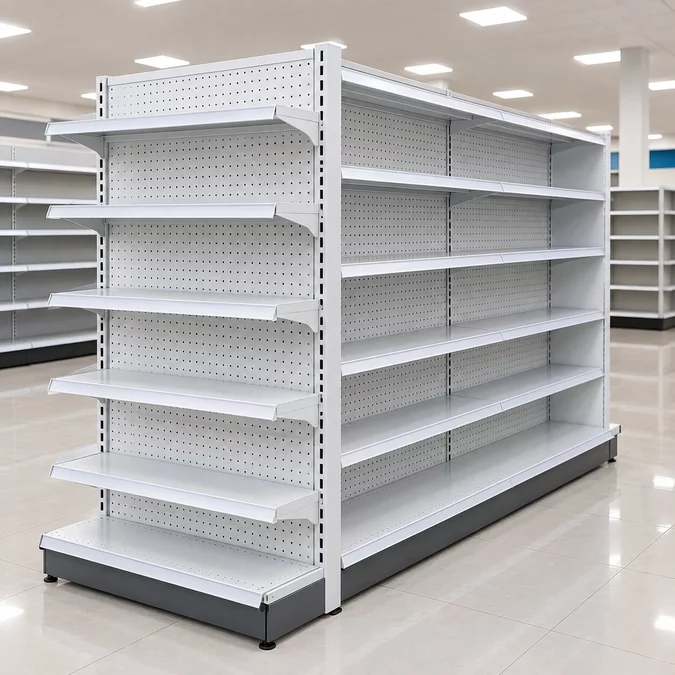
Retail stores need shelving that makes good use of floor space while keeping products easy to see and reach. Gondola Shelving is designed for this purpose, providing a flexible retail storage and display solution for supermarkets, convenience stores, independent shops, and other commercial environments.
Unlike basic wall shelving, gondola units can often be positioned in the middle of a store. Their double-sided design allows products to be displayed on both sides, creating useful shopping aisles without requiring separate fixtures for each product range.
Choosing the right gondola system starts with understanding the store layout, product requirements, available space, and expected daily use.
A good gondola shelving system needs to provide stable product support, practical storage, and clear product visibility. It should also fit naturally into the store layout without making aisles difficult to navigate.
The shelving should be strong enough for the products being displayed. Lightweight packaged goods may require less load capacity than heavier retail items, so the shelf specification should match the intended use.
Adjustable shelf positions can make the system more flexible. Retailers can change shelf heights to accommodate products of different sizes and create a more organised presentation.
Many different retail environments can use gondola shelving. Supermarkets often use it for packaged food, household products, personal care items, and everyday essentials.
Convenience stores can use compact gondola runs to maximise the available sales floor. Independent retailers can also combine gondola shelving with wall-mounted fixtures, counters, and specialist displays.
The system can be particularly useful when a store needs to create clear product categories while making efficient use of the centre of the shop.
There isn't one standard size suitable for every retail environment. Gondola shelving can be planned around the dimensions of the store and the amount of merchandise that needs to be displayed.
The height of the unit affects product visibility and the overall feel of the store. Taller shelving can provide greater display capacity, while lower units can create a more open environment and improve visibility across the shop.
Bay width and shelf depth should also be considered. Larger shelves can hold more products, but they also require more floor space.
Before installation, retailers should measure the available area and consider aisle widths, entrances, exits, checkout locations, and customer movement.
A gondola system typically uses multiple shelves that can be adjusted to different heights. This makes it easier to organise products according to their size and packaging.
Smaller products may benefit from closer shelf spacing, while larger containers need additional vertical clearance. Adjustable shelves allow retailers to change the configuration as their product range develops.
Shelf edges can also accommodate accessories such as price strips or product information holders. These small additions can make product identification easier for customers.
Load capacity is an important consideration when selecting retail shelving. The required capacity depends on the weight and quantity of products placed on each shelf.
Heavy merchandise requires a suitable shelving specification and stable construction. Retailers should always follow the manufacturer's stated load limits rather than assuming every shelf can support the same weight.
Even distribution of products can also help maintain a neat and stable display. Overloading a shelf can create safety and maintenance concerns, so stock levels should be managed according to the shelving specification.
Gondola shelving can be fitted with different accessories to support specific retail requirements. Price strips are useful for displaying product prices along shelf edges.
Shelf dividers can help separate different products, while hooks can provide space for hanging merchandise. Baskets, wire accessories, sign holders, and other components may also be suitable depending on the type of products being sold.
These accessories allow retailers to adapt the shelving instead of relying on one fixed configuration. As a result, the same shelving framework can support different product categories.
Double-sided gondola shelving is designed for use in the middle of a retail floor. Products can be displayed on both sides, allowing one unit to serve two shopping aisles.
This configuration can make efficient use of floor space because retailers don't need to position separate shelving units back-to-back.
The central position also creates opportunities to organise products into clear categories. For example, complementary product groups can be placed on opposite sides or along the same shelving run.
Good product presentation starts with an organised layout. Products should be arranged so customers can easily understand the different categories and find the items they're looking for.
Shelf height can be adjusted to create consistent rows and reduce unnecessary empty space. Products can also be grouped by brand, size, type, or use.
Keeping shelves stocked and facing products forward can help maintain a tidy appearance throughout the trading day. Regular checks are particularly useful in busy stores where products are frequently removed.
The finish should suit the overall appearance of the retail environment. Neutral finishes can blend easily with different shop interiors, while specific colours may be selected to complement existing branding or fixtures.
The finish should also be practical for regular retail use. Since shelving is exposed to customers and staff every day, it should be easy to maintain and suitable for the intended environment.
A consistent finish across different shelving runs can help create a more unified appearance throughout the store.
The shelving layout should support natural customer movement. Aisles should provide enough space for customers to browse and move between product categories without unnecessary obstruction.
Retailers should consider where customers enter the store, which products they see first, and where the checkout area is positioned.
Gondola units can be arranged into straight runs, islands, or combinations with wall shelving. The final configuration depends on the store's shape and product requirements.
Before purchasing a gondola system, retailers should check the available floor dimensions, unit height, bay width, shelf depth, number of shelves, load capacity, accessories, and finish.
It's also important to consider future requirements. A modular system can be useful because additional bays or accessories may be added when the store's product range changes.
Installation should be planned carefully so the shelving is positioned securely and doesn't interfere with entrances, exits, walkways, or other retail equipment.
Gondola shelving combines storage and product presentation in one flexible retail system. Its adjustable shelves can accommodate different product sizes, while double-sided configurations make effective use of central floor space.
For supermarkets, convenience stores, and independent retailers, the system can help create organised shopping aisles while providing room for a wide range of merchandise.
Retailers looking for adaptable shop-fitting solutions can work with Shop Solutions Midlands to plan shelving that suits their available space, product categories, and day-to-day retail requirements.
A suitable gondola shelving system should provide stability, flexibility, product visibility, and efficient use of floor space. It should also be easy to adapt as stock ranges and store layouts change.
By considering shelf dimensions, load requirements, accessories, unit height, aisle space, and future expansion before ordering, retailers can create a practical shelving arrangement that supports both product presentation and everyday store operations. Read more: retail shop shelving




Comment