
Alerts
-
3 minutes, 51 seconds
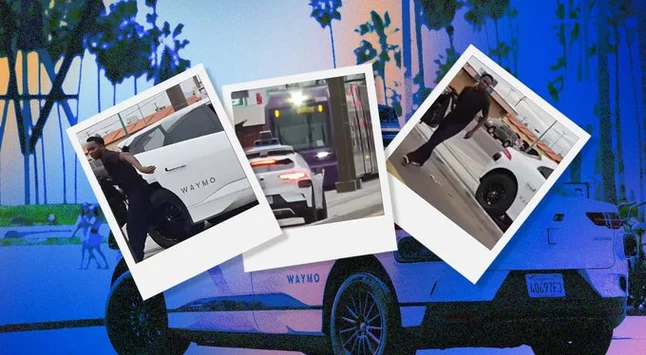
A Waymo self-driving car startled bystanders in Phoenix, Arizona, after it accidentally drove onto active light-rail tracks while a passenger fled the vehicle. The incident, captured on video by an onlooker, highlighted potential safety gaps in autonomous vehicle navigation, particularly in areas with recent construction or changing road layouts.
The passenger exited safely, leaving the AI-driven car to continue its unexpected journey along the tracks. This raised immediate concerns about how autonomous systems respond to unusual or rapidly evolving scenarios, especially when human intervention is absent.
Witnesses reported the passenger reacted quickly, sensing imminent danger, and left the vehicle without hesitation. In high-stress situations like this, human instincts typically override careful judgment, making it impossible to rely on passengers to correct AI errors.
Waymo’s safety protocols are designed to allow remote intervention, but the sudden nature of this event meant no immediate corrective measures could be taken. Video footage shows the car continuing along the tracks, emphasizing the challenges of unmonitored autonomous operation in unpredictable environments.
According to First Alert 6, the light-rail tracks were part of a new development completed just last year. Autonomous vehicle AI relies on GPS mapping and previously recorded data to distinguish roads from other surfaces. New infrastructure or construction zones can confuse navigation systems, especially when the AI has limited data for recently modified areas.
This incident underscores a known vulnerability in autonomous vehicle technology: while AI learns from past experiences, it struggles to anticipate future changes in city layouts or infrastructure. Phoenix’s rapid urban development creates a dynamic environment where such errors are more likely to occur.
Driverless technology faces increasing scrutiny as urban areas grow and evolve. Construction sites, new rail lines, and temporary road changes present unique challenges for AI navigation systems, which must adapt to unexpected conditions without human input.
Experts emphasize that autonomous vehicles need continual mapping updates and robust safety measures to prevent similar incidents. While AI is designed to reduce human error, these events reveal that technology alone cannot fully account for every real-world hazard, especially in cities undergoing rapid development.
The Phoenix incident serves as a cautionary tale for the autonomous vehicle industry. While self-driving cars promise convenience and efficiency, unexpected scenarios like new train tracks show that human oversight—or more advanced AI prediction capabilities—remains critical.
Waymo and other autonomous vehicle operators will likely review their mapping protocols, AI training data, and emergency response systems to prevent recurrence. Public confidence in self-driving technology depends on the industry’s ability to anticipate and respond to such real-world hazards effectively.










Comment