Alerts

-
7 minutes, 36 seconds
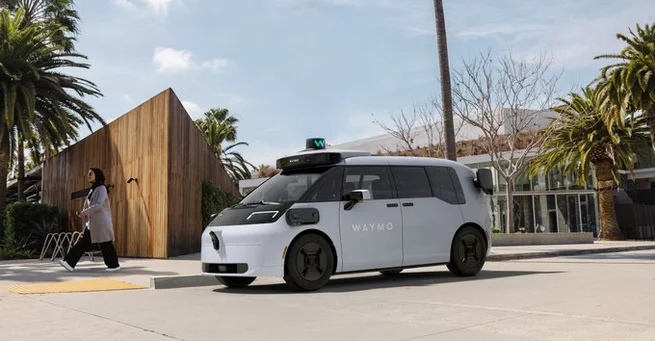
Self-driving cars are moving from concept to reality as the Waymo robotaxi prepares for passenger service and mass production. After years of testing, the autonomous vehicle platform is now ready for real-world riders, starting with limited trips before scaling to broader public access. This milestone signals a major shift in the robotaxi race, positioning Waymo to expand faster, cut costs, and dominate early adoption across new cities.
The latest update confirms that Waymo has officially finalized its sixth-generation robotaxi technology. The company plans to begin passenger rides with employees and select users before opening access to the public. Initial deployments are expected in San Francisco and Los Angeles, two cities already familiar with autonomous testing.
This rollout is more than a product update — it marks a turning point for autonomous mobility. By shifting from experimental trials to operational service, Waymo is reinforcing its early leadership in the robotaxi market. For consumers, it brings self-driving rides closer to everyday reality rather than futuristic speculation.
The sixth-generation platform represents a major leap in autonomy and efficiency. Unlike earlier versions, the new system uses fewer sensors while delivering higher performance and reliability. Improved cameras, lidar, and radar systems work together to detect obstacles, pedestrians, and road conditions with greater precision.
The upgrade also improves performance in challenging environments, including harsh weather and complex urban traffic. This makes the new system more versatile across different geographies and climates. The company emphasizes that smarter hardware and software integration reduces operational costs while increasing safety margins.
The transition to new vehicles reflects both strategic and practical changes. Waymo’s previous fleet relied heavily on the Jaguar I-Pace, which is no longer in production. That discontinuation forced the company to rethink its hardware approach and move toward a more flexible platform.
The new robotaxi system is designed to operate across multiple vehicle types. This shift allows Waymo to partner with more automakers and future-proof its fleet strategy. Flexibility is critical as the robotaxi market evolves rapidly and hardware availability becomes a competitive factor.
The next generation of Waymo robotaxis will debut in new electric vehicles built specifically for autonomy. The rollout begins with a minivan from Zeekr, followed by additional models like the Hyundai Ioniq 5. These vehicles are optimized for passenger comfort and sensor integration, improving both safety and rider experience.
Waymo is also exploring future collaborations with global automakers such as Toyota. Such partnerships could accelerate deployment across new markets while reducing manufacturing constraints. Expanding vehicle partnerships helps Waymo scale faster than competitors reliant on single-platform fleets.
Perhaps the most important announcement isn’t the launch itself — it’s the scale. Waymo says its new system is built for high-volume manufacturing, with partners capable of producing tens of thousands of robotaxis annually. This shift transforms the business from experimental technology to scalable infrastructure.
Mass production lowers per-unit costs and improves accessibility for consumers. As fleets grow, ride prices are expected to drop, making robotaxi services more competitive with traditional ride-hailing. High-volume manufacturing is also key to expanding into multiple cities simultaneously rather than slowly city by city.
Waymo is targeting rapid expansion across roughly 20 new cities in 2026. This aggressive roadmap reflects confidence in the maturity of its autonomous driving stack. Years of testing — including hundreds of millions of miles driven across major cities — support the company’s readiness claims.
Expanding into new environments will test the platform’s adaptability. From dense urban areas to regions with extreme weather, each new city presents unique challenges. However, Waymo’s new architecture is designed specifically for broader geographic deployment.
The robotaxi industry has long been defined by hype and slow progress. With this move, Waymo is attempting to separate itself from competitors by combining technical maturity with manufacturing scale. Being first to achieve both could create a powerful network effect.
Early large-scale deployments may help Waymo gather more data, refine algorithms faster, and lock in partnerships with cities and regulators. In emerging tech markets, early momentum often determines long-term dominance. If successful, this rollout could cement Waymo’s position as the frontrunner in autonomous mobility.
For riders, the evolution of Waymo robotaxis promises more than novelty. Autonomous rides could offer safer transportation by eliminating human driving errors, which remain a leading cause of accidents. Consistent driving patterns and real-time machine learning updates may improve safety over time.
Convenience is another major factor. Robotaxis can operate around the clock, potentially reducing wait times and improving transportation access in underserved areas. Over time, lower operational costs could translate into more affordable rides compared to traditional ride-hailing services.
The shift from limited testing to scalable deployment marks a defining moment for self-driving technology. Waymo’s latest milestone shows that autonomous mobility is transitioning into a real-world industry rather than an experimental frontier. High-volume production, new vehicle partnerships, and city expansion all point to accelerating adoption.
While challenges remain — including regulations, infrastructure readiness, and public trust — the direction is clear. Autonomous transportation is no longer a distant vision. With the Waymo robotaxi entering mass production and passenger service, the self-driving future is arriving faster than many expected.










Comment