
Alerts
-
7 minutes, 2 seconds
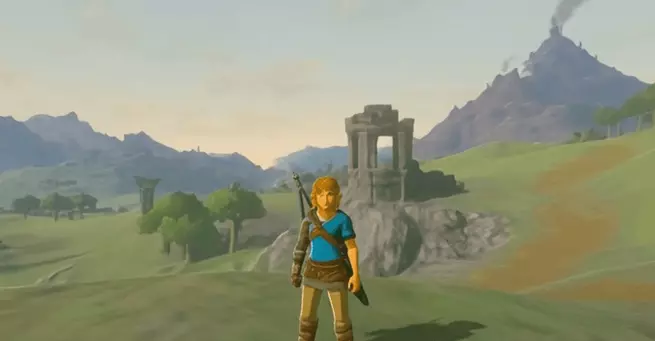
Video game company stock prices dropped sharply after Google revealed a new AI-powered world-generation tool designed to create interactive virtual experiences from text prompts. Investors quickly reacted to concerns that the technology could disrupt traditional game development, testing, and creative workflows. Several major gaming firms saw steep declines within a single trading session, signaling broader anxiety across the industry. The market response highlights growing uncertainty around how generative AI could reshape the future of game creation and employment.
The timing of the sell-off suggests that investors are closely watching how advanced AI tools might alter the competitive balance in gaming. While AI has long been part of development pipelines, this latest announcement raised new questions about automation, originality, and long-term value. For an industry already under pressure, the reaction was swift and unforgiving.
Following the announcement, several well-known video game companies experienced notable drops in share value. Take-Two Interactive closed the day down nearly eight percent, while Roblox shares fell by more than thirteen percent. Unity saw the steepest decline, losing over twenty-four percent in a single session. These moves wiped out significant market value in just hours.
Such synchronized declines suggest the market viewed the AI announcement as a sector-wide risk rather than an isolated event. Investors appeared to be pricing in the possibility that AI-generated worlds could reduce demand for traditional tools, engines, or development services. Even companies not directly competing with AI platforms were caught in the pullback. The sell-off reflected fear, not fundamentals, but fear can move markets quickly.
The newly revealed tool allows users to generate short, interactive virtual environments using simple prompts. These experiences resemble early-stage games, offering basic movement and interaction rather than fully developed gameplay. The technology is powered by an advanced world model trained on large amounts of publicly available data, including online gaming videos.
At its current stage, the tool can only generate experiences lasting around 60 seconds. While visually impressive, these worlds lack depth, balance, and long-term engagement. Still, the demonstration was enough to spark debate about how quickly the technology could improve. For investors, even limited capability today can signal significant disruption tomorrow.
Many game developers remain deeply skeptical of generative AI tools. A major concern centers on whether these systems borrow too heavily from existing games, blurring the line between inspiration and imitation. Early examples generated by the tool appeared to resemble familiar franchises, even if unintentionally. This resemblance has fueled worries about creative dilution across the industry.
Beyond originality, developers also question whether AI-generated content can ever match the fun, polish, and emotional resonance of human-made games. Building compelling gameplay requires iteration, testing, and creative judgment that AI currently struggles to replicate. For now, most see the tool as a rough experiment rather than a replacement for skilled teams. However, skepticism has not eased fears about future displacement.
The gaming sector has faced repeated waves of layoffs over the past few years. Against that backdrop, the introduction of AI world-generation tools has heightened anxiety about job security. Even if AI cannot build full games, it may replace early-stage tasks such as prototyping, concept art, or quality testing. These roles often serve as entry points for new talent.
Investors appear to be weighing potential cost savings against reputational and creative risks. Reducing headcount through automation may boost short-term margins but could weaken long-term innovation. The stock market reaction suggests uncertainty over which outcome will dominate. For workers, the announcement added another layer of instability to an already fragile environment.
Despite the dramatic market reaction, the AI tool remains limited in scope. It cannot produce full-length games, deep narratives, or complex mechanics. Still, investors tend to look ahead, pricing stocks based on future possibilities rather than present constraints. The concern is not what the tool does today, but what it could do in five years.
Generative AI has a track record of improving rapidly once early hurdles are cleared. That potential trajectory is what unsettled markets. Even a small chance of major disruption can trigger defensive selling, especially in creative industries. The gaming sector now finds itself squarely in that conversation.
The drop in video game company stock prices reflects more than a reaction to one product reveal. It underscores a broader reckoning between creativity and automation in interactive entertainment. While AI tools may eventually support developers rather than replace them, trust has yet to be earned. Both creators and investors remain cautious.
For now, the industry sits at a crossroads. Innovation promises efficiency and new possibilities, but also threatens established roles and business models. How companies respond, ethically and strategically, will shape the next chapter of gaming. The market has made one thing clear: uncertainty around AI carries real financial consequences.










Comment