
Alerts
-
4 minutes, 50 seconds
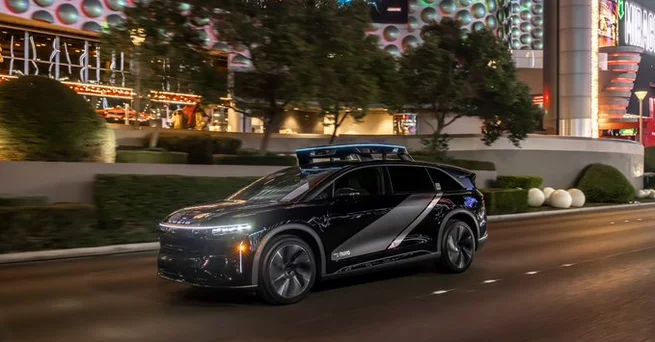
Uber’s robotaxi halo became one of the most talked-about visuals at CES 2026, answering a question many tech fans are asking: what will Uber’s next-generation autonomous cars actually look like? The company revealed upgraded Lucid Gravity SUVs designed specifically for robotaxi service, ahead of their public launch later this year. These vehicles are part of Uber’s long-term autonomous strategy with Lucid and Nuro. The reveal offered the clearest look yet at how luxury EV design is merging with self-driving technology. Visitors immediately noticed the futuristic hardware mounted above the roofline. Uber appears focused on blending function with visual identity. The debut also signals that robotaxis are moving closer to everyday reality.
Uber’s robotaxi halo isn’t just a design experiment; it represents a large-scale deployment plan. Last year, Uber, Lucid, and Nuro announced a deal to roll out 20,000 autonomous vehicles across the US over six years. These robotaxis will be owned by Uber or managed by third-party fleet operators. San Francisco is confirmed as the first launch city, reinforcing its role as a testing ground for autonomous mobility. The Lucid Gravity SUV was chosen for its premium interior and long-range EV platform. Uber is positioning these vehicles as both high-tech and comfortable. The partnership suggests Uber wants tighter control over the rider experience. That strategy could shape how urban transportation evolves.
The most striking feature of the Uber robotaxi is the floating sensor system perched above the roof. Uber calls this setup a “purpose-built, roof-mounted halo,” and the name fits its appearance. The halo houses solid-state lidar along with other critical sensors for autonomous driving. Unlike Waymo’s roof-flush sensor design, Uber’s halo visibly hovers a few inches above the vehicle. This separation makes the technology instantly recognizable. Uber seems to be embracing visibility rather than hiding its autonomy hardware. The design also hints at easier upgrades and maintenance. Functionally, it reinforces the car’s awareness of its surroundings.
Uber didn’t stop at sensors when designing the robotaxi halo. LED lighting accents circle the halo to improve visibility for pedestrians and nearby drivers. These lights also give the vehicle a distinctive presence on the road. Additional LED screens appear on the front and sides of the SUV. They can display messages like “Hello” or show rider initials for easy identification. This echoes Uber’s earlier Beacon experiment but expands it across the vehicle. Clear communication is crucial for driverless cars operating in busy cities. The lighting may also reduce confusion at pickup points. Overall, the design blends safety, branding, and user experience.
The Uber robotaxi halo signals a shift in how autonomous vehicles are presented to the public. Rather than blending in, Uber’s design makes autonomy obvious and intentional. This transparency could help build trust with riders and pedestrians. The Lucid Gravity platform adds a premium feel that aligns with Uber’s push toward higher-end services. With San Francisco as the starting point, public reaction will be closely watched. Success there could accelerate expansion into other cities. CES 2026 suggests Uber is serious about scaling autonomy, not just testing it. The halo may soon become a familiar sight on city streets.










Comment