Alerts

-
3 minutes, 22 seconds
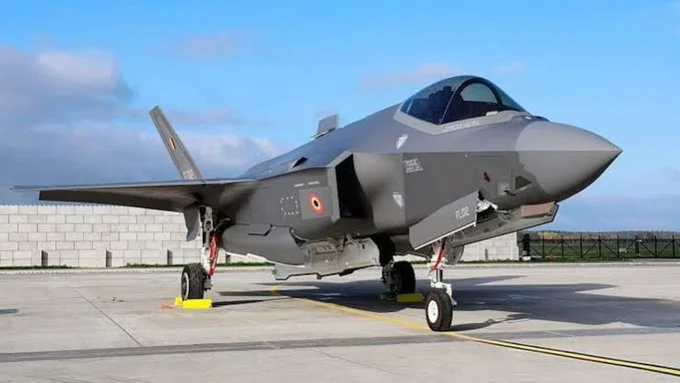
The Pentagon is actively seeking a new generation of inexpensive, attritable drones to address rapidly evolving threats and sustain its military advantage. This initiative marks a strategic shift away from relying solely on a small number of exquisite, high-cost platforms. Instead, the focus is on fielding large numbers of cheaper systems that can be deployed in swarms or distributed networks, overwhelming adversary defenses.
According to the source, this approach is driven by the need to counter the rising capability of peer competitors and non-state actors who have demonstrated the effectiveness of low-cost unmanned systems. The goal is to achieve mass and resilience at a price point that allows for significant force multiplication without breaking the defense budget. The Pentagon believes that this new drone initiative is essential for ensuring that U.S. forces remain dominant in future conflicts, where the ability to quickly adapt and field innovative, cost-effective technology will be a critical differentiator.
The imperative for low-cost drones stems directly from the prohibitive expense of current systems. Advanced military drones, such as the MQ-9 Reaper, can cost tens of millions of dollars per unit, making them a scarce and highly valued asset. This high price tag inherently limits the number that can be procured and fielded, restricting their use to high-priority missions.
Simultaneously, the proliferation of drone technology among adversaries has fundamentally altered the operational landscape. State and non-state actors now deploy inexpensive, commercially available drones for reconnaissance and attacks. The U.S. military’s reliance on a small number of exquisite, costly platforms is a vulnerability when facing an enemy that can saturate the battlespace with swarms of cheap systems. To counter this, the U.S. must possess a similar capacity for mass, which is only achievable by dramatically reducing unit costs. Affordable, expendable drones allow for the riskier, high-volume operations that are now essential for maintaining tactical superiority. As noted in the source, the high cost of current systems and the spread of drone technology among adversaries create a critical need for cheaper alternatives.
The new drone designs prioritize affordability and expendability over multi-mission sophistication. Rather than preserving every airframe, the Pentagon envisions platforms that can be used once and lost without strategic or financial strain. This approach directly supports operations in contested environments, where electronic warfare and air defenses would make recovery risky or impossible.
Key planned attributes include:
These drones are expected to operate in large numbers, overwhelming adversary defenses through saturation rather than individual capability. The emphasis on expendability means they can be pushed into high-threat areas where manned or premium unmanned systems would be withheld. This shifts the cost-benefit calculus: losing dozens of cheap drones is acceptable if they degrade a target or force an enemy to expend expensive interceptors.
The shift toward cheaper drones is poised to reshape core military assumptions. With lower unit costs, the Pentagon can move from precision-strike scarcity to massed, attritable swarms—a fundamental change in tactical calculus. This enables new operational concepts where commanders trade individual platforms for collective effect, saturating enemy air defenses rather than risking a single high-value asset.
Logistically, cheaper systems reduce the burden of sustainment. Instead of protecting a small fleet of exquisite drones, forces can pre-position large numbers of expendable units, simplifying supply chains and maintenance cycles. Procurement likewise shifts from multi-year, high-cost programs to rapid, iterative production runs that can adapt to evolving threats.
For the individual warfighter, this means:
Ultimately, the strategic impact lies in deterrence: a force that can cheaply field thousands of drones presents a different, and arguably more credible, threat than one relying on a handful of exquisite systems.










Comment