


The Complete Guide to CRM Software in Dubai and How It Benefits Your Business in 2026
-
10 minutes, 48 seconds
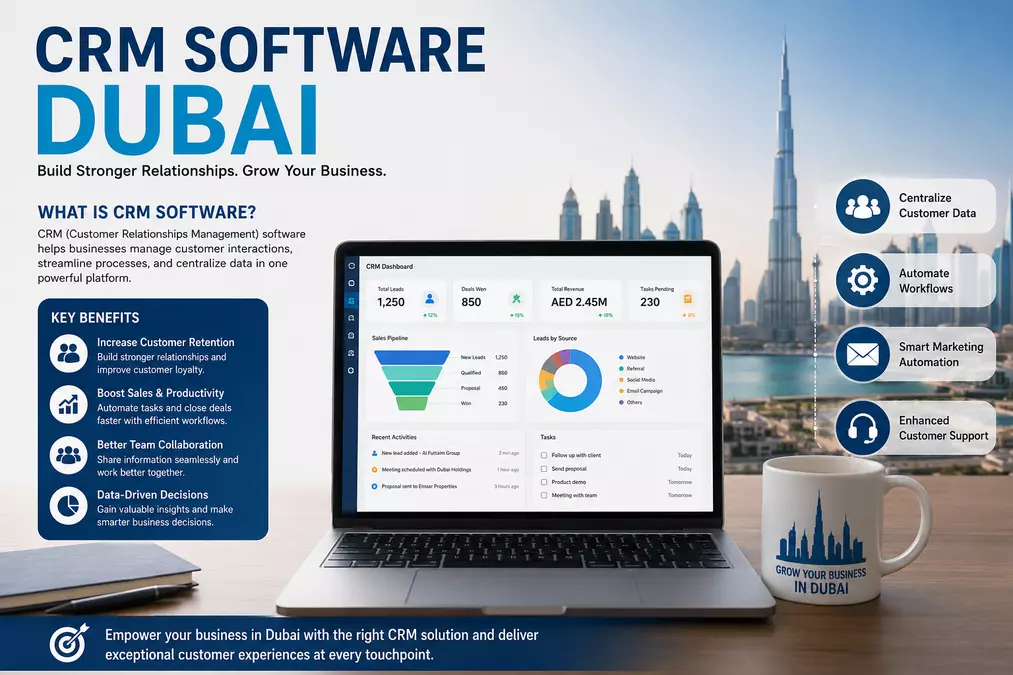
What Is CRM Software?
Customer Relationship Management (CRM) software is a business solution designed to help companies manage interactions with customers, prospects, and business partners from a single centralized platform. Think of CRM as the digital brain of your business. Instead of storing customer information in scattered spreadsheets, notebooks, email chains, or individual employee records, CRM software organizes everything in one place. Every customer interaction, purchase history, support request, follow-up task, and communication record becomes accessible whenever needed.
In today's competitive marketplace, businesses can no longer rely on memory or manual record-keeping. Customers expect personalized experiences, quick responses, and consistent service across multiple channels. CRM software enables businesses to meet these expectations by creating a complete view of each customer. Sales teams can track leads more effectively, marketing departments can run targeted campaigns, and customer service teams can resolve issues faster because all customer information is readily available.
The role of CRM has expanded significantly in recent years. Modern CRM platforms now incorporate artificial intelligence, predictive analytics, workflow automation, and omnichannel communication capabilities. Businesses using CRM systems can automate repetitive tasks, identify sales opportunities, and gain valuable insights into customer behavior. As customer expectations continue to rise, CRM software has evolved from being a luxury tool into a business necessity for organizations of all sizes. Businesses in Dubai, from startups to large enterprises, are increasingly recognizing CRM as a strategic asset that drives growth and strengthens customer relationships.
Why CRM Has Become Essential for Modern Businesses
The modern customer journey is more complex than ever before. Customers interact with businesses through websites, social media, email, phone calls, live chat, and mobile applications. Without a centralized system, managing these interactions becomes challenging. CRM software bridges this gap by consolidating customer information and communication channels into a unified platform.
Businesses that fail to organize customer data often face issues such as missed opportunities, inconsistent communication, duplicated efforts, and poor customer experiences. CRM eliminates these challenges by ensuring that every department works from the same source of truth. Whether a customer contacts sales, support, or marketing, the entire interaction history remains visible.
CRM systems also play a critical role in improving operational efficiency. Automation features reduce manual work by automatically assigning leads, scheduling follow-ups, generating reports, and sending personalized communications. This allows employees to focus on high-value activities rather than administrative tasks. Research and industry analysis consistently show that organizations implementing CRM effectively experience improved customer satisfaction, stronger retention rates, and increased revenue growth. AI-powered CRM capabilities are further transforming how businesses engage customers by delivering personalized recommendations and predictive insights.
The Growing Demand for CRM Software in Dubai
Dubai’s Digital-First Business Environment
Dubai has established itself as one of the world's most innovative and digitally advanced business hubs. The city attracts multinational corporations, startups, investors, and entrepreneurs from across the globe. In such a highly competitive environment, maintaining strong customer relationships is crucial for business success.
The rapid pace of digital transformation across the UAE has accelerated the adoption of CRM solutions. Businesses operating in industries such as real estate, healthcare, hospitality, retail, finance, logistics, and professional services are leveraging CRM software to streamline operations and improve customer engagement. Dubai's customer-centric economy places significant emphasis on delivering exceptional experiences, making CRM technology a critical investment.
A major advantage of CRM software in Dubai is its ability to support multilingual and multicultural customer bases. Businesses frequently interact with customers from different nationalities and regions. CRM platforms help organizations manage diverse customer segments efficiently while maintaining personalized communication. The growing focus on automation, digital customer journeys, and AI-driven engagement strategies has further increased demand for sophisticated CRM solutions throughout the emirate.
CRM Adoption Trends in the UAE
Recent industry reports indicate strong momentum in CRM and AI adoption across the UAE business landscape. According to research conducted in the UAE market, approximately 63% of businesses have already integrated AI or automation into their operations, while 44% have implemented AI agents. The same research found that 80% of consumers consider personalized experiences highly important when making purchasing decisions.
These statistics highlight a growing expectation for businesses to deliver tailored customer experiences. CRM software provides the foundation for meeting these expectations by collecting, organizing, and analyzing customer data. Companies that embrace CRM gain a competitive advantage by understanding customer preferences, anticipating needs, and responding proactively.
The integration of AI into CRM platforms is another significant trend shaping the market. Modern CRM solutions now offer predictive analytics, automated lead scoring, intelligent chatbots, and sales forecasting tools. These capabilities help businesses make smarter decisions and achieve higher levels of efficiency. As Dubai continues its digital transformation journey, CRM adoption is expected to become even more widespread across industries.
Core Features of Modern CRM Software
Customer Data Management
At the heart of every CRM system lies customer data management. This feature allows businesses to store comprehensive customer profiles, including contact information, purchase history, communication records, preferences, and engagement activities. Instead of searching through multiple databases or email threads, employees can access complete customer information instantly.
Accurate customer data empowers businesses to provide personalized experiences. When a sales representative understands a customer's previous interactions and interests, conversations become more meaningful and productive. Likewise, support teams can resolve issues more efficiently because they have immediate access to relevant information.
Sales Automation
Sales automation is one of the most valuable features offered by CRM software. It streamlines repetitive tasks such as lead assignment, follow-up reminders, quote generation, and pipeline management. Automated workflows ensure that opportunities are not overlooked and sales teams remain focused on closing deals.
Modern CRM platforms also include AI-powered forecasting tools that help businesses predict future revenue and identify high-potential prospects. Automated lead scoring prioritizes opportunities based on likelihood of conversion, allowing sales teams to allocate resources effectively. AI-assisted sales tools are becoming increasingly common in advanced CRM platforms, improving productivity and reducing administrative workloads.
Marketing Automation
Marketing automation enables businesses to create targeted campaigns based on customer behavior and preferences. CRM software can segment audiences, automate email sequences, track engagement metrics, and measure campaign performance. These capabilities help organizations deliver relevant content to the right audience at the right time.
Personalized marketing significantly improves customer engagement and conversion rates. By leveraging CRM data, businesses can nurture leads more effectively and create stronger connections with customers throughout the buying journey.
Customer Service and Support
Exceptional customer service remains a key differentiator in competitive markets. CRM software equips support teams with the tools needed to deliver faster and more effective assistance. Ticket management systems, knowledge bases, live chat integration, and customer history tracking all contribute to improved service experiences.
When support agents have access to complete customer records, they can resolve issues quickly and avoid asking customers to repeat information. This creates smoother interactions and enhances customer satisfaction.
How CRM Software Benefits Businesses in Dubai
Improved Customer Retention
Customer retention is often more cost-effective than customer acquisition. CRM software helps businesses build stronger relationships by maintaining consistent communication and delivering personalized experiences. Customers who feel valued are more likely to remain loyal and continue doing business with a company.
CRM systems track customer interactions, preferences, and purchase patterns, enabling businesses to identify opportunities for engagement. Automated follow-ups, personalized offers, and proactive support contribute to long-term customer loyalty. Studies examining AI-enabled CRM systems consistently highlight their positive impact on customer retention and overall business performance.
Better Sales Performance
One of the most immediate benefits of CRM software is improved sales performance. By providing visibility into the sales pipeline, CRM platforms help businesses manage opportunities more effectively. Sales teams can track leads from initial contact through conversion, ensuring no opportunity falls through the cracks.
The ability to automate repetitive tasks allows sales professionals to focus on building relationships and closing deals. Advanced analytics provide insights into sales performance, helping managers identify strengths, weaknesses, and growth opportunities.
CRM Impact on Business Performance
| Business Area | Without CRM | With CRM |
|---|---|---|
| Lead Tracking | Manual and inconsistent | Automated and centralized |
| Customer Data | Scattered across systems | Unified database |
| Sales Forecasting | Limited visibility | AI-powered insights |
| Customer Support | Slow response times | Faster resolutions |
| Team Collaboration | Information silos | Shared visibility |
Enhanced Team Collaboration
Collaboration is critical for delivering consistent customer experiences. CRM software serves as a central hub where sales, marketing, and customer service teams can access shared information. This eliminates communication gaps and ensures that everyone remains aligned.
When departments work together effectively, customers receive more cohesive experiences. Marketing campaigns become more targeted, sales conversations become more informed, and support interactions become more efficient.
Data-Driven Decision Making
Modern businesses generate vast amounts of data. CRM software transforms this data into actionable insights through dashboards, reports, and analytics tools. Business leaders can monitor performance metrics, identify trends, and make informed decisions based on real-time information.
Data-driven decision-making reduces uncertainty and enables organizations to respond quickly to changing market conditions. This capability is particularly valuable in Dubai's fast-moving business environment, where agility and responsiveness are essential for success.
Types of CRM Software Available in Dubai
Cloud-Based CRM
Cloud-based CRM solutions have become the preferred choice for many businesses due to their flexibility, scalability, and lower upfront costs. These systems are hosted remotely and accessed through the internet, eliminating the need for extensive on-site infrastructure.
Cloud CRM platforms offer benefits such as automatic updates, remote accessibility, and easier integration with other business applications. For growing businesses in Dubai, cloud CRM provides the agility needed to adapt quickly to changing requirements.
On-Premise CRM
On-premise CRM solutions are installed and maintained within a company's own infrastructure. While they require greater investment and technical resources, they provide enhanced control over data and system customization.
Organizations with strict security requirements or highly specialized workflows may prefer on-premise CRM deployments. The choice ultimately depends on business objectives, compliance requirements, and budget considerations.
Choosing the Right CRM Software in Dubai
Key Factors to Consider
Selecting the right CRM requires careful evaluation of business needs. Key considerations include scalability, ease of use, integration capabilities, automation features, reporting functionality, and total cost of ownership. Businesses should also assess vendor support, training resources, and customization options.
The ideal CRM should align with both current requirements and future growth plans. A platform that works well today should continue supporting the business as it expands.
Top CRM Platforms Popular in Dubai
Several CRM platforms have established strong positions within the UAE market.
| CRM Platform | Best For | Key Strength |
|---|---|---|
| Salesforce | Large enterprises | Advanced customization |
| Microsoft Dynamics 365 | Microsoft ecosystem users | Seamless integrations |
| HubSpot CRM | SMEs and startups | User-friendly interface |
| Zoho CRM | Growing businesses | Affordable scalability |
| Freshsales | Budget-conscious companies | Fast deployment |
These platforms offer varying levels of functionality, pricing, and customization. Businesses should evaluate multiple options before making a final decision.
Future of CRM Software in Dubai
The future of CRM software in Dubai is closely tied to artificial intelligence, automation, and predictive analytics. AI-powered CRM systems are becoming increasingly sophisticated, enabling businesses to anticipate customer needs, automate complex workflows, and generate highly personalized experiences.
Emerging technologies such as conversational AI, intelligent sales assistants, and predictive customer behavior modeling are reshaping how organizations interact with customers. Businesses that adopt these innovations early will be better positioned to compete in Dubai's dynamic marketplace. AI-enhanced CRM solutions are already demonstrating significant productivity gains by reducing manual work and accelerating customer engagement processes.
Conclusion
CRM software in Dubai has evolved from a simple contact management tool into a strategic business platform that drives growth, efficiency, and customer satisfaction. By centralizing customer information, automating processes, and delivering valuable insights, CRM solutions empower businesses to build stronger relationships and make smarter decisions.
As customer expectations continue to rise and competition intensifies, organizations that invest in the right CRM software gain a significant advantage. Whether you're a startup seeking better lead management or an enterprise looking to optimize customer experiences, CRM technology provides the foundation for sustainable growth. In Dubai's rapidly evolving digital economy, CRM is no longer optional—it is an essential component of long-term business success.
FAQs
1. What is CRM software used for?
CRM software is used to manage customer relationships, track interactions, automate sales processes, improve customer service, and analyze customer data to support business growth.
2. Is CRM software suitable for small businesses in Dubai?
Yes. Many CRM platforms offer affordable plans specifically designed for startups and small businesses, helping them organize customer data and improve sales performance.
3. What industries benefit most from CRM software?
Industries such as real estate, healthcare, retail, finance, hospitality, logistics, and professional services benefit significantly from CRM implementation.
4. How does CRM software improve customer retention?
CRM helps businesses maintain personalized communication, track customer preferences, automate follow-ups, and deliver better customer service, all of which contribute to stronger customer loyalty.
5. What is the difference between cloud CRM and on-premise CRM?
Cloud CRM is hosted online and accessed via the internet, while on-premise CRM is installed on a company's own servers. Cloud CRM offers greater flexibility, while on-premise CRM provides more direct control over data and infrastructure.


Contact Information

Suggested Writers
-

7.6K articles
-

2.5K articles
-

1.3K articles
-

34 articles




Comment