
Alerts
-
7 minutes, 46 seconds
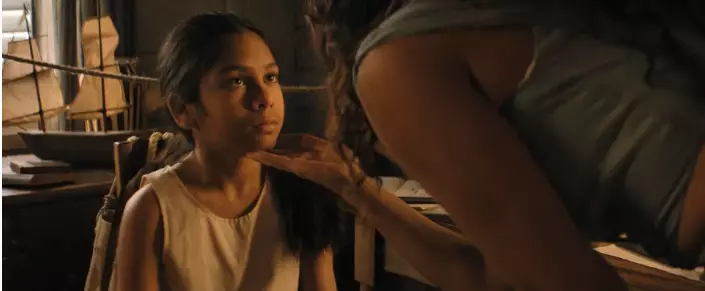
When The Bluff debuted at No. 1 worldwide on Prime Video in March 2026, it quickly sparked a bigger conversation: can authentic disability casting be the future of blockbuster success? The answer, according to early data and industry reactions, is yes. Director Frank E. Flowers celebrated the milestone alongside the disabled filmmaking community, highlighting how the film treated disability not as a limitation but as a creative advantage. At the center of this breakthrough is young actor Vedanten Naidoo, whose real-life experience shaped a performance that resonated globally. The film’s success is already being seen as a case study in modern, inclusive storytelling. More importantly, it signals a shift in what audiences value. Authenticity is no longer optional—it’s a competitive edge.
Despite representing a significant portion of the global population, people with disabilities remain largely invisible on screen. Studies show that one in four Americans identifies as having a disability, while globally the number is closer to one in six. Yet, fewer than 4% of speaking characters in major films reflect that reality. In children’s media, the number drops even further, falling below 1%. This gap reveals not just a cultural oversight but a missed business opportunity. Audiences are eager to see themselves represented in meaningful ways. The Bluff stepped directly into this gap—and capitalized on it. The result is proof that inclusion isn’t just ethical; it’s profitable.
In the film, Naidoo plays Isaac Bodden, a young boy with cerebral palsy navigating a dangerous pirate world alongside his mother, played by Priyanka Chopra Jonas. Crucially, Isaac’s disability is not the center of the story—it’s simply part of who he is. This approach avoids the clichés that have long defined disability narratives in Hollywood. Instead of framing Isaac as someone to be pitied or “overcome,” the film presents him as capable, complex, and fully human. According to Flowers, casting actors with lived experience unlocks emotional depth that traditional casting often misses. It allows performances to feel grounded and real. And audiences are responding to that honesty.
Finding the right actor for Isaac was no easy task, but the production refused to lower its standards. Casting director Sarah Finn led a search for a young actor who could authentically represent the role. The result was Naidoo, whose background in performance and personal journey made him uniquely suited for the part. His mother, Nadine Naidoo, used acting as a developmental tool, helping him build both confidence and physical capability over time. By the time he landed The Bluff, he had already appeared in projects across major platforms. This commitment to authenticity sent a clear message: inclusive casting requires effort—but it delivers results. And it proves that talent exists when you choose to look for it.
One of the film’s biggest lessons is that accessibility can improve production for everyone—not just disabled cast members. When concerns arose about navigating sandy filming locations, the crew installed rubber matting, making it easier to transport equipment. When accessible trailers weren’t available, they created adaptable solutions that can now benefit future productions. Even costume design evolved, with custom footwear built to incorporate Naidoo’s real braces seamlessly. Accessibility consultant Stephanie Dower worked closely with the team, ensuring safety and inclusion across departments. These changes didn’t slow production—they enhanced it. As Flowers noted, it’s less about extra cost and more about better planning.
Naidoo’s performance stands as the emotional core of the film, offering audiences a portrayal rarely seen at this scale. His physical movements, shaped by cerebral palsy, are not hidden or altered—they are embraced as part of the storytelling. This creates a viewing experience that feels immediate and genuine. Rather than focusing on limitation, the film highlights adaptability and resilience. Naidoo himself emphasized that disabled characters should be written with full arcs, not defined solely by their condition. This perspective resonates strongly with audiences who want representation without tokenism. It’s a subtle shift, but one with powerful impact.
The success of The Bluff, backed by studios like Amazon MGM Studios, is more than a one-off win—it’s a signal to the entire industry. Inclusive casting is no longer a niche strategy; it’s a proven path to global success. With a diverse ensemble that includes stars like Karl Urban, the film blends mainstream appeal with meaningful representation. Industry advocates have already called it a milestone moment for disability inclusion in cinema. The message is clear: audiences want stories that reflect real life. And when filmmakers deliver that authenticity, they don’t just tell better stories—they win.
For studios still debating whether inclusive casting is worth the investment, The Bluff offers a decisive answer. Authentic representation drives engagement, builds trust, and expands audience reach. It transforms storytelling from something people watch into something they feel connected to. As Hollywood continues to evolve, the films that succeed will be those that reflect the diversity of the real world. Disability casting is no longer an afterthought—it’s a blueprint for the future. And if The Bluff is any indication, that future is already here.










Comment