
Alerts
-
5 minutes, 20 seconds
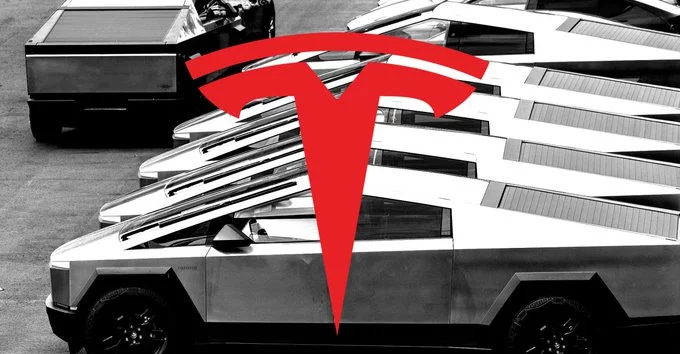
Global interest in Tesla sales recovery has surged as buyers and investors ask whether the company is truly back on track after a turbulent period. Recent figures show a slight year-over-year improvement, but the broader trend still points to weakening demand, uneven regional performance, and growing competition in the electric vehicle market. This article breaks down what is driving the partial rebound, why concerns remain, and what it could mean for the future of Tesla’s sales trajectory in 2026.
Despite a modest uptick in deliveries, Tesla’s sales recovery remains fragile and heavily dependent on short-term incentives rather than sustained consumer demand across key global markets.
Analysts point to fluctuating demand across major regions, where price sensitivity and supply adjustments have created inconsistent sales momentum throughout the year.
While the electric vehicle sector continues to grow overall, Tesla faces intensified competition and shifting buyer expectations that are limiting its ability to scale recovery uniformly.
Weak quarterly signals have left investors cautious, with many focusing on margin pressure, pricing strategy, and the long-term sustainability of Tesla’s growth model.
Looking ahead, Tesla’s sales recovery will depend heavily on how effectively the company balances pricing strategy with innovation in its next-generation vehicles. Market analysts expect gradual stabilization, but caution that external pressures such as interest rates and regional subsidies will continue shaping demand patterns. Any sustained improvement will require stronger affordability measures and clearer product differentiation across Tesla’s lineup.
Recent pricing adjustments have played a key role in boosting short-term sales volumes, but they have also raised concerns about long-term profitability. Consumers appear increasingly responsive to discounts, indicating that Tesla’s demand curve is becoming more elastic than in previous years. This dynamic creates a challenge for maintaining premium brand positioning while still achieving higher delivery targets.
Tesla continues to face mounting pressure from established automakers and emerging electric vehicle startups that are rapidly expanding their product offerings. These competitors are increasingly targeting the same price segments, forcing Tesla to defend its market share more aggressively than before. At the same time, global expansion strategies and software-driven services are expected to play a larger role in sustaining future growth.
Investor sentiment around Tesla has become increasingly cautious as short-term sales fluctuations overshadow long-term growth narratives. This shift reflects broader uncertainty in the electric vehicle market, where rapid innovation is colliding with slower-than-expected adoption rates in several regions. Many investors are now prioritizing efficiency, cash flow stability, and realistic delivery forecasts over aggressive expansion assumptions.
Despite current challenges, Tesla remains a central player in the global transition to electric mobility, with its performance still closely watched by markets worldwide. The company’s ability to stabilize its sales recovery will depend on a combination of product innovation, pricing discipline, and expansion into new markets. At the same time, shifting consumer preferences and macroeconomic conditions will continue to influence demand patterns across all regions.
Ultimately, Tesla’s sales recovery will determine whether the company can maintain its leadership position in an increasingly crowded electric vehicle landscape. Industry observers also note that software services and autonomous driving developments may become key differentiators in the coming years. However, execution risks remain significant in a highly competitive and rapidly evolving industry landscape. Success will depend on consistent delivery and strategic clarity across all business units. Investors are closely watching now.










Comment