SpaceX Starship V3 Cleared for Flight After Booster Investigation
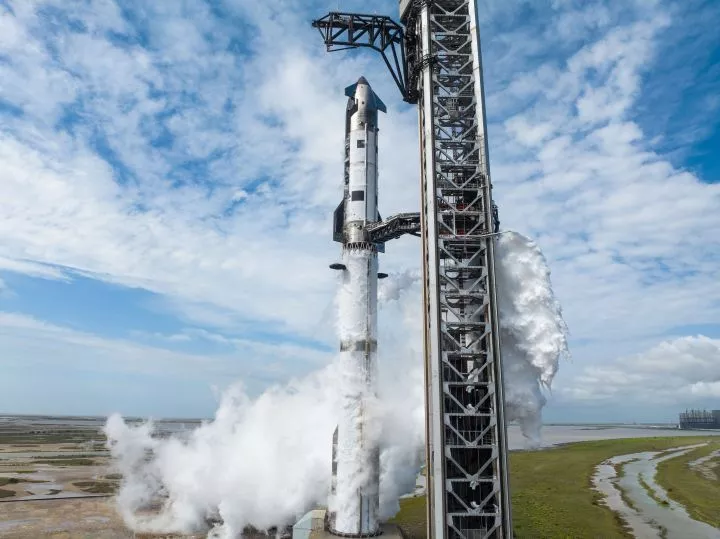
SpaceX's Starship V3 has officially received regulatory clearance to return to flight following a thorough investigation into the Super Heavy booster failure that occurred during its last mission in May. The next launch is tentatively scheduled for as early as July 16, marking a critical step forward for the world's most powerful rocket. This upcoming test flight will also debut the third-generation Starlink satellites, making it one of the most consequential missions in the company's history.
The approval represents more than just a green light for another launch. It signals growing confidence in the engineering changes implemented after the May anomaly, while underscoring SpaceX's commitment to rapid iteration and continuous improvement. As the company pushes toward satellite internet expansion, deep-space exploration, and fully reusable launch systems, each successful Starship mission builds momentum for its long-term vision.
Why SpaceX Starship V3 Is Flying Again
The Federal Aviation Administration (FAA) clearance followed months of technical reviews after the previous Starship V3 mission encountered problems during the Super Heavy booster's return. Although the upper stage completed most of its planned objectives, the booster failed during its landing sequence due to engine restart issues that prevented a controlled descent.
Root Cause of the Booster Failure
Engineers conducted an extensive investigation to determine the exact cause of the malfunction. According to the findings, small differences in engine startup timing caused the booster to rotate in the wrong direction immediately after stage separation. Instead of preparing correctly for its return trajectory, the booster lost its intended orientation, leading directly to the failed landing attempt in the Gulf of Mexico.
Key Findings from the Investigation
- Engine startup timing discrepancies caused unintended rotation
- Booster lost orientation control after stage separation
- Landing burn sequence could not compensate for the misalignment
Following the investigation, engineers redesigned several software sequences and mechanical systems to improve reliability before requesting permission for another launch.
What Went Wrong During the Previous Starship Flight?
The previous Starship V3 mission demonstrated both impressive achievements and valuable lessons. The enormous launch vehicle successfully lifted off and completed stage separation. The upper stage continued its mission as planned, deploying test payloads into space before performing a controlled descent demonstration. These milestones showed that major parts of the Starship system were operating successfully.
However, the Super Heavy booster encountered problems during its return to Earth. When the engines attempted to restart for landing, the booster failed to orient itself correctly. Instead of completing its planned landing profile, it fell into the Gulf of Mexico. While the loss of the booster attracted significant attention, the company viewed the mission as an opportunity to gather engineering data that would improve future flights.
Engineering Changes Aim to Improve Reliability
After identifying the probable causes of the booster failure, engineers implemented multiple improvements across the Starship system. One of the biggest updates involves the engine startup sequence. The timing has been adjusted to ensure the booster rotates in the correct direction before beginning its landing burn. This change is expected to significantly improve landing consistency.
Additional Modifications
- Engine restart reliability: Upgrades to ignition systems and fuel delivery
- Onboard alarm systems: Enhanced monitoring for early anomaly detection
- Automatic abort procedures: Refinements to prevent unnecessary shutdowns
- Thermal protection: Strengthened hardware components that experienced high temperatures during ascent
Starship's Upper Stage Also Received Important Upgrades
Although attention largely focused on the booster failure, engineers also made several improvements to the Starship upper stage. During the previous mission, one of the vacuum-optimized Raptor engines stopped operating before completing the planned flight profile. Even though the spacecraft successfully completed several mission objectives, the engine issue highlighted another area requiring refinement. Since then, additional hardware upgrades and operational adjustments have been introduced to improve engine reliability in space.
Third-Generation Starlink Satellites Will Debut
One of the biggest highlights of the upcoming mission is the first launch of third-generation Starlink satellites. Unlike earlier demonstration payloads, this mission will deploy operational next-generation satellites designed to improve network capacity and internet performance.
What to Expect from the New Satellites
The mission plans to release 20 third-generation Starlink satellites into orbit. These satellites feature advanced laser communication technology that allows them to exchange data more efficiently with the growing Starlink constellation. Several satellites will also carry onboard cameras capable of capturing detailed images of the Starship vehicle during deployment. These images could provide engineers with valuable information about the rocket's performance in space. The demonstration represents another step toward expanding one of the world's largest satellite internet networks.
Why Starship Matters to SpaceX's Future
Starship is more than a new rocket. It serves as the foundation for nearly every long-term objective within SpaceX's future roadmap. The company aims to build a fully reusable launch system capable of dramatically lowering the cost of reaching orbit. If successful, Starship could transform satellite deployment, lunar missions, Mars exploration, and large-scale cargo transportation into space.
A Critical Moment After Becoming a Public Company
The upcoming Starship mission carries additional significance because it follows SpaceX's transition into a publicly traded company. Investors are now watching Starship development more closely than ever before. Although the company has long embraced rapid testing and iterative improvements, public markets often place greater emphasis on execution and technical progress. A successful flight would reinforce confidence in the company's engineering strategy while demonstrating that lessons learned from previous failures are translating into measurable improvements.
SpaceX Continues Its 'Test, Learn, Improve' Strategy
Rocket development has always involved risk, and SpaceX has consistently adopted an engineering philosophy centered on rapid testing. Instead of waiting years to perfect every system before launch, the company conducts regular flight tests, collects enormous amounts of data, identifies weaknesses, and rapidly updates hardware and software before the next mission. While this approach occasionally results in dramatic launch failures, it also accelerates innovation by allowing engineers to validate real-world performance instead of relying entirely on simulations.













Comment