Space Data Centers Face Reality Check
The concept of space data centers has captured global attention as artificial intelligence pushes demand for computing power to record highs. Many are asking whether AI processing in orbit could become the next major technology revolution. While supporters believe orbital computing could transform cloud infrastructure, aerospace and AI experts argue the technology remains years away from commercial practicality. The latest debate between Sam Altman and Elon Musk highlights the growing divide between ambitious promises and engineering reality.
Social Media Exchange Reignites the Debate
A public exchange between OpenAI CEO Sam Altman and SpaceX CEO Elon Musk has once again placed space data centers at the center of industry discussions. The conversation began after Musk criticized Altman online, prompting Altman to question the idea of promoting short-term space data centers to investors. While the comments spread quickly across social media, they reflected concerns that many engineers and aerospace specialists have quietly expressed for years.
Why Space Data Centers Attract Attention
Artificial intelligence requires enormous computing power. Every new generation of AI models demands larger data centers, more electricity, and advanced cooling systems. Supporters of orbital data centers believe placing AI servers in space could overcome some challenges with constant solar energy and cold environments for thermal management. Some investors also believe future orbital computing networks could create new cloud infrastructure serving AI systems worldwide.
Experts Say the Economics Don't Work Yet
Despite the excitement, many industry specialists remain unconvinced that space data centers are commercially viable in the near future. According to aerospace engineers, launching thousands of high-performance computing satellites remains prohibitively expensive. Building, testing, transporting, and maintaining orbital hardware costs significantly more than constructing modern terrestrial data centers.
Cheaper Rocket Launches Remain the Biggest Requirement
Nearly every technical analysis points toward one critical factor: dramatically lower launch costs. Reusable launch systems have already reduced costs compared to previous decades. However, specialists argue prices must fall much further before space data centers become economically competitive with Earth-based facilities. Launching thousands of computing satellites requires an unprecedented number of reliable, low-cost missions.
Starship Could Change the Future—But Not Overnight
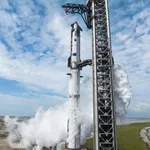
Much of the industry's optimism depends on continued development of Starship, the next-generation heavy-lift rocket designed to increase payload capacity while reducing launch expenses. If the rocket achieves rapid and fully reusable operations, transportation costs to orbit could decline significantly. However, experts caution that operational reliability, manufacturing capacity, regulatory approvals, and sustained commercial operations remain major hurdles.
Mass Manufacturing Presents Another Challenge
Launching satellites represents only part of the problem. Building thousands of powerful computing satellites requires manufacturing capabilities unlike anything in the commercial space industry. Each spacecraft needs advanced processors, cooling systems, radiation protection, communication hardware, and reliable power systems. Scaling production introduces enormous engineering, supply chain, and financial challenges. Many experts believe manufacturing—not launching—could become the industry's biggest obstacle.
AI Computing Demand Continues to Explode
While questions remain about orbital infrastructure, there is little disagreement regarding one trend: global demand for AI computing continues growing at an extraordinary pace. Technology companies are investing billions into new data centers as businesses increasingly adopt generative AI, automation, robotics, and machine learning. Electricity consumption from AI infrastructure is rising rapidly, forcing companies to search for more efficient solutions. This growing demand explains why investors remain interested in unconventional ideas like space-based computing.
Earth-Based Data Centers Still Hold Major Advantages
Modern terrestrial data centers benefit from decades of infrastructure investment. They can be upgraded more easily, repaired quickly, connected directly to high-speed internet networks, and expanded as demand increases. Operators have access to established power grids, experienced maintenance teams, and proven cooling technologies. Compared to these advantages, orbital infrastructure still faces significant operational uncertainty. Most analysts believe conventional AI facilities will dominate the industry throughout this decade.
Investor Optimism Meets Engineering Reality
One of the biggest differences in today's debate comes from the gap between investor expectations and technical feasibility. Financial markets often price companies based on future possibilities rather than present-day capabilities. The promise of orbital AI infrastructure represents an exciting long-term opportunity that could reshape cloud computing. Engineers, however, evaluate projects based on current technology, manufacturing capacity, operational costs, and practical implementation. Those perspectives do not always align.
The Timeline May Stretch Into the 2030s
Although launching experimental computing satellites may happen within the next few years, deploying a truly large-scale orbital AI network represents a much larger undertaking. Experts estimate that achieving affordable launches, reliable reusable rockets, large-scale satellite manufacturing, and sustainable operations will likely push commercial viability into the 2030s. Until then, terrestrial data centers will remain the backbone of AI infrastructure.













Comment