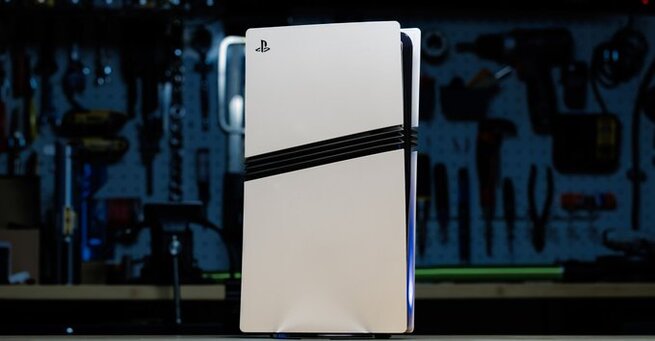
Sony teases new GPU tech for the PS6, giving fans a glimpse of what could be the biggest performance leap in console gaming. In a recent YouTube video, PlayStation architect Mark Cerny and AMD executive Jack Huynh discussed groundbreaking GPU innovations that could define the next generation of PlayStation consoles.
Although both noted the technology is still in early development — existing only in simulation — the collaboration between Sony and AMD hints at a major upgrade in how future games will handle graphics, efficiency, and realism.
Cerny, who also led development for the PS5 and PS5 Pro, explained that “the current approach has reached its limit.” To overcome those limits, Sony and AMD are co-developing a new GPU architecture designed to improve upscaling, ray tracing, and path tracing — the advanced rendering techniques that make game worlds look lifelike.
AMD’s Huynh introduced a new technology called Radiance Cores, similar to Nvidia’s RT Cores, which will handle demanding visual effects like ray tracing and path tracing more efficiently. These dedicated cores should make future PlayStation titles both visually stunning and faster to render.
One of the most exciting reveals from the “Sony teases new GPU tech for the PS6” discussion was the introduction of Radiance Cores. These cores are built to boost performance by offloading heavy rendering tasks, freeing up the GPU for smoother gameplay and more complex visuals.
The upcoming GPU tech will also leverage AMD’s FSR Redstone, an AI-powered upscaling tool designed to enhance image quality and frame rates. Features like Neural Radiance Caching are expected to take realism and efficiency to a whole new level.
Beyond raw performance, Sony’s next-gen GPU tech focuses on improving how efficiently data moves through the system. The PS6 will reportedly move beyond the Delta Color Compression system used in the PS5 and PS5 Pro. Instead, it will employ Universal Compression, a more advanced method that compresses everything in the graphics pipeline.
This change means more bandwidth, higher frame rates, and improved detail — all while consuming less power. It’s a crucial step toward ensuring that PS6 games run smoother, faster, and cooler.
The conversation around Sony’s GPU innovations also sparks speculation about the rumored PlayStation handheld currently in development. The improvements in GPU efficiency and thermal management could easily benefit portable devices.
If Sony’s new GPU tech can deliver console-quality visuals in a smaller form factor, the next handheld could redefine portable gaming for the modern era.
As Sony teases new GPU tech for the PS6, it’s clear the company is aiming to blend power, efficiency, and AI-driven rendering to push gaming visuals to the next level. AMD’s involvement guarantees that these innovations will influence not just the PS6, but potentially PCs and even Xbox hardware that share similar chip architectures.
While it may still be years away, this early look at Sony’s GPU roadmap suggests one thing: the PS6 could mark the biggest graphical leap since the PS4 era, setting a new gold standard for next-gen gaming.
Sony and AMD’s joint research into next-gen GPU architectures shows how seriously they’re taking the future of gaming. From AI upscaling to universal compression, the PS6 could redefine performance and immersion for years to come.
When Sony teases new GPU tech for the PS6, gamers pay attention — and for good reason. The next console generation might just change how we experience worlds, light, and motion forever.

Access our platform effortlessly on-the-go through our user-friendly mobile apps.






Comment