Smart mirror technology stole attention at CES 2026, answering one big question on many minds: can a mirror really tell how well you’re aging? On the show floor, journalists sat down for a 30-second scan and walked away with a numerical “longevity score” tied to their health and appearance. Some laughed, others cringed, and a few looked genuinely shaken. The experience felt less like a fun demo and more like a judgment. With health tech pushing deeper into personal spaces, this smart mirror sparked immediate curiosity and concern. It promised insight, but delivered emotional whiplash. That reaction alone made it one of CES 2026’s most talked-about devices.
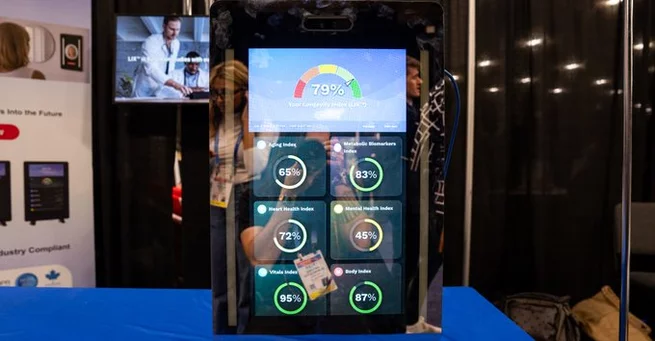
The device in question is Nuralogix’s $899 Longevity Mirror, a smart mirror designed to assess aging through facial analysis. Using transdermal optical imaging, it analyzes subtle blood flow patterns beneath the skin without physical contact. From that scan, the mirror estimates heart rate, blood pressure, cardiovascular risk, metabolic health, mental health indicators, and something it calls “physiological age.” All of these data points roll into a single longevity score ranging from 1 to 100. Higher scores suggest better aging, at least according to the algorithm. The process feels fast, clinical, and surprisingly intimate. Sitting still while a mirror sizes up your future is a strange experience.
Accuracy, however, remains a major question hanging over this smart mirror. Some measurements, like heart rate, appeared consistent with smartwatch data during demos. Blood pressure readings landed roughly within expected ranges, though the company says that feature is still undergoing FDA clearance. Journalists comparing notes found similar results, suggesting some level of internal consistency. Still, health experts often warn that wellness scores can oversimplify complex biological realities. A single facial scan can’t account for genetics, lifestyle, or long-term medical history. Even when numbers look plausible, interpretation matters. Without clinical context, scores risk being misleading rather than helpful.
What truly made the smart mirror feel unsettling was its emotional impact. Watching seasoned tech reporters react viscerally to a number revealed how powerful quantified health feedback can be. A low score didn’t just feel like bad data; it felt personal. For some, the mirror confirmed anxieties about stress, sleep, or burnout. For others, a high score offered fleeting validation that bordered on smug relief. This raises real concerns about how such devices might affect everyday users outside a CES demo bubble. In private homes, repeated exposure to judgment-like scores could influence self-esteem or mental health. Technology that frames aging as a score can easily cross from informative to harmful.
The smart mirror at CES 2026 ultimately highlighted a crossroads for consumer health tech. On one hand, contactless health monitoring could make wellness insights more accessible and proactive. On the other, packaging complex health data into a single number risks overselling certainty. Trust, transparency, and clinical validation will determine whether this technology becomes empowering or exploitative. For now, the Longevity Mirror feels less like a helpful guide and more like a provocative experiment. CES has always been about bold ideas, and this smart mirror certainly qualifies. Whether it belongs in homes is a question far bigger than its reflection.













Comment